
How can Nordic competitiveness benefit from gender equality?
The future competitiveness of the Nordic region will largely depend on how well it manages to develop, utilise and renew its human capital. Productivity, innovation and adaptability depend on the right skills being available, talent being utilised where it is most needed and investments leading to the greatest possible value creation. This report starts from the premise that several of the mechanisms that influence these factors are also impacted by gender equality. Gender equality is therefore a key issue for the region’s economic efficiency and competitiveness.
By highlighting these links, the Nordic Council of Ministers for Gender Equality and LGBTI aims to contribute new perspectives on how the competitiveness of the Nordic region can be strengthened, focusing on: 1) the importance of the digital transformation, 2) the green transition of industry and working life and 3) welfare and social care as social infrastructure.
How can Nordic competitiveness benefit from gender equality?
- Category: Economic equalityLabour and labour market
- Text: Jimmy Sand
- Published: 2026
- Material Type: PDF/online
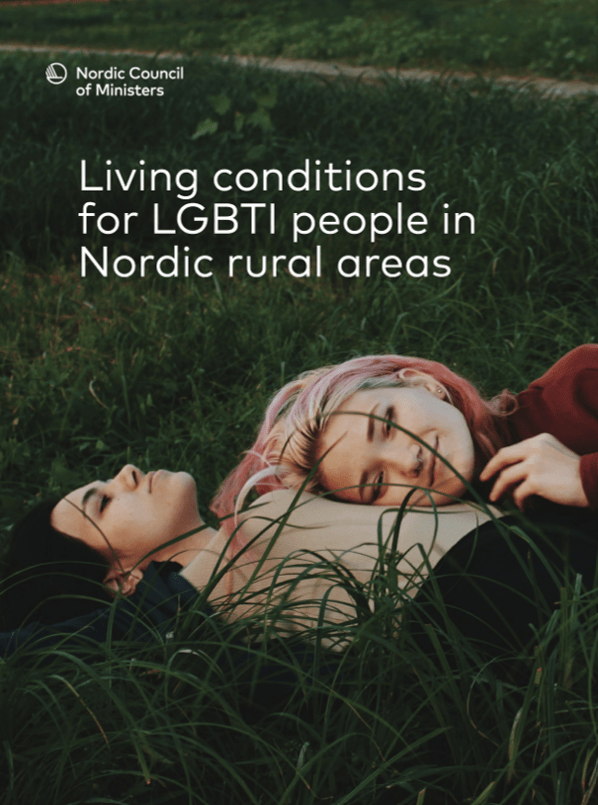
Living conditions for LGBTI people in Nordic rural areas
The publication brings together existing research on the living conditions of LGBTI people in rural areas of Denmark, the Faroe Islands, Finland, Greenland, Iceland, Norway, Sweden and Åland, as well as Sápmi. It focuses on settlement patterns, the experiences of young LGBTI people, queer organising and meeting places, and the role of religion. By comparing and analysing previous research, the publication highlights both challenges and opportunities, as well as important knowledge gaps.
The hope is that the report will contribute to a strengthened knowledge base for the work on promoting equal rights and opportunities for LGBTI people in rural areas of the Nordic region. Consequently, the results can support knowledge transfer, policy development and continued Nordic co-operation.
Living conditions for LGBTI people in Nordic rural areas
Download and print the publication in PDF
- Category: DemographicsLGBTI
- Text: Helga Eggebø and Fredrik Langeland
- Photo: Masha S/Unsplash
- Published: 2026
- Material Type: PDF/online
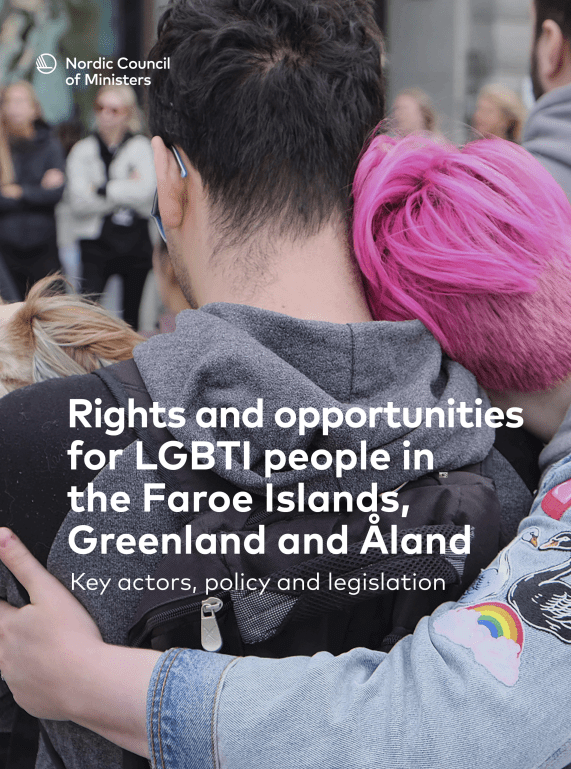
Rights and opportunities for LGBTI people in the Faroe Islands, Greenland and Åland
In April 2026, a targeted call for proposals was launched to ensure that projects applying for funding from the Nordic LGBTI Fund include stakeholders from the Faroe Islands, Greenland and Åland. To provide insight into the current conditions for Nordic cooperation projects NIKK has written this report.
The report identifies key stakeholders, policies, legislation and ongoing initiatives in the Faroe Islands, Greenland and Åland in the LGBTI field. Hopefully the results will form the basis for the implementation of the call for proposals, the drafting of applications, and future initiatives and activities.
Rights and opportunities for LGBTI people in the Faroe Islands, Greenland and Åland
Download and print the report in PDF
- Category: DemographicsLGBTI
- Text: Fredrika Almqvist
- Published: 2026
- Material Type: PDF/online
Honour-based violence and oppression in the Nordic countries: Governance, organisation and legislation
Honour-based violence and oppression constitute a violation of fundamental human rights and freedoms. This violence is based on patriarchal and heteronormative ideas and undermines both gender equality and the rights of LGBTI people.
The purpose of this publication is to provide an overview of the work being done to combat honour-based violence and oppression in the Nordic region. The publication describes the strategic work being done in this area, focusing on how honour-based violence and oppression are defined, the problems and challenges that have been identified, and how the work to address these is organised. Furthermore, the publication contains an overview and analysis of national policy documents and other relevant material dealing with the vulnerability of LGBTI persons to violence, as well as a review and analysis of national criminal law legislation related to honour-based violence and oppression.
Honour-based violence and oppression in the Nordic countries
Download and print the report in PDF
- Text: Alexandra Lebedeva and Johan Rosquist
- Published: 2026
- Material Type: PDF/online
Masculinity in Nordic gender equality policy 2019–2024: Concepts, perspectives and differences
The Nordic Council of Ministers regularly publishes reports aimed at providing a basis for the development of gender equality policy in relation to various social challenges. In recent years, the concept of masculinity has begun to be referenced repeatedly in such publications. But what does it mean that men and masculinity are highlighted in these reports? How are the concepts of men and masculinity used and how are problems, causes and solutions constructed? This publication analyses twelve gender equality policy reports published by the Nordic Council of Ministers between 2019 and 2024. Based on current scientific discussions, perspectives are provided on previous initiatives and a basis for how research can guide Nordic gender equality policy going forward.
Masculinity in Nordic gender equality policy 2019–2024
Download and print the report in PDF
- Category: Gender equality and welfare policyMasculinities
- Text: Kalle Berggren
- Photo: Curated lifestyle/Unsplash
- Published: 2025
- Material Type: PDF/online
Welfare resilience during crises in the Nordic region, gender perspectives on challenges and ways forward in healthcare
The financial crisis, pandemic, war and climate threats of recent years show that the global risk landscape is changing rapidly and that the threats to our societies are becoming increasingly interconnected and complex. Experience from the COVID-19 pandemic shows that the resilience of welfare is crucial, both for good and equal health and for functioning societies in general. At the same time, today’s challenges in health and social care are considerable. When does a crisis begin and who decides? How can we strengthen our crisis preparedness and increase the resilience of Nordic welfare?
In this publication, researchers in global public health, economic history, demography, sociology and social work contribute reflections from a gender perspective in four essays. Based on their research findings, they open up new perspectives, questions and possible solutions for future crises.
Welfare resilience during crises in the Nordic region

Download and print the publication in PDF
- Category: Gender equality and welfare policy
- Text: Angelica Simonsson (editor), John Lapidus, Ann Liljas, Bo Burström, Paula Mulinari, Ann-Zofie Duvander, Minna Lundgren
- Photo: Jens Lindström/Image Bank Swedeb
- Published: 2025
- Material Type: PDF/online
“Standing out even in groups to which you belong”
LGBTI people in the Nordic region who belong to multiple minorities are in a particularly vulnerable position. These are groups that are exposed to multiple forms of discrimination and marginalisation based on, for example, racism, homophobia and ableism. Studies show that LGBTI people with non-normative functional abilities or a foreign background report higher levels of bullying, violence, threats and hate crime than other LGBTI people.
Several projects funded by the Nordic Gender Equality Fund and the Nordic LGBTI Fund focus on issues affecting LGBTI people who belong to multiple minorities. This publication provides an insight into the Nordic cooperation projects – the problems and challenges they have identified, how they have addressed them and the concrete results they have achieved.
The publication aims to highlight the living conditions of LGBTI people who belong to multiple minorities and to disseminate knowledge and experiences from the projects so that they become more sustainable, benefit more people and inspire others to engage in Nordic cooperation.
“Standing out even in groups to which you belong”

Download and print the report in PDF
- Category: LGBTI
- Text: NIKK
- Published: 2025
- Material Type: PDF/online
Towards pay equity: Explaining the undervaluation of women’s work in the Nordic countries
Today, women in the Nordics are among the most active labour market participants in the world, but the goal of equal conditions in the labour market is far from being achieved. One of the clearest indicators of this are pay differentials between women and men. To help reduce the pay differentials the Nordic Council of Ministers has initiated a project on pay equity, which, among other things, has resulted in this publication.
This publication discusses various explanations for the undervaluation of women’s work in a gender-segregated labour market, based on a survey of social partners and other key stakeholders in the Nordic countries. A background review of various statistics of gender pay gaps is provided with the aim of illustrating the underlying factors. Various aspects of the survey highlighted by the respondents are also discussed, drawing on relevant research.
Towards pay equity: Explaining the undervaluation of women’s work in the Nordic countries
Download and print the publication in PDF
- Category: Economic equalityProject: Towards Pay Equity
- Text: Jimmy Sand
- Published: 2025
- Material Type: PDF/online
Trans People’s Working Life in Figures
In the Nordic countries the living conditions of many LGBTI people are worse than those of the majority population. Trans people are a particularly vulnerable group who face various obstacles in life, not least working life. Prejudice and poor treatment affect recruitment processes, working environments and opportunities for career development. These conditions, characterised by significant barriers, can have serious consequences for trans people’s financial situation, quality of life and health. This publication summarises data on the working life conditions of trans people in the Nordic countries produced by the European Union Agency for Human Rights. The findings show that LGBTIQ people, and in particular trans and intersex people, continue to face hate-motivated violence, direct and indirect discrimination and other forms of victimisation, despite legal protections.
Trans People’s Working Life in Figures

Download and print the report in PDF
- Category: Labour and labour marketLGBTI
- Text: Susanna Young Håkansson
- Published: 2025
- Material Type: PDF/online
Towards Pay Equity: An Exploratory Study of National Statistics in the Nordic Region
Within the framework of NIKK’s project Pay Equity in the Nordic Region, the report Paths to Equal Pay for Equal Work – An Exploratory Study of National Statistics in the Nordic Region has now been published. The report highlights what national statistics can be used to analyse pay differences between women and men in work of equal value at national level. It is hoped that the report will make an important contribution to efforts to reduce the gender pay gap in the Nordic region.
Towards Pay Equity: An Exploratory Study of National Statistics in the Nordic Region

Download and print the publication in PDF
- Category: Economic equalityLabour and labour marketProject: Towards Pay Equity
- Text: Minna Salminen-Karlsson, Anna Fogelberg Eriksson
- Published: 2025
- Material Type: PDF/online