
Iceland intent on eliminating the gender pay gap
How can the differences in pay between women and men be eliminated? Icelandic trade unions, employers´ confederation and government officials have developed an Equal pay management system, called “The Equal Pay Standard” that will help employers prevent salary discrimination and enable them to become certified. The country’s new gender equality minister wants to make the standard mandatory for all major employers.

Part 3: The labour market
The pay gap between men and women is a problem that all Nordic countries are struggling with. Despite several initiatives in the area, limited progress has been made in recent years. Now Iceland wants to lead the way. The country adopted an equal-pay-for-equal-work law for the labour market in the early 1960s. It was determined that the gender pay gap should be eliminated by 1967 at the latest. This goal was never achieved, however, as today the gap is a full 15 per cent. Yet the problem is far from forgotten.

In the fall of 2008 the Ministry of Welfare, together with ASI – the Icelandic Confederation of Labour and SA – Business Iceland, began the work of developing the Equal Pay Standard. Icelandic Standards agreed to supervise the project. It was decided to use the international standard similar to the ISO standard for environmental management systems as a model. Maríanna Traustadóttir from the Icelandic Confederation of Labour has been involved in the work from the start.
‘The creation of the Equal-Pay Standard was a long process. We met at least 100 times over a period of four years. We both considered the nature of the Icelandic labour market and developed guidelines for the valuation of work. What’s unique with the standard is that all labour market parties have agreed on all decisions made,’ she says.
Salary must be based on the position
In 2012 the Standard was ready, but did it work? An Action Group on Equal Pay was appointed in December 2012 by the government and Social Partners to work on gender equality and to conduct a pilot project to implement the Equal Pay Standard. In brief, the equal-pay standard described the process that companies and public institutions can follow in order to ensure equal pay within the workplace. In order to achieve this, the employer must determine which work tasks each position entails and then assign a value. The salary must be decided based on the position and not the person carrying out the work. The idea is that this will eliminate salary discrimination.
‘The standard makes employers pay a fixed salary for a certain type of work. However, there is some room for an upward adjustment for example if a worker adds extra value to the work, but such exceptions must be decided in accordance with the standard and justified in writing,’ says Maríanna Traustadóttir.
She points out that the standard makes the setting of salaries more clear and transparent, which benefits both the employers and the employee. Several private and public Icelandic employers have participated in the pilot project supervised by the Action Group on Equal Pay. The participants stress that the implementation is a big commitment that must be supported at the highest level of management.
‘Yet everybody also thinks it’s well worth the work. They feel that the whole workplace benefits from a fair and transparent salary system. Several employers also describe how they had to adjust some salaries that they realised were discriminatory,’ says Maríanna Traustadóttir.
The infrastructure is in place
Iceland’s new minister of social affairs and equality Þorsteinn Víglundsson wants to require all Icelandic employers with more than 25 employees to implement the standard. The infrastructure is already in place. The employer organisations give courses on how to use the standard and in 2015 the University of Iceland offered a special course on equal-pay certification.
Guðbjörg Andrea Jónsdóttir is a researcher and director at the University of Iceland’s Social Science Research Institute. She does not think the standard will eliminate the entire gender pay gap in Iceland but is confident it will increase the awareness of the reasons for it.
‘During the implementation process, the awareness is raised about how differently women’s and men’s work is valued among both employers and employees. This may be the most important step to get the debate going and close the gender pay gap,’ she says.
So what are the main reasons behind the salary differences between women and men in the Nordic countries? International comparisons show that the Nordic countries place far from the top when it comes to gender-equal salaries. For example, the data for Italy and Luxembourg look much better. Anita Nyberg, gender scholar and professor at Stockholm University in Sweden, says that the statistics have to do with women’s employment rate. Countries in which fewer women work outside the home have smaller gender pay gaps.

‘The reason is that the women who work in those countries are well-educated,’ she says and compares with for example Sweden, where many women have low-paying jobs in the public sector.
According to Anita Nyberg, the salary differences are generally growing in Sweden, regardless of gender. This affects women as a group, since they are at the bottom of the scale. At the same time, women are more likely than men to pursue post-secondary education, which makes the development multifaceted.
‘The primary reason for the pay gap is that women and men tend to have different occupations. Right now, we’re witnessing a change in this regard, though. Jobs that used to be male dominated, such as psychologists, have been taken over by women,’ says Anita Nyberg.
The level of motivation is missing
The gender pay gap will not disappear without sufficient motivation among policymakers and employers. At present, this level of motivation is missing in several Nordic countries, says Paula Määttä, Finnish researcher and expert on equal pay.
‘The pay gap is a serious violation of human rights. I’d like to say it is one of the most serious violations, since it affects half of all people in the Nordic region.
She continues by saying that Finland’s political focus is on economic growth rather than discriminatory structures and practices of the labour markets. This affects the country’s priorities.
‘Dealing with the salary differences also has to do with money. Right now, there is no willingness in Finland to significantly increase the salaries in sectors dominated by women in order to narrow the pay gap,’ she says.

According to Paula Määttä, one reason behind the slow progress is that people in Finland, as in other Nordic countries, are so used to the structures they can’t see the discrimination. The setting of salaries is not openly discussed in the workplaces. When the negotiations take place behind closed doors, the differences are destined to be maintained, says Paula Määttä.
‘In order to achieve equal pay, it is important that salaries and how they are set are discussed in the public debate. Then employees will be able to understand why they are paid a certain salary and compare it with how much other people make,’ says Paula Määttä.
It has not yet been decided exactly when Iceland’s gender equality minister will mandate the equal-pay certification. Maríanna Traustadóttir from the Icelandic Confederation of Labour hopes that the solution will spread to other Nordic countries.
‘The standard is international. It is developed so that it can be used outside the Icelandic context. However, it does need to be adapted to each country’s specific labour market and labour laws,’ she says.
- Text: NIKK
- Categories: Gender equality and welfare policy
- Published: 2017-02-21
Nordic networks initiate a discussion about gender norms
Young boys are repeatedly exposed to extreme gender ideals in films and advertisements. Men are often portrayed as strong lone wolves with a preference for violence as a means to solve problems. The Nordic MenEngage network wants to initiate a discussion about gender norms, change the stereotypical male norm and stop the violence. Today they are hosting a conference in Oslo.
There is a growing global movement focusing on men and gender equality. The conference titled Making the Invisible Visible: Transforming Social Norms among Boys & Men for Gender Justice in Practice is arranged by the Nordic member in MenEngage associations and aims to disseminate the network’s knowledge to more people. The conference is funded by the Nordic Gender Equality Fund, which is administered by Nordic Information on Gender (NIKK).
‘At this point in time, there is no obvious arena for dialogues about masculinity norms. We have invited a variety of actors to the conference, such as organisations that work with boys and young men, in order to expand the discussion,’ says Ole Nordfjell from the Norwegian organisation REFORM.
The about 100 conference participants range from municipal workers and gender researchers to activists and politicians. The programme includes workshops on how to engage boys and young men in the anti-violence work and how to deal with negative gender ideals for men. A panel discussion will focus on how to involve more men with migrant backgrounds in the struggle for gender equality.
‘We think this is an important issue in the wake of the Cologne debate, where men with migrant backgrounds were pointed out as perpetrators. It’s important that we share knowledge about integration in the gender equality work,’ says Ole Nordfjell.
Problematic norm of violence
Alexander Blum Bertelsen will participate in a panel discussion titled The Voices of Young Male Activists. He is a young Danish feminist with a background in the political youth movement. At present, he is completing a programme in peace and conflict studies at Lund University in Sweden.
‘My studies have made me think a lot about the norm of violence that we men have to deal with. Being a man means that you’re constantly expected to use violence,’ he says.

According to Alexander Blum Bertelsen, the image of the strong man who is eager to resort to violence is a central element not least in pop culture. He believes that this norm is a strong reinforcer of the gender power structure, and also that it affects international relations.
‘Mostly men are in charge of foreign policy and military operations.’
He thinks that white, heterosexual men should use their privilege to change the male norm. Alexander Blum Bertelsen is calling for a communication climate where instead of rejecting people who say the ‘wrong’ things, we see a potential for a constructive discussion.
‘Instead of labelling a person ”anti-women” or ”racist”, it’s important to see the context. It’s not the individual that’s wrong, it’s the structure. What I mean is, it’s important to turn wrong into right!’
Recommendations will be submitted to the Norwegian government
A greater aim of the MenEngage conference is to reduce gender-related violence in society. This is an issue the Norwegian organisation REFORM has focused on for a long time. In 2015, they managed a Nordic project that focused on how to combat violence among young couples in the Nordic region. During the MenEngage conference, the recommendations from the previous project will be handed over to a representative from the Norwegian government.
‘It’s a good thing. We hope that the Norwegian government will take the recommendations seriously,’ says Ole Nordfjell.
He sees obvious advantages of Nordic cooperation in the area of men and gender equality.
‘We are sufficiently similar but the differences in methods and practices are exciting, and can be imitated.’
- Text: NIKK
- Categories: Gender equality and welfare policy
- Published: 2017-02-16

‘Seriously, nothing is happening’
One focus area of the Norwegian presidency of the Nordic Council of Ministers in 2017 is gender equality in the labour market and the workplace. As part of this ambition, a large Nordic conference on the topic was arranged in early February. Nordic Information on Gender (NIKK) attended the event, which was held Oslo.

Part 2: The labour market
The 2-day conference included discussions on the challenges related to the gender-segregated labour market, the importance of a gender-equal use of parental insurance, discrimination of migrants and prevention of gendered educational choices. The conference gathered participants from business, academia, unions, politics, research and civil society. In a panel discussion on diversity recruitment, Petter Stordalen, owner and chair of Nordic Choice Hotel, expressed frustration over the ultraslow transition to gender equality in the labour market.
‘Seriously, nothing is happening. The universities are full of competent women. What happens to them after they graduate? I’m afraid that men in top positions don’t care about diversity and gender equality. But they should, as several studies show that diversity-oriented businesses tend to be very profitable. Many people think that Nordic Choice actively promotes diversity just to be nice, but we don’t. We do it for the wellbeing of the company,’ he said.
Women more likely to work part time
Gerd Kristiansen, president of the Norwegian Confederation of Trade Unions, also participated in the panel discussion. She referred to the systematic gender segregation in the labour market as a big problem on the path to gender equality.
‘Women work part time to a much greater extent than men and also make less money. Women’s pensions are lower than men’s, and they also take more responsibility for ill family members. We need to deal with all these inequalities in order to achieve gender equality in the labour market.’
Lynn Roseberry, PhD, author and former senior lecturer at Copenhagen Business School, stressed the importance of gender equality in parents’ use of the parental insurance.
A comparison shows that Nordic dads take more paternal leave than the world average. Still, big differences can be seen among the Nordic countries, and despite the progress made in gender equality, mothers continue to spend more time caring for children.
According to Gerd Kristiansen, in a European perspective, the Nordic countries have come relatively far when it comes to gender equality in the labour market. However, we still have a long way to go.
‘We therefore need an active gender equality policy that ensures a good balance between work, family and leisure, for both men and women,’ she says.
What concretely needs to be done in order to achieve gender equality in the labour market and the workplace?
‘First of all, we need to agree that gender equality in the labour market is the ultimate goal. In order to reach this goal, we need to promote gender equality in the family domain, with a gender-equal distribution of work and care responsibilities. We need a family policy that promotes gender equality at home. In addition, businesses need to integrate a gender equality perspective in their recruitment and career development work. And they need to expand their thinking when assessing competence in a recruitment process,’ she says.

Hanne Bjurstøm, Norway’s ombudsperson for discrimination and gender equality, agrees that the importance of the recruitment process cannot be overestimated on the path to gender equality in the labour market.
How can recruitment work contribute to gender equality?
‘A good recruitment process helps the employer hire the most qualified applicants, regardless of gender, functional variations and ethnicity. The most qualified person gets the job and vulnerable groups don’t risk being discriminated against. The employer must ensure a professional recruitment process that is based on non-biased assessments,’ says Hanne Bjurstøm.
As the national ombudsperson for discrimination and gender equality, which challenges do you see?
‘Research shows that people with a foreign-sounding name have a 25 per cent lower chance of being invited to a job interview in Norway. We know that not all people are treated equally in recruitment processes. When recruitments to a large extent depend on the gut feeling of those in charge of shortlisting job applicants, there is a great risk that irrelevant personal traits are given more attention than relevant qualifications. Good recruitment practices are blind to gender.
Focus on work

The importance of including an intersectional perspective on the labour market was another topic discussed at the conference. Paulina de los Reyes, professor of economic history at Stockholm University told the audience about her research during a session titled “Where in the Labour Market are the Immigrant Women?”
She stressed that we need to look beyond employment statistics when we discuss the labour market.
‘Sweden sees it as incredibly important that immigrants find employment. It’s seen as the key to integration.’
According to Paulina de los Reyes, this ambition makes us neglect what happens once a person is working. Like salary differences, what the work environment and the person’s opportunities to combine work and family life look like, and whether there is discrimination or harassment in the workplace.
‘By focusing solely on the number of people who have a job, we risk missing these important aspects. We may not see that the Swedish labour market is segregated.’
Paulina de los Reyes points out that although two persons might work under the same roof, they often face entirely different conditions. An intersectional perspective enables us to identify how factors such as class, age, ethnicity and gender may imply different challenges for different people.
‘There are preconceptions that push racialised women into roles they are expected to accept. These roles often come with worse conditions than those enjoyed by the majority. An intersectional perspective helps us see how this categorisation affects workplace hierarchies and the opportunity for staff to develop their full potential. In order to achieve equality in the workplace and the labour market, we need to be able to see the entire person,’ says Paulina de los Reyes.
- Text: NIKK
- Categories: Gender equality and welfare policy
- Published: 2017-02-09

A gender quota law is not a quick fix
In Norway and Iceland, gender quota laws have successfully increased the share of women on corporate boards. The issue of introducing a similar law in Sweden has been debated for many years, but so far no legislative changes have been made. However, the very threat of an upcoming gender quota law indeed seems to have made a difference.
Part 1: The labour market
The red-green Swedish government has been threatening to pass a gender quota law since 2014. The intention was for such a law to go into effect this year. However, a few weeks ago, the opposition parties in the government’s Committee on Civil Affairs made an agreement to say no to a gender quota law, which made the cabinet withdraw its plans.
‘The cabinet’s legislative proposal didn’t even make it to the parliament. At this point, a law seems unlikely. It’s a tricky situation for the cabinet, since this means they can be accused for not delivering on the promise they made during the election campaign,’ says Lenita Freidenvall, associate professor of political science at Stockholm University.
It is not the first time the issue of a gender quota law has come up in Sweden. The strategy to put pressure on the business sector by threatening them with a law was implemented already in 1999 by then gender equality minister Margareta Winberg. At that time, companies were told they had five years to increase the share of women on their boards to 25 %. No gender quota law was ever passed, but the threat made a difference. According to Lenita Freidenvall, the share of women on corporate boards increased from 6 % to 18 %.
‘Margareta Winberg’s threat really worked. Considering the multiply threat on introducing a gender quota law it is likely that the present government thought the businesses would solve this on their own,’ she says.
“Sweden is different”
The Norwegian gender quota law was approved by a centre-right government in 2003. Minister of Trade and Industry Ansgar Gabrielsen pushed the development of the law forward, and finally in 2008 it went into effect. Mari Teigen is director of CORE – Centre for Research on Gender Equality and editor of the book Virkningen av kjønnskvotering i norsk næringsliv (the effects of the quota rule in the Norwegian business sector). She thinks it is interesting that the issue has re-surfaced in Sweden.
‘This is an issue that obviously is having a problem making it all the way in Sweden, but that at the same time never completely disappears from the agenda.’
Mari Teigen believes that the differences between the Norwegian and Swedish business sectors can have an impact on the developments in the two countries. In Norway, the state is a central owner of enterprises. This makes it hard to argue against the idea of the state getting involved in the governance of businesses.’
‘Sweden is different, as it more strongly characterised by large private companies like Volvo and Ericsson.’
She also points out another important difference. When Norway passed its gender quota law, the corporate boards had only 6 % women. The present share in Sweden is 32 %.
According to Mari Teigen, the Norwegian gender quota law has had several effects. One is that the corporate boards affected by the law now have about 40 % women. Other benefits are increased transparency and clearer routines for the selection of board members.
‘Instead of appointing board members informally, the businesses use nomination committees. This is an effect not only of the quota law but also of other interventions to improve the processes,’ she says.
The Norwegian law has also helped spark a European debate about the male dominance, both generally in business and industry and more specifically in corporate boards. Several countries have been inspired by the Norwegian model.
‘It has become somewhat of an export,’ says Mari Teigen.
It should be remembered, however, that a lot remains to be done when it comes to gender equality effects of the gender quota law. Studies show that the gender distribution effects have not spread to the top management level in Norwegian business. The fact that the corporate boards have become gender balanced does not mean that these companies are more likely to have a female CEO.
‘So a gender quota law is not a quick fix to solve structural gender equality problems in the business sector. I believe the law would have been more powerful if it had been connected to other gender equality measures,’ says Mari Teigen.
She thinks that issues such as what work experience is required for promotion to higher positions should be addressed.
‘What education is required? Do you have to work 60 hours a week to qualify? There is a need for a more critical discussion of these types of issues,’ she says.
The gool has been achieved

Iceland approved a quota law in 2009. The law went into effect in 2013 and covers all larger companies, with 50 or more employees, as well as all pension fund companies. Evaluations show that the goal of 40 % female board members has been achieved in the companies affected by the law. According to Gudbjörg Linda Rafnsdóttir, professor of sociology, and Thorgerdur Einarsdóttir, professor of gender studies at the University of Iceland, has the gender equality distribution effect of the law not been noticeable in Iceland – but it has led to increased diversity in the boards. They have studied the difference between male and female board members, when it comes to background and characteristics.
‘On average, female board members have more and another type of education than their male colleagues. They are also younger,’ they say.
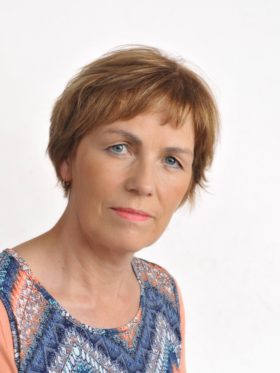
Gudbjörg Linda Rafnsdóttir and Thorgerdur Einarsdóttir have carried out several studies related to the gender quota law. One review, based on interviews with male and female board members, shows that the women rate the quality of their own board work higher than men in the same positions do.
‘The questions concerned for example whether the board members were prepared for the board meetings and how good they were at taking initiatives or being critical. These results indicate that the claim that women don’t have enough self-confidence for these positions is not true,’ says Gudbjörg Linda Rafnsdóttir.
- Text: NIKK
- Categories: Gender equality and welfare policy
- Published: 2017-01-31

Gender equality in the labour market – a Norwegian focus
Nordic females participate in the labour market to almost the same extent as their male counterparts. Yet many gender equality problems remain to be solved, according to Norway’s gender equality minister, who is also the new leader of Nordic gender equality cooperation.

On 1 January, Norway took over the presidency of the Nordic Council of Ministers. The programme for the Nordic gender equality cooperation includes initiatives against gender-related violence and online hate speech, work already initiated by previous countries holding the presidency. In addition to these themes, Norway will give special attention to gender equality in the workplace and the labour market. On 7–8 February, Norway will host a Nordic conference in Oslo on the topic. The discussions will address issues such as how the position of migrant women in the labour market can be strengthened, what it means to be a father in 2017 and how gender equality in corporate leadership can be achieved. The event targets researchers, business leaders, policymakers and representatives from the labour market parties.
‘Participation in the labour market and the ability to earn an income are prerequisites for gender equality,’ says Norway’s Minister of Children and Equality Solveig Horne.
Yet this seems to be easier said than done.

‘Women are underrepresented in leadership positions in the private sector, and women and men still tend to choose jobs along traditional gender lines. We need more female engineers and more male preschool teachers.’
Gender equality in the labour market is also the main theme of the UN women’s commission in New York this year and the issue will therefore be discussed in a public panel debate with the Nordic gender equality ministers.
Implementation of the Istanbul Convention
Last year, the Finnish Presidency focused on practices and solutions to combat violence in close relationships. A conference centred on the role of the perpetrators of this type of violence was arranged. Norway will continue this work with a project dealing with the implementation of the Istanbul Convention. The project will be presented at a Nordic conference on violence arranged by Norway 29–30 November.
‘Violence is a societal problem, a public health problem and not least a gender equality problem. Victims of violence must be offered protection through support measures and the legal system. Measures targeting the perpetrators are also important in order to prevent the violence,’ says Solveig Horne.
The project will also look into how the Nordic countries are implementing some of the commitments laid down in the Istanbul Convention. The commitments in question concern the work to prevent gender-related violence and the provision of protection and support to victims.
Information package to young people about online hate speech
How to stop online hate speech is another hot topic in the Nordic countries. The epidemic of threats and sexist remarks in website comment fields is a serious democracy problem, as it may silence voices in the public space. The issue received attention during both Denmark’s and Finland’s presidency. One problem is that the legislations in the Nordic countries have not been updated in the area. This spring, Nordic Information on Gender (NIKK) will present a review of the legal regulation of online hate speech at the request of the Nordic Council of Ministers. On 21–22 June, Norway will arrange a Nordic conference on the topic.
‘We will continue Finland’s and Denmark’s work against hate speech, and we look forward to NIKK’s review and recommendations about what can be done about the problem. Norway will also develop an information package for children and young people in all Nordic countries,’ says Solveig Horne.
The issue of men and gender equality is also on Norway’s agenda. More specifically, the discussion will concern men and health, men and education and men and men’s roles.
‘We can’t achieve gender equality unless we have the men on board. The participation and involvement of men and boys have been important elements of Nordic gender equality policy in the last 10 years,’ says Solveig Horne.
As a gender equality minister, what do you feel are the main benefits of Nordic cooperation in the area of gender equality?
‘The Nordic countries have worked together to deal with gender equality challenges for over 40 years. Equality between women and men is an important feature of the Nordic countries. It is a prerequisite both for people’s opportunity to create a good life and for the creation of solid welfare states. I feel strongly that the Nordic cooperation helps us improve each other,’ says Solveig Horne.
- Text: NIKK
- Categories: Gender equality and welfare policy
- Published: 2017-01-23
A conference about gender equality in research environments
How can the field of physics become more gender equal, and what can international organisations do to help? These key questions will be addressed when the renowned European Organization for Nuclear Research CERN hosts a Gender in Physics Day (GiPD) on 27 January. Several representatives from Nordic science organisations will participate in the event.
Gender in Physics Day is the title of a series of conferences. This particular one-day conference will be organised by CERN, the European Southern Observatory (ESO) and NordForsk. The intention is to make visible and analyse the lack of gender equality in research environments within the field of physics. The conference on 27 January will focus on what international organisations do and can do to improve the situations, but also the situation in the Nordic countries. Reports show that Nordic academia is far from gender equal. Almost 80 per cent of all professors are men, with the natural sciences and engineering showing the greatest imbalances. Lotta Strandberg works as senior adviser at NordForsk:
‘The situation is particularly problematic in physics. We hope that the conference will give us at NordForsk some ideas about what we can do to improve things,’ she says.
Science organisations from Sweden, Norway and Denmark will present descriptive gender statistics at the conference. There will also be a presentation on the situation in developing countries.
The decision to host the event at CERN may seem like a strategic move. CERN employs particle physicists and R&D engineers from across the world, but less than 15%of them are women. According to Geneviève Guinot, CERN’s Diversity Programme Leader, the reason for this is that CERN receives few job applications from female scientists:
‘We seem to have stagnated at a certain level. We need to talk about what we, who employ scientists and host international physics collaborations for cutting-edge experiments, can do about it.’
Geneviève Guinot sees several reasons for the lack of gender equality in physics. Research shows that gendered choices of educational paths tend to begin early in life.
‘The stereotype about what a typical particle physicist is like is one problem. People immediately think of a male scientist. Another problem is that many students don’t know what jobs a physics degree can lead to,’ says Geneviève Guinot.
She also mentions other obstacles women face when planning their careers. Due to norms and unconscious gender blindness, women do not enjoy the same opportunities as men. Concrete cases from CERN will be discussed at the conference.
Lotta Strandberg from NordForsk says that physics in particular is a field with many discouraging stories about how women have been treated.
‘I once heard of a professor who was denied working in a research environment because the place lacked a ladies’ room. Her entire postdoc went down the tubes because of it. In another case, a woman realised after her parental leave that her department had given both her doctoral studentship and her research project to somebody else,’ she says.
According to Geneviève Guinot, CERN is addressing the gender equality problem in several ways. For example, they organise special theme days to which they invite girls from compulsory school to spend a day with leading scientists. CERN also offers a programme for physics teachers, which includes a course in gender-inclusive teaching. In this course, the participants discuss for example how gender stereotypes related to physics can be avoided in the classroom.
‘I hope GiPD will contribute to noticeable change when it comes to gender equality and opportunities for female physicists,’ says Geneviève Guinot.
- Text: NIKK
- Categories: Gender equality and welfare policy
- Published: 2017-01-18

Busy Finnish Presidency about to End
A Nordic expert panel on online sexism and hate speech at the UN women’s commission meeting in New York and an event focusing on gender equality in the Nordic media. These are two activities that the Finnish Presidency is particularly happy to have accomplished in the past year.
The leadership of the Nordic gender equality cooperation changes annually. In 2016, it was Finland’s turn to hold the Presidency of the Nordic Council of Ministers. The focus of the Presidency has been on gender equality in the media and the work against violence. Gender equality in health and welfare and the area of men and gender equality have also received special attention. Annamari Asikainen and Heidi Haggrén at the gender equality unit of the Finnish Ministry of Social Affairs and Health have coordinated the efforts.
‘It has been a very interesting year, with a lot of work. The planning began already in 2014, and this year we have definitely had plenty of balls in the air,’ says Annamari Asikainen.
Last year, the Danish Presidency started to work against online sexism and hate speech. This was followed up in February at the UN women’s commission meeting in New York when an expert panel discussed solutions to the problem in front of an audience. The panel included Emma Holten from Denmark, who became a feminist activist after falling victim to revenge pornography, and Finnish politician Nasima Razmyar, who has been subject to organised hate campaigns due to her engagement in refugee issues.
Annamari Asikainen and Heidi Haggrén feel that this event was particularly successful.
‘An experienced CSW participant said it was the best joint Nordic event ever at the UN women’s conference,’ says Annamari Asikainen.
The work will be followed up during Norway’s Presidency with for example an assessment of the legal regulation of online threats and hate speech in the Nordic countries, which is carried out by NIKK at the request of the Nordic Council of Ministers.
Gender equality in the media
On the theme of gender equality in the media, the Finnish Presidency also arranged a side event on gender equality and freedom of the press during UNESCO World Press Freedom Day in Helsinki in May. The goal was to address the issue of the skewed gender representation in the news media as a threat to democracy and freedom of the press. The list of participants in Helsinki also included representatives from the Nordic Gender Equality Fund project Gender Equality in Nordic Media. They presented the latest Nordic results from the Global Media Monitoring Project, which revealed that the share of women present in Nordic news media has decreased from 2010. The study shows that the Nordic countries have been surpassed by for example USA, Romania, Peru and Pakistan.
‘Even if Nordic press enjoys a lot of freedom in an international perspective, the report points to significant weaknesses in terms of gender equality. It was a good idea to include the gender equality issue in this UNESCO context,’ says Heidi Haggrén. She appreciates the discussion on the roles of men and women in the media content and how they are linked to democracy.
Gender-related violence

The Finnish Presidency has addressed the issue of gender-related violence from several perspectives. It has arranged three large conferences with a focus on perpetrators, genital mutilation and human trafficking. The conference titled Confronting Gendered Violence: Focus on Perpetrators, arranged in collaboration with a project funded by the Nordic Gender Equality Fund, dealt with how the perpetrators’ violence can be stopped. It targeted researchers and practitioners in the Nordic countries. The conference included a presentation of results from the Presidency project Enough, Now! Nordic Models to End Domestic and Intimate Partner Violence.
‘The conference turned out great, maybe because it targeted a specific group. One important insight we gained is that it is important to define a clear target group early in the planning process. It’s difficult to reach out to everybody with a conference. For example, you can’t target both practitioners and policymakers at the same time,’ says Annamari Asikainen.
She also stresses the importance of collaborating with other actors. The conference Female Genital Mutilation and Cutting – a Matter of Human Rights and Gender Equality was arranged together with the Finnish League for Human Rights, and the conference The Nordic Countries – a Common Market for Human Trafficking was hosted in cooperation with the Finnish Non-Discrimination Ombudsman, among others.
‘It has worked well, because they have access to other networks than we do at the Ministry. They are able to reach other organisations and groups of people,’ says Heidi Haggrén.
Challenges and lessons learned
Besides the main themes of media and anti-violence work, Finland’s Presidency has also addressed the gender equality perspective in health policy and the theme of men and gender equality.
What has been the biggest challenge this year?
‘The short time period! One year is not a long time and it’s quite demanding to work on so many things simultaneously. Also, we should develop better structures for collaboration in the Nordic cooperation, for example between different sectors. Today those types of structures are more established at the EU level,’ says Annamari Asikainen.
In 2017, Norway will take over the Presidency of the Nordic Council of Ministers. They will continue to focus on themes such as violence and hate speech.
What advice do you want to give Norway?
‘It has been valuable to make room for voices from all Nordic countries at the events and in the overall work. It’s not always easy to do, but that’s how you generate Nordic value. Collection of comparable information and creation of discussion forums can help facilitate effective gender equality policy in the different countries,’ says Heidi Haggrén.
- Text: NIKK
- Categories: Gender equality and welfare policy
- Published: 2016-12-19

Gender Equality Fund Highlights Nordic Cooperation Against Violence
Lagging and inconsistent legislation against online violence. The importance of including an intersectional perspective in the understanding of violence prevention work and sharing of information between non-profit organisations and public entities such as the police and the legal system. These were some of the issues discussed when NIKK arranged a network meeting for projects that have received funding from the Nordic Council of Ministers’ gender equality fund.
‘The organizations involved in our project have worked hard to reach out to young people through social media, festivals and schools. We have for example arranged workshops for adolescents about what dating violence is and how it is expressed: psychological violence, digital violence, stalking. We were surprised to find out how few adults the adolescents have to talk to about their thoughts and questions about for example sexuality,’ says Hedda Hakvåg.
Hedda Hakvåg from Reform – Resource Centre for Men in Norway presented the project “Ungdoms kjærestevold i Norden. Nordisk ekspertkonferanse om vold i ungdommers parforhold” together with Rikke Kann from Danish Dialogue against Violence at the network meeting.
Nordic cooperation in practice
The meeting gathered 10 organisations from six Nordic projects that work in various ways to prevent gender-related violence for two days in Helsinki. Representatives from for example universities, the police, women’s shelters and resource centres for men from Finland, Denmark, Iceland, Latvia, Norway and Sweden came together to share knowledge and experiences regarding the prevention of violence. The discussed projects focused on everything from online violence, violence among adolescents to the involvement of boys and men in the work against violence.
In addition to the project presentations, the meeting participants attended workshops in which they discussed the responsibilities of various actors and the needs that can be identified at the Nordic level when it comes to for example networks, knowledge and policy changes. One of the challenges addressed was how the legislation and law enforcement seem to always be one step behind in the Nordic countries when it comes to online violence, which causes many victims to experience a sense of poor legal security. The agenda also included discussions about the benefits of Nordic cooperation.
‘I see almost only advantages with Nordic cooperation. Every time I attend a Nordic meeting, I realise how much we have in common and how much we can learn from each other,’ says Brynhildur Heiðar- og Ómarsdóttir from the Icelandic Women’s Rights Association.
However, the Nordic context also implies a risk, as the need to discuss the countries’ shared traits may have an excluding effect.
‘We have to pay attention to the intersectional perspective, such as the LGBT perspective, violence against people with functional variations and ethnic minorities. It is important to hear also their voices when we develop the work against violence in Nordic co-operation,’ says Sari Laaksonen from The Federation of Mother and Child Homes and shelters, Finland.
Network meetings a new yearly tradition
This is the first time NIKK arranges a network meeting for fund projects, but from now on the plan is to arrange a meeting every year on various themes. The Finnish Presidency has identified violence as a prioritised area in 2016, which explains the focus of this year’s meeting. Moreover, the meeting was held in connection with the fund-supported conference “Confronting Gendered Violence – Focus on Perpetrators“, which took place 30 November – 2 December in Helsinki, Finland.
‘NIKK has administered the Nordic Council of Ministers’ gender equality fund since 2013. So this week we have met both projects that have ended and projects that have just started. There is a lot to learn from the projects, not only for us at NIKK but also for the projects themselves in terms of how to make a project sustainable. It is also an opportunity for sharing knowledge with other organisations than those that are involved in the projects. There is clearly a strong interest in finding new networks and models of collaboration,’ says Louise Grip, project coordinator at NIKK.
- Text: NIKK
- Categories: Gender equality and welfare policy
- Published: 2016-12-08

Focus on the perpetrators of violence
Gender-related violence is a widespread and persistent problem in the Nordic countries. An international conference that puts the focus on the perpetrators opens today. What are the best methods to change the behaviour of the perpetrators and thereby end the violence?
The conference, titled Confronting Gendered Violence: Focus on Perpetrators, held in Helsinki at the House of the Estates, gathers Nordic researchers and experts in the field. The ambition with the event is to generate knowledge and explore ways to stop the spiral of violence.
‘So far, the debate has largely focused on the survivors. But it is important to also bring attention to the perpetrators, since they are central in any attempt to end the violence. There is a lot going on in this field of expertise at the moment,’ says Kristín Pálsdóttir.
Pálsdóttir serves as contact person for the Nordic fund project within which the conference is arranged by the participating organisations in collaboration with the Finish Presidency of the Nordic Council of Ministers. The need for a discussion focusing on the perpetrators has been voiced repeatedly. Gender-related violence is one of the focus areas both in the Nordic gender-equality ministers’ present co-operation programme and in connection with the Finnish Presidency. The conference is a collaboration between organisations, exports, researchers, public officials and policymakers. Kristín Pálsdóttir says that the conference has attracted a lot of attention, not only in but also outside the Nordic region.
‘People from Nepal, Pakistan, Greece and Palestine have contacted us about attending the conference. This shows that there’s a strong and widespread desire for knowledge in this area,’ she says.
According to Kristín Pálsdóttir, the intention with the 3-day conference is to enable various actors to meet and discuss how the issue is handled in the different Nordic countries. What treatments and solutions are available? What does the research say? Another objective is to create a Nordic network.
‘We are hoping that such a network can help develop the practices used in the Nordic region. It’s an important step in the work to solve the problem,’ she says.
Young perpetrators fell between the cracks
Kristín Pálsdóttir works at the University of Iceland’s Institute for Gender, Equality and Difference. She got the idea for the project when the staff at the Institute evaluated a pilot project that had been carried out in select Icelandic communities. The pilot project was based on the Istanbul Convention and aimed to combat gender-related violence through improved follow-up of reported violence and tougher sanctions for the perpetrators. When evaluating it, Kristín Pálsdóttir noticed that treatment options for the perpetrator were largely ignored.
‘Iceland offers only one type of treatment for perpetrators, and all perpetrators with children are required to undergo it. But this means that young men, without children, are neglected and don’t receive any treatment at all.’
New report maps the situation in the Nordic region
A new report shedding light on the situation in the Nordic countries will be presented at the conference. The report was ordered by the Finnish Presidency aiming to map out the different models used in the Nordic countries (including the autonomous regions of Åland Islands, Greenland and Faroe Islands) to help the perpetrators of intimate partner violence to break the cycle of violence.

The questions concern everything from which treatments perpetrators are offered to challenges and results. Berta Vall, researcher at the University of Jyväskylä’s Department of Psychology in Finland, is in the process of adding the final touches to the report. She says that the results show that the access to treatment options varies both across countries and between urban and rural areas.
“Most treatment options are offered in the larger cities. This means that it is more difficult for perpetrators outside the cities to get help. One exception is Sweden, where treatments are offered in the countryside as well.”
“Also long-term funding is one of the main challenges that the service providers in Nordic Countries are faced with, which might provoke difficulties on long-term planning.”
Norway first European country to offer treatment
According to Berta Vall, most treatments available today are voluntary. They are largely based on the model developed by the Norwegian NGO Alternative to Violence (ATV), a professional research and treatment centre against partner violence. Founded in 1987, ATV was a European pioneer in offering perpetrators of partner violence psychological treatment.
‘The purpose of these treatments is to stop the violence by recognizing the gender aspect of Intimate Partner Violence and by helping perpetrators acquiring responsibility and increasing empathy for the victim. The treatments consist mainly of one-on-one and group counselling’, says Berta Vall.
One thing that is characteristic of the Nordic countries is that several service providers have a gender perspective in their treatments as stated in the Istanbul Convention. They raise up the gender aspects that are behind the Intimate Partner Violence.
‘This is unusual in a European context. The Nordic countries definitely stand out,’ says Berta Vall.
Demands in the Istanbul Convention
Gender-based violence is one of the prioritised areas within the 4-year framework of the Nordic gender equality co-operation. Päivi Yli-Pietilä works for the Finnish Ministry of Social Affairs and Health Social and is a member of the Nordic Committee of Senior Officials for Gender Equality.
‘Gender-based violence is a problem in all Nordic countries that we still have not solved – despite the fact that the Nordic countries always do very well in international comparisons of gender equality in society,’ she says.
The Istanbul Convention was adopted by the Council of Europe in 2011 and includes demands for measures to deal with perpetrators.
‘Most discussions have concerned only the victims. We need both perspectives and are very happy to see that Norway (the next country to hold the Presidency) will continue the work to implement the Istanbul Convention in the Nordic co-operation,’ says Päivi Yli-Pietilä.
- Text: NIKK
- Categories: Gender equality and welfare policy
- Published: 2016-11-30

Gender research journals explore contemporary trends
The Nordic countries boast several research journals that together help push the field of gender research forward. One example is NORMA: International Journal for Masculinity Studies, which is celebrating its 10-year anniversary this year. The current issue of the journal looks for example at how masculinity research can help us understand Donald Trump’s success in the political arena.
Ulf Mellström, editor-in-chief and professor of gender studies at Karlstad University, leads off the current issue of NORMA with an editorial titled In the Time of Masculinist Political Revival. According to Mellström, present-day politics is characterised by a revival of traditional masculinity ideals in many parts of the world. And this trend is combined with the advancement of openly sexist and male chauvinistic agendas, with a prime example being Donald Trump in the US. Media portrays the primary supporters of the next US president as white working-class men – a group that has seen its status dwindle over the years and that is full of nostalgic dreams of a return to how things used to be back when the world supposedly was a better place. Ulf Mellström draws parallels to aggressive homophobia, anti-feminism and a reinvigorated masculinism in Russia, Turkey, Eastern Europe and the Middle East. One example is Turkey’s President Erdogan, who last summer talked about the importance of re-establishing the ‘gender order’ in his country, without any influence from ‘Western’ feminism. Ulf Mellström concludes that masculinity research plays a central role in these disturbing times. It is needed not least in order to understand, explain and resist reactionary political trends around the world.
Important with contributions from the global south

NORMA was founded in 2006 with financial support from Nordic Information on Gender, which at that time was a Nordic research institute located at the University of Oslo. The research field called masculinity studies was relatively new and the idea with the journal was to contribute to dialogue and sharing concerning research practices in the Nordic region. Today, NORMA has a more international profile. The intention is to bring masculinity researchers around the words together in one place. According to the journal’s other editor-in-chief Lucas Gottzén, associate professor and senior lecturer in child and youth studies at Stockholm University, it is particularly important to start a dialogue with the global south.
‘If we want to understand central issues related to men and masculinities, we can’t rely solely on knowledge in a Western context,’ he says.
Lucas Gottzén believes that countries such as USA, Great Britain and Australia hold a dominant position with respect to masculinity research. Widening the perspective is not least a matter of working against colonialist views. The editors-in-chief are actively searching for other contributions to the journal. For example, the current issue features an article by Ceylonese researcher Andi Schubert, which deals with representations of political leaders in the first general election after Sri Lanka’s civil war.
‘Andi Schubert’s research shows that the candidates were portrayed as either father figures or war heroes. Although these types differ in many ways, both are based on patriarchal values characteristic of the post-war situation in the country,’ he says.
Next theme: transmasculinity
As editor-in-chief, Lucas Gottzén feels it is important to keep masculinity research from becoming an enclave disconnected from the broader field of gender research. He talks about the importance of intersectional perspectives and of creating dialogue between different fields. The theme of the upcoming issue of NORMA is transmasculinity, which is an attempt to bring trans research and masculinity research together under one roof.
‘What can trans research contribute to masculinity research and vice versa? People, including those with trans experience, “make” masculinity in many different ways, and this needs to be explored and understood,’ says Lucas Gottzén.
At present, most research journals are published in the US. According to Lucas Gottzén, the fact that NORMA is based in the Nordic region makes a difference.
‘We are acting in the semi-periphery, which gives us a special perspective. It gives us a sensitivity to cultural differences in how masculinity is made,’ he says.
Research journals with a focus on gender research in the Nordic region
NORMA (International Journal for Masculinity Studies)
NORA (Nordic Journal of Feminist and Gender Research). A multi-disciplinary scholarly journal focusing on Nordic gender research. The journal, which is published in English, emphasises the Nordic perspective on feminist research, with respect to both content and theoretical and methodological approaches.
LAMBDA NORDICA. A scholarly journal that presents research in the humanities and social sciences in relation to LGBT and queer studies. The journal, which features research from the entire Nordic region, strives to support the dialogue between established and younger scholars and to encourage new research.
Tidskrift för genusvetenskap (TGV). A Swedish journal focusing on current interdisciplinary gender research. A central ambition is to reflect the multitude of voices in the field of gender studies. It was founded in Lund in 1980 and was originally titled Kvinnovetenskaplig tidskrift (Journal of Women’s Studies). The journal is written in Swedish but includes English summaries.
Kvinder, Køn & Forskning (Denmark). An interdisciplinary journal with articles reflecting the diversity in Danish gender research. The journal targets a wide range of readers and not just scholars. Most articles are written by Danish researchers, yet material from other countries is published as well.
Tidsskrift for kjønnsforskning (Norway). Founded in 1977 as “Nytt om kvinneforskning” and changed to its current title in 2005. The interdisciplinary journal aims to reflect the diversity in Norwegian gender research and present new knowledge from the field. The articles are mainly written by Norwegian researchers, but contributions in Swedish, Danish and English are also accepted.
Sukupuolentutkimus – Genusforskning (Finland). Published by the Association for Gender Studies in Finland. The journal is bilingual (Finnish and Swedish) and publishes primarily articles about research in Finland. It was founded in 1988 as Naistutkimus – Kvinnoforskning and changed to its current title in 2005. The editorial office rotates between different higher education institutions.
FOOTNOTE: All mentioned journals are peer reviewed.
- Text: NIKK
- Categories: Gender equality and welfare policy
- Published: 2016-11-22
