
Apply for funding from the Nordic Gender Equality Fund!
A new call for applications for funding from the Nordic Gender Equality Fund will be arranged in March 2017. If you are interested in applying, now is a good time to initiate collaborations, contact potential partners and start working on your application!
The Nordic Gender Equality Fund was established by the Nordic gender equality ministers and is administered by NIKK, Nordic Information on Gender. The fund supports projects in which at least three organisations from at least three Nordic countries collaborate to promote gender equality. The funding can be used to arrange conferences, meetings, knowledge projects, networks etc.
Since 2013, around 40 projects have been granted funding from the Nordic Gender Equality Fund. The projects have resulted in everything from study material to policy proposals and new Nordic networks. In 2016, the total sum granted was DKK 2.7 million.
The purpose of the fund is to stimulate Nordic gender equality cooperation within the framework of the gender equality ministers’ co-operation programme. For the period 2015–2018, the co-operation programme gives special attention to gender equality in the public space and welfare and innovation. There are two cross-cutting themes for the entire co-operation programme: sustainable development with a focus on diversity and men’s and boys’ active participation in the gender equality work.
Gender equality in working life given priority
Gender equality in working life is a prioritised theme in the 2017 call for applications. This means that projects related to this theme will be given priority in the assessment of applications. Examples of such projects include projects focusing on gendered educational choices or discrimination in the labour market. Projects related to the co-operation programme will also be given priority. However, projects unrelated to these prioritised areas may also be granted funding.
Important dates
Applications must be submitted using the special application form that will be made available at nikk.no as soon as the call opens. The projects must begin in autumn 2017 and end in 2018.
- 1 March – Call opens
- 31 March – Call closes
- May – Funding decisions are communicated to the applicants
- June – Contracts are signed
- Text: NIKK
- Categories: Gender equality and welfare policy
- Published: 2016-11-14

Funding for research on gender equality in academia
The Nordic countries often find themselves at the very top of international gender equality rankings. But when it comes to the share of women at the higher levels in academia, the Nordic countries place right around the European average. Nordforsk, an organisation under the Nordic Council of Ministers, has granted NOK 41.8 million to two research projects aiming to change this.
One of the two projects that have been granted funding is Nordic Centre for Research on Gender Equality in Research and Innovation (Nordicore). Mari Teigen and Liza Reizel are managing the research group at the Norwegian Institute for Social Research in Oslo that has received NOK 21.8 million. One focal point is similarities and differences between the academic sector and the rest of the labour market.
‘One of the topics we are studying is how the interrelation between working life and family life leads to differing career patterns for women and men. Studies have shown that women do not leave the academic sector to a higher extent than men, as previously assumed, but that their career development is slower. Why is this?’ says Mari Teigen.
Several of the researchers in the project have previously studied the labour market in general. The project is grounded in their studies, which among other things show that Nordic countries stand out by displaying a more gender-segregated labour market than other countries as well as relatively long parental leaves, which are mainly taken by women. This affects their career opportunities.
Contribution to sustainable change
The researchers will also explore gender equality measures that have been implemented in academia, for example which ones have led to progress and which ones have not. Two of the project’s five key objectives are to involve research policy actors in the project to ensure that the results can contribute to sustainable change and to facilitate knowledge exchange between for example researchers, students, decision makers and gender equality practitioners.
‘The plan is to be able to say something about what the main barriers to gender equality in academia are, and whether they differ from those seen in the rest of the labour market. It will be interesting to learn more about the differences and similarities between the countries,’ says Mari Teigen.
Gabriele Griffin from Uppsala University in Sweden is in charge of the other research group, which has been granted NOK 20 million for the project titled Beyond the Gender Paradox: Women’s Careers in Technology-Driven Research and Innovation in and outside of Academe.. Two of the project’s focus areas are the healthcare sector and the gaming industry. The researchers believe the gendered structures in these fields have effects on the academic sector.

‘We are seeing increasing digitalisation in healthcare, which is a very female-dominated sector. It has been assumed that this development is leading to reduced job security, but we’re not so sure that is the case. What we do know, however, is that the technological development is changing the patters in the labour market and how gender inequality is expressed,’ says Gabriele Griffin.
Two of the project’s four pillars are e-health and digital humanities. The use of digital tools to improve people’s access to healthcare is of interest not least in the sparsely populated Nordic regions.
Humanities meets digitalisation
The gaming industry is another important field besides the female-dominated healthcare sector. The Nordic countries are at the forefront of game development, and even if it is a male-dominated sector, Nordic gaming companies have a larger share of female workers than their counterparts in other countries. Digital humanities, or humanities research in the intersection with digital technology, is of particular relevance for the gaming industry.
‘Similar to healthcare, humanities research is dominated by women, whereas technology is an area traditionally dominated by men. But healthcare and humanities are becoming increasingly intertwined with technology, which is changing the labour market. How are women’s career opportunities affected in this process?’ says Gabriele Griffin.
The other two pillars of the project are research and innovation in urban and rural areas, respectively. The research project includes, besides the researchers at Uppsala University, researchers from the University of Tampere in Finland and Bergen University and Vestlandsforskning in Norway.
The research projects are funded by Nordforsk, an organisation under the Nordic Council of Ministers, together with the Swedish research council Forte, the Academy of Finland, Rannís – the Icelandic Centre for Research and the Research Council of Norway. Gabriele Griffin and Mari Teigen presented their projects at the Gender Summit in Brussels 8–9 November 2016. The projects will start in January 2017.
- Text: NIKK
- Categories: Gender equality and welfare policy
- Published: 2016-11-10

Nordic Laws Against Online Threats And Hate Speech Analysed
Hate speech and sexism on the internet is a growing problem in the Nordic region. What legal protection can the victims expect? NIKK has launched a new project to review the applicable legislations in the Nordic countries.
How can the online violence and harassment be stopped? This is a hot topic in all Nordic countries. The widespread posting of threats and sexist remarks in online forums and comment fields is not least a democracy problem, as it risks silencing voices in the public space. But it is notably difficult to bust the perpetrators. One problem is that the legislation in the area is outdated. Another is that the research on how the online violence can be combated is limited. To tackle a few of these problems the Nordic Council of Ministers has commissioned NIKK start a project that will review the applicable legislations in the Nordic countries. The purpose of the project is to contribute to knowledge-based work against online hate speech, threats and other violations that are linked to gender.
‘My focus is on the national legislations, which I analyse from an intersectional gender perspective. I want to explore what situations are covered by the present laws and which ones are not,’ says Moa Bladini, senior lecturer in criminal law and analyst in the project.
What does the current situation look like when it comes to gender-related online violence in the Nordic region?
‘Threats and hate speech online is a relatively new phenomenon. It is a consequence of the rapid technological progress. The wheels in the legislative mills turn rather slowly and don’t respond quickly to sudden changes, like the ones we have seen in the area of online violence. Young women are particularly vulnerable, and some of the violations they experience fall outside the current legislative frameworks. I’m for example thinking of distribution of nude pictures without consent, which is a violation that remains unregulated in Swedish law.’
What have you found so far?
‘The Nordic legislations show many similarities, but there are also some differences. Dissemination of material that may violate a person’s integrity, such as nude photos spread without the person’s consent, is a criminal act in Norway and Finland. In Sweden, the two criminal offences defamation and insult clash with the country’s law of freedom of expression, which takes precedence. As a result, the police cannot always pursue a case. Instead, the victim’s only option is to file a lawsuit for damages. Finland looks at it differently and gives priority to the protection of a person’s honour over the freedom of expression. However, following criticism from the European Court of Human Rights, they have been forced to make some adjustments.’
How can NIKK’s project benefit other Nordic actors?
‘This is important knowledge that can help bring attention to legislative weaknesses in the Nordic countries, but also to best practice. If we for example see that Norway has found a good solution to something, the other countries can be made aware of it and learn from their example. It can also imply coordination gains.’
- Text: NIKK
- Categories: Gender equality and welfare policy
- Published: 2016-10-19
Human Trafficking Calls for International Collaboration
Human trafficking has taken new forms and is placing new demands on legal systems. This week, experts from the Nordic countries are meeting to learn from each other.
‘We need to get better at solving these crimes,’ says Norwegian prosecutor Rudolf Christoffersen.
He is one of the keynote speakers at The Nordic Region – a Single Market for Human Trafficking, a conference that will be held in Helsinki on Wednesday. The gender- and gender equality-themed event targets experts in for example social services, healthcare and law enforcement. Women and men suffer partly differing consequences of human trafficking. For example, women are more commonly exploited for sexual purposes, while men are forced to carry out crimes and provide free labour.
New forms of trafficking calls for new strategies
Rudolf Christoffersen has been involved in the work against human trafficking for many years. At present, he works for Eurojust, an EU agency for international cooperation against cross-border crime. From his office in Hague, he sees new forms of human trafficking emerging in Europe. It has for example become increasingly common that children are sexually exploited online, which implies new demands on prosecutors and the police. In just a few weeks, legal proceedings against a person in Norway accused of making children in the Philippines perform sexual acts and assaults on other children while he watched them over the internet are scheduled to begin. The man supposedly paid a poor family and instructed the children to carry out his wishes.
‘We have seen these types of cases in several Nordic countries, and they are difficult to solve,’ says Rudolf Christoffersen.
In many cases, the police do not even know in which country the violations have occurred, and it is often difficult to find out, he says.
‘The streaming traffic can go through countries that we traditionally don’t collaborate with, and that can make it hard to obtain the evidence we need.’
Another example of a new form of human trafficking that Rudolf Christoffersen points out is linked to the refugee crisis. Children fleeing their home countries are forced to engage in criminal activities such as drug smuggling and sex trade. Many of the victims are facing extremely vulnerable situations, and Christoffersen believes that the police and prosecutors have a lot to learn in that area.
‘We need to become better at dealing with victims who don’t want to collaborate with us. Their fear of reprisal keeps them from contacting us,’ he says.
Maybe their trust in law enforcement would increase if more crimes were solved, he speculates.
‘We need to become better at getting people convicted. Otherwise we risk signalling to the victims that we don’t care,’ he says.
Rudolf Christoffersen thinks that policy makers should be more active as well. He believes that the consequences for perpetrators are too mild and would like to see harsher punishments.
‘That is true for the entire Nordic region. The penalties are far too soft,’ he says.
International collaboration necessary

Effective management of the new forms of human trafficking requires international collaborations not only in the Nordic region but also all over Europe. Moreover, there is a need for expert competence in the legal sector, says Rudolf Christoffersen. As an example, he mentions the Norwegian introduction of expert teams. The teams are available in the five largest cities and consist of police officers and prosecutors specialising in combating human trafficking.
‘There are similar examples in other countries. We need to become better at sharing our methods and experiences so that we can learn from each other,’ says Rudolf Christoffersen.
The conference on Wednesday may fill a void in that respect, he believes. Researchers and experts in various fields and from several countries will participate in the conference. For example, Lisa Green, county coordinator against human trafficking in Malmö, Sweden, will give a presentation on the city’s work to support refugee children. Maija Koskenoja, senior officer at the Non-Discrimination Ombudsman in Finland, will talk about the methods perpetrators use and the psychological consequences of human trafficking from a gender equality perspective. Prosecutor Jette Malberg and police officer Anders Morville will talk about the Danish investigation Operation Hvepsebo, which revealed a case where people were being exploited by being forced to carry out criminal acts.
The conference is arranged by the Finnish Non-Discrimination Ombudsman in cooperation with the Finnish Presidency of the Nordic Council of Ministers. The Finnish Non-Discrimination Ombudsman will open the event, and Minister of the Interior will also be there.
- Text: NIKK
- Categories: Gender equality and welfare policy
- Published: 2016-10-15

Genital Mutilation in Focus at Nordic Conference
The fight against genital mutilation has been successful around the world. However, despite growing resistance against the practice, many girls remain at risk. In Nordic countries, there is a strong need for preventive work and education. A conference titled Female Genital Mutilation and Cutting – a Matter of Human Rights and Gender Equality begins today in Helsinki.
According to WHO, over 200 million women and girls in the world have had their genitals mutilated. The procedure is a violation of the basic human rights and the rights of children. Efforts to end the practice are underway in many parts of the world. The resistance offered by women, health workers and civil society organisations in countries where the practice is common has made a difference. Several countries, including Burkina Faso, Egypt, Ethiopia and Sudan, have adopted laws prohibiting the procedure. The possibility of eliminating the most harmful elements of traditional rites of passage is gaining increasing acceptance in many places.
Several initiatives have been taken at the international level. One example is the umbrella organisation IAC (The Inter-African Committee on Traditional Practices Affecting the Health of Women and Children) formed in 1984 by women from a number of African countries. IAC works actively to end genital mutilation and is a consultative body to the UN. The organisation has adopted action plans that are supported by several other organisations, including UNICEF and WHO.
Scope unknown
All Nordic countries have some sort of laws against the practice of genital mutilation. However, the number of court cases where a perpetrator has been convicted is very limited, and so is the knowledge about the scope of the problem.

– I’ve worked with Somalis in Finland since the 1990s and I have never heard of any parents mutilating their children’s genitals here. Since it’s illegal in Finland, some parents instead do it before they get here, says Saido Mohamed from the Finnish League for Human Rights.
The Finnish League for Human Rights is an expert NGO that has worked against genital mutilation for 15 years. The organisation’s work is based on respect for different cultures, with the addition that violence can never be accepted regardless of culture or tradition. There is a focus on preventive work by for example discussing the issue with Finns originating from cultures where genital mutilation is common. The target groups include Finns from Somalia, Ethiopia, Eritrea, Sudan, Nigeria and Kenya.
– We meet with religious leaders, visit youth activities, talk to organisations and attend women’s celebrations and other events. My colleague, who is from Ethiopia, and I meet people in their natural environments, she says.
An increasing number of young people seeking medical attention
According to Saido Mohamed, who was born in Somalia, the attitudes to female genital mutilation have changed over the years. In the 1990s, the issue was a taboo subject in Finland. Today it is discussed more openly and an increasing number of young people are seeking medical attention. She believes that the organisation’s outreach work has made a difference.
– The preventive work is very important when it comes to genital mutilation. It has to be carried out continuously, since there is a steady inflow of new migrants from the areas in question.
Jamila Said Musse has worked against genital mutilation for over 20 years both in Somalia and in Sweden. Recently, for example on behalf of the County Administrative Board of Västra Götaland. She, too, thinks that the attitudes have changed in the right direction and that preventive work is of central importance.
– Sweden adopted its law against genital mutilation in 1982. But the law alone can’t put an end to the phenomenon. There’s also a need for education and prevention.
Mutilated genitals more common among older people
The exact extent of the genital mutilation problem in the Nordic region is hard to know. The existing studies on the topic rely on estimations that are merely based on the number of girls and women originating from countries where the practice is common. In an effort to produce more precise data, the National Institute for Health and Welfare in Finland has conducted a large interview study involving Finnish women from Somalia and Kurdistan. According to researcher Reija Klemetti, the purpose of the study was to explore the prevalence of the procedure, the health effects women experience and how the practice is connected to socioeconomic factors.
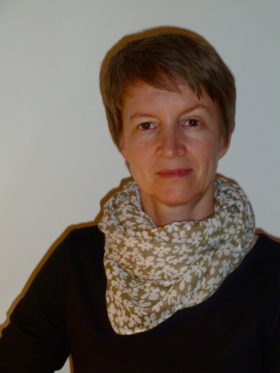
– An increasing number of genitally mutilated women are moving to Finland, but very little research has been done on the issue, such as on the health effects and treatments.
The questions in the study were included in a larger health questionnaire, and the responses show that genital mutilation is more common among women who are older and lack education. Married Finnish women from Somalia had higher rates of genital mutilation than their unmarried counterparts. Among Finnish-Kurdish women, the procedure was more common among those who described themselves as religious. The study also found that Finnish-Somali women with mutilated genitals were less likely to seek medical attention. The results of the study will inform the work against genital mutilation in Finland and help for example healthcare workers discuss the issue with affected women. Genital mutilation remains a sensitive issue that many professional groups are hesitant to address.
– We need to educate Finnish healthcare workers about the practice and how it can be prevented. It’s also important that teachers and other school workers become knowledgeable about the problem.
Swedish municipality found guilty of discrimination
It is of key importance that the issue of genital mutilation is dealt with in the right way. In 2010, Uppsala Municipality in Sweden was convicted of ethnic discrimination of a girl and her parents after a district nurse reported a possible case of genital mutilation to the social welfare board. The whole thing started when the girl and her father made a routine visit to the local child health centre. During the visit, the father said that the girl was going to travel abroad with her aunt in the summer to visit relatives. The nurse suspected that the girl would get genitally mutilated while abroad and filed a report to Uppsala’s social welfare board. The social welfare board in turn notified the police, who without prior warning picked up the girl from her school and took her to a hospital where she was given a gynaecological examination without her consent. The examination showed that the girl had not been genitally mutilated, which made the police close the case. The parents reported the municipality to the Swedish Ombudsman against Ethnic Discrimination, which took the case to the district court. The district court found that the municipality had acted solely based on the family’s ethnicity and therefore ordered it to pay SEK 60 000 in restitution to the family.
More resources for education needed

Both the Finnish League for Human Rights and Jamila Said Musse from Sweden are working to educate professional groups such as social workers, police officers and healthcare workers about genital mutilation. They say there is a great need for knowledge, but that it is difficult to provide all the support that is needed. According to Saido Mohamed, there is a great need for more resources, for both preventive measures and education. She thinks that Finnish policy makers should give more attention to the issue.
– Finland has had an action plan with an end date in 2016. When it expires, we don’t know what’s going to happen. But the issue needs to be given higher priority. Our organisation alone can’t be expected to do all the work that’s needed in Finland, says Saido Mohamed.
Jamila Said Musse has similar experiences.
– The authorities need to take this issue seriously, and it needs to be made clear who has the main responsibility. The policy makers also need to work on the issue globally, she says.
- Text: NIKK
- Categories: Gender equality and welfare policy
- Published: 2016-10-13

The design of parental insurance influences men’s use of it
Nordic dads take more parental leave than the world average. What are the reasons for this? A new fact sheet from NIKK explains what the parental insurance systems look like in the Nordic countries, and how the design affects fathers’ use of the right to parental leave. The fact sheet also sheds light on how the system rules can be complex or even dysfunctional for parents who do not conform to the heterosexual nuclear family norm.
The ability for both parents to combine parenthood with participation in the labour market has long been a prioritised gender equality issue in the Nordic region. In a global perspective, the Nordic countries are pioneers in promoting parental leave for both parents. Policy interventions aimed to encourage men to take parental leave have been an important factor in this context.
Research shows that men’s share of the total parental leave taken by couples has increased in all Nordic countries since the turn of the millennium. But the change is slow and mothers continue to spend more time than fathers caring for their children. The most gender-equal use of the parental insurance is found in countries that stipulate that a certain portion of the total parental leave granted for a child can only be taken by the father.
A good example of this is Iceland, which in the year 2000 split the parental insurance into three parts. Of the total nine months of parental leave granted for a child, the reform reserved three months for each parent and allowed the parents to split the remaining three months any way they wish. The effect was dramatic. Before the reform, only 0.2−0.4 per cent of Icelandic fathers took parental leave. After the reform, the share climbed to 87 per cent.
Systems not for everybody
Researchers hold that the Nordic parental insurance systems are based on a heterosexual twoness norm. This can make it difficult for families with fewer or additional parents. For example, Finnish fathers can only take parental leave if they live with the child, making the system poorly suited for parents living apart. In Sweden, the rules are based on the assumption that the parents cooperate with each other, which can be problematic if they for example do not get along.
At present, there is only a limited amount of research on how the Nordic parental insurances work for people outside norm, such as rainbow families. The studies that do exist in the area deal mainly with general patterns.
Read more and download the fact sheet in PDF here

- Text: NIKK
- Categories: Gender equality and welfare policy
- Published: 2016-10-10

‘Some bodies are obviously undesirable’
Intersex persons often undergo surgery early in life in order for them to fit into the binary gender norm. The surgeries are standard procedure in all Nordic countries despite the fact that they cannot be justified on medical grounds.
‘The doctors think they can decide what a child’s “right” sex is, but they can’t,’ says Kitty Anderson, chair of Intersex Iceland.
According to Kitty Anderson, the decisions doctors make can never be anything more than guesses.
‘The ”right” sex is whatever sex corresponds to the child’s gender identity, and we can’t know anything about that until the child grows older,’ she says.
The way she sees it, almost all surgeries and other interventions performed on children with intersex variations are carried out for cosmetic reasons or to make the child fit the standard for what men and women are supposed to look like.
‘People should be able to decide what is done to their bodies. Since the surgeries are rarely necessary from a health perspective, they shouldn’t be done at such an early age,’ she says.
Only one hospital in the whole Nordic region, Oulu University Hospital in Finland, has clearly declared it will not perform surgeries on children with intersex variations for cosmetic or social reasons. Maarit Huuska from Seta – LGBTI Rights in Finland, believes the hospital’s resistance has been very important.
‘It shows there are alternatives. It has also sparked a discussion about what is ethically right.’
According to Maarit Huuska, not all medical experts in Finland are on the same page. The types of surgery that Oulu University Hospital refuses to perform are still available at the hospital in Helsinki. In May last year, however, new ethical guidelines for healthcare in Finland were presented, and they discourage doctors from performing surgery on children with intersex variations for cosmetic or social reasons.
‘We don’t know what the effects of it will be,’ says Maarit Huuska.
Selective abortion and silence important issues
The final decision on what medical procedures should be carried out on children with intersex variations is often made by the parents, yet the responsibility never lies with them, according to Ellie Nordfelt, intersex activist in Sweden. She says that the core of the problem is how doctors and other experts present the situation to the parents.
‘They are told that their child is not normal but that the doctors can fix it. It’s a shock to them,’ she says.
She also mentions selective abortions as an issue important to the intersex movement. In most cases when an intersex variation is discovered in a foetus, the pregnancy is terminated.
‘Some bodies are obviously undesirable. What does that do to those of us who actually end up being born? We really shouldn’t be born at all, and if we are born anyway we need to be surgically normalised as soon as possible,’ says Ellie Nordfelt.
Both Ellie Nordfelt and Kitty Anderson believe that intersex persons will not gain the right to healthcare based on informed consent without political intervention.
‘The surgeries will continue until we get a law that prohibits them. The medical experts will not implement the necessary changes on their own,’ says Kitty Anderson.

Her own story shows that society also has a past to deal with. Not long ago, children were often not told that they had an intersex variation. Kitty Anderson did not find out she was intersex until she was a teenager.
‘At that point, when I finally found out, I was feeling miserable. I totally lost faith in the adult world. I just couldn’t trust grown-ups anymore. I thought that everybody had lied to me,’ she says.
In today’s age she believes it is unusual that the information is kept from the child in that way.
‘Now we understand better that it causes problems. Children have the right to know things like that about themselves. It’s super important,’ she says.
Nordic countries not role models
The Nordic countries tend to see themselves as pioneers and role models when it comes to LGBIT issues, but that is a false self-image, according to Kitty Anderson.
‘If there is a role model, it’s Malta,’ she says.
That’s the only country in Europe that has outlawed surgeries on children with intersex variations for cosmetic or social reasons. No Nordic county is considering a similar law at present, but both Kitty Anderson and Ellie Nordfelt are noticing a growing interest in the situation of intersex persons at the political level. For example, the Swedish National Board of Health and Welfare has been commissioned to investigate the health care that intersex persons receive in the country, and in Iceland, the Ministry of Welfare has appointed a queer council in which the intersex movement is represented.
Ellie Nordfelt believes that the increased visibility is important. She describes how the actual diagnosis system may isolate and alienate people.
‘We are divided into a bunch of different diagnoses and are told there are very few of us. That makes it hard for us to meet each other and talk about our experiences,’ she says.
‘In my dream society, there’s no need to diagnose and correct. Instead we celebrate differences and think of physical variations as something positive.
- Text: NIKK
- Categories: Gender equality and welfare policy
- Published: 2016-10-04

Online Hate Speech and Perpetrators Scrutinised in this Year’s Fund Projects
What can be done to stop hate speech and sexism in the comment fields in social media? What are the best measures to break perpetrators’ patterns of violence? These questions are the focal point of some of the projects that receive funding from the Nordic Gender Equality Fund this year.
Each year, NIKK administers funding for measures and collaborations in the area of gender equality in the Nordic countries on behalf of the Nordic Council of Ministers. The Gender Equality Fund was initiated by the Nordic gender equality ministers to stimulate Nordic cooperation within the framework of the priorities laid down in the joint programme.
The list of this year’s approved projects has great breadth. The Danish Institute for Human Rights has gathered a number of Nordic ombudsman institutions to explore effective ways to end hate speech and sexism online. The network will arrange three expert seminars and develop concrete recommendations for what can be done to combat online hate speech.
Another fund project focuses on breaking perpetrators’ patterns of violence. The coordinators of this project will arrange a conference in Helsinki in order to facilitate sharing of knowledge and the establishment of a Nordic professional network that will focus on the perpetrator perspective.
Two other fund projects shed light on women in Nordic film. One of them will analyse the output of films from a gender perspective and arrange a feminist film festival. The other, coordinated by Stockholm University, will draw attention to the women in film history. In 2016, the Swedish Film Institute launched a website for the rewriting of film history from a feminist perspective. At present, the website focuses solely on Sweden. The aim of the project is to complement the site with Norwegian and Danish film history.
- Text: NIKK
- Categories: Gender equality and welfare policy
- Published: 2016-09-26
Sharing the Keys to Sustainable Gender Equality
National gender equality objectives cannot be achieved without active contributions by municipalities and county councils, but how do they succeed? As part of a cross-Nordic project, local representatives meet to share successful experiences.
Anna Ulveson, gender equality expert at the Swedish Association of Local Authorities and Regions, is leading the project, which gathers municipal representatives from Sweden, Finland, Iceland, Norway and Denmark. The intention is for the project to inspire others who want to work with gender mainstreaming as a method.‘Municipalities are well suited to work with gender equality in practice. We have a close relationship with the citizens through healthcare, schools, community youth centres and elderly care,’ says Ulveson.
What does gender mainstreaming really mean?
‘It means that you integrate a gender equality perspective into the daily work everywhere from the top decision-makers to the face-to-face interaction with citizens. Municipalities and county councils have an important role in this context since we’re involved in so many different types of citizen services.’
How does the gender mainstreaming work differ between different Nordic countries?
‘That’s what we want to find out in the project. We know that the method has been understood in more than one way, and there is still some uncertainty about how it can be done in practice. In Sweden we have worked with gender mainstreaming through the Program for Sustainable Gender Equality, and there are many success stories.’
Can you tell us about any of them?
‘Many organisations start out by analysing themselves with gender statistics. This can help them see problems they weren’t aware of. For example, Sahlgrenska Hospital in Gothenburg discovered that women who came to the hospital with a broken hip were given less pain relief than men. This realisation made them redesign their entire procedure for these types of cases. Today all patients with a hip fracture are given pain relief already in the ambulance and the care they receive has become both better and more efficient. There are more examples at jämställ.nu and in our film about sustainable gender equality.’

Concretely, what are you going to do in the project?
‘We will arrange three workshops in Malmö, Helsinki and Oslo. The purpose of them is to get together and discuss experiences from different municipalities. We think we’ve made some progress and now it’s important that we learn from each other to keep moving forward.’
What are some Nordic challenges?
‘The Nordic countries have many similarities in politics and overall living conditions for citizens. Knowledge about solutions to shared problems is valuable. Active sharing of experiences could speed up the gender mainstreaming process in the Nordic countries.’
This is an article about one of the projects granted funding through the Nordic Gender Equality Fund.
- Text: NIKK
- Categories: Gender equality and welfare policy
- Published: 2016-09-26
Demand for Legislation Against Discriminating Advertising
Sweden is the only Nordic country without a law against sexist advertising. The other countries have legislation in place, but the issue is not receiving enough priority. Iceland is best-in-class when it comes to following up on violations, according to a new Nordic review presented today.

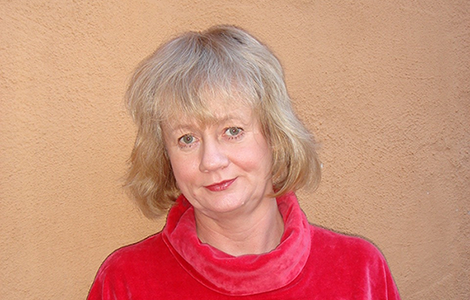
The review, published in Swedish and titled “Sexism på köpet – lagstiftning, praxis och förslag till åtgärder mot könsdiskriminerande reklam i Norden”, is presented by the Swedish Women’s Lobby and its Norwegian and Danish partner organisations in the so-called Ad Watch project, which started in 2013. In the project, the involved organisations have gathered information about present laws and how they are applied. According to Stéphanie Thögersen, programme coordinator at the Swedish Women’s Lobby, the issue of sexist advertising is of utmost importance. The growing advertising space in society implies a growing space also for sexist advertising, increasing the risk of ‘normalisation’ of the practice.
‘Hopefully, our report will lead to concrete measures, to improved legislation in the Nordic countries. The review includes recommendations for each country.’
What does the situation look like in the Nordic countries?
‘Denmark stands out. The advertising reported to authorities in Denmark is so sexist it wouldn’t see the light of day in Sweden. Unfortunately, Danish advertisers get away with a lot. Their consumer ombudsman is relatively lenient. For example, we had a case where a company ran the same ad campaign in Malmö (Sweden) and Copenhagen (Denmark). While the company was forced to remove the advertisements in Sweden, they were deemed acceptable in Denmark.’
What do the Nordic legislations against sexist advertising look like?
‘All Nordic countries have laws in place except Sweden. In Iceland, sexist advertising is regulated under the gender equality act. In the other countries it is considered a consumer legislation issue, which means that the respective consumer ombudsmen are in charge of monitoring compliance. However, we have found that these agencies are not giving much priority to the problem. The follow-up of violations works best in Iceland, where the responsibility lies with the Centre for Gender Equality – a government agency with a lot of competence in the area. The law imposes a fine on companies that do not voluntarily remove advertisements after being instructed to do so. So far, no company has been fined, but the law seems to have a deterring effect.’
If Sweden doesn’t have a law, what happens when somebody reports sexist advertising?
‘Sweden has the Swedish Advertising Ombudsman, which is a self-regulatory organisation founded by the industry. That’s who you contact if you spot sexist advertising, but then not much happens. The Ombudsman does not impose a penalty, like a fine, or ask companies to remove their advertisements. In practice, this means that businesses caught engaging in sexist advertising can safely continue their practices.’
What can the Nordic countries learn from each other in this area?
‘We conclude that there is a need for not only laws against sexist advertising but also effective monitoring and public engagement. In Sweden there is a strong public interest in reporting sexist advertising, yet the country needs legislation in order for the submitted reports to lead to tangible consequences. Norway, Finland and Denmark have laws, but the problem in these countries is that few people are familiar with the legislation and report violations. This means there’s a need for information campaigns. What’s most important is that politicians and policymakers start giving higher priority to the issue so that everybody will understand that sexist advertising is not compatible with a gender-equal society.
- Text: NIKK
- Categories: Gender equality and welfare policy
- Published: 2016-09-21
