
Nordic Network for Gender Equality Certification in Education
A gender equality certification for schools and preschools mainstreams gender equality work to education. It will encourage teachers and other school staff in their gender equality work, says researcher Mervi Heikkinen. Heikkinen is leading a new Nordic network of researchers and teachers.
Experts from Finland, Norway, Denmark and Sweden will work together to develop criteria for the proposed gender equality certification. A joint Nordic certification is initiated by Cecilie Nørgaard, a member of the group. The first step will be to identify successful examples from Nordic schools and preschools.
‘We need to get a better understanding of which methods work and have proved successful,’ says Mervi Heikkinen, researcher at the University of Oulu.
Can you tell us about a successful example?
‘Sure, there are many. In Finland, for example, the government has introduced an amendment to a gender equality act consisting an obligation for compulsory schools to draft a gender equality action plan. One important feature of the plan is that the children and adolescents are supposed to be involved in the entire process of change. Together with the teachers, they are expected to point out problems, set goals and ponder over how to achieve them. This teaches the children to talk about gender and gender equality. The kids have come up with many different issues that need attention. They have for example pointed to problems concerning girls’ and boys’ access to toys in preschool.’
Why do we need a gender equality certification for schools and preschools?
‘We see the certification network as an important policy tool. The Nordic countries are world leading in gender equality, but we aren’t done yet. The gender equality work in education is not systematic enough. These are the types of innovative methods we need to reach the next level.’
The politicians still haven’t decided whether there will actually be a Nordic gender certification. Where do we stand at the moment?
‘It looks like we’ll have to start at the national level. We hope that it will lead to a Nordic certification down the road. The politicians are afraid that a certification system will get too big and expensive. Maybe we can convince them with our project that it won’t.’
What can the Nordic countries gain from cooperating?
‘We’re facing similar challenges and can benefit greatly from each other’s knowledge. The Nordic countries have taken important steps forward together in recent decades and that’s how we can reach even further. We need to challenge and inspire each other.’
What happens next in the network?
‘We’ve been able to gather a good group of researchers and teachers but are still looking for experts from Iceland, Greenland and the Faroe Islands. We’re also planning a seminar on successful examples from Nordic schools and preschools. The work will also result in a report on key features of successful practices on gender equality promotion in education.’

This is an article about one of the projects granted funding through the Nordic Gender Equality Fund.
- Text: NIKK
- Categories: Gender equality and welfare policy
- Published: 2014-11-19

Better Mentors With a New Nordic Network
Many organisations and government agencies have implemented mentorship programmes, but a good forum where the method can be developed further has been lacking. “We want to change that”, says Goro Ree-Lindstad at the Norwegian Centre for Equality.
You are starting a Nordic network. Why?
‘Because we have a lot to learn from each other. The network will enable the members to share experiences and together refine the methods used. We want to inspire each other but also promote the use of mentoring and show others how useful the method is.’
Mentoring – how can it be used?
‘Mentoring programmes targeting women in leading positions are fairly common. New executives may benefit from talking to somebody with more experience and a larger network. Mentors can for the same reasons offer important support to people with problems entering the labour market. That’s how we have used the method at the Centre for Equality. We for example launched a very successful mentoring programme targeting women who are new in Norway.’
How were the mentors helpful in that programme?‘They offered encouragement and helped the women strengthen their self-esteem. Women who have immigrated to Norway often face a special set of problems in the labour market. If you apply for a large number of jobs and then have to endure a steady flow of negative responses, it’s going to slowly break you down. The mentors helped the women focus on their competence and became important contact points in their new society.’
What do you think the members can learn from each other?‘Bunches! The Danes in particular are big on mentoring, and they have a lot of knowledge that will benefit the other countries. There are numerous mentoring schemes targeting all sorts of groups across the Nordic region. There are for example mentors for people with disabilities and projects targeting adolescents. The programmes can be tailored to the needs at hand and can be designed in any shape or form. That’s one thing that makes the work so exciting, but also difficult. You really have to think about what needs there are and what you want to accomplish. You can’t just copy somebody else’s programme.’
What happens next in the project?
‘We will hold our first meeting in connection with this autumn’s meeting of the European mentoring network. At the top of the agenda is the planning of a Nordic conference next spring.’
This is an article about one of the projects granted funding through the Nordic Gender Equality Fund.
- Text: NIKK
- Categories: Gender equality and welfare policy
- Published: 2014-11-17
Male Perspectives on Gender Equality
Nordic initiatives aimed at increasing the level of male involvement in gender-equality work have made considerable progress in recent years. The ministers for gender equality are now putting together a task force to identify the most successful initiatives. They have also commissioned a “catalogue for the future”, consisting of robust proposals for achieving maximum Nordic synergy in this field.
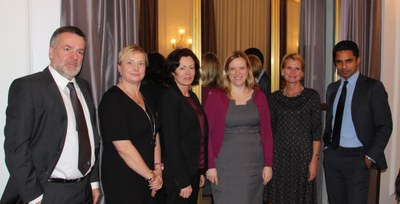
The ministers debated the theme of men, boys and equality at a meeting in Copenhagen on Monday.
“After years of positive conferences, meetings and research, we need tangible proposals that will lead to even better results in the Nordic Region. For example, we need to look at legislation – is it enough merely to achieve the targets set for male involvement in gender-equality work?” asks Eygló Harðardóttir (Iceland), chair of the Council of Ministers for Gender Equality 2014.
Long-term priority
The male perspective is a recurring thread in every aspect of the new Nordic programme for gender equality 2015–2018, which was adopted at the Council of the Nordic Session in Stockholm on 29 October.
“Interestingly, men aren’t just over-represented in society’s upper echelons, but also at the bottom – in the prison statistics, for example. This is something I think we should look at,” said Manu Sareen (Denmark), who takes over as chair of the ministerial council in 2015.
“Not only do we need to try and engage men and boys in the struggle for gender equality, we need to engage more women too. In Denmark, the debate is highly polarised. For example, more women need to participate in the discussion about the right of fathers to have access to their children after a divorce, something that is becoming more and more common. It’s a far more complex issue than it might first appear,” Sareen adds.
From women’s struggle to specific challenges faced by men
The ministers also noted that the focus had shifted in work on men and gender – from men participating in women’s struggles for equality to gender-related challenges faced by men in specific areas such as health and welfare, education, fatherhood and marginalisation.
“Sharing the responsibility for care within families more equally is good for women who want to work, and for men who want to play a greater role as fathers. Men who take jobs in sectors traditionally dominated by women help to break the pattern of segregation, something that is beneficial to both genders in terms of career and job opportunities. One positive side effect is a decrease in the pay gap between women and men,” Eygló Harðardóttir points out.
- Text: NIKK
- Categories: Gender equality and welfare policy
- Published: 2014-11-06

New Report: the Nordic Countries Still Leading the Way in Gender Equality
The Nordic countries have reduced the gender gaps by 84 %, according to the Global Gender Gap Report 2014, published by the World Economic Forum.
The Global Gender Gap Report has been presented by the World Economic Forum every year since 2006 and measures gender differences in four categories: economy, political representation, health and education. This year 142 countries are included in the review.
Only Nordic counties are found in the top five (last year’s ranking in parentheses):
Iceland (1)
Finland (2)
Norway (3)
Sweden (4)
Denmark (8)
Investments in gender-equal health and education is a key factor behind the Nordic success, says the report. These investments also help reduce the gender gaps in the other categories: Nordic women show strong participation in the labour market and politics, too. Worth noting is that the report does not consider in which political fields women are represented. We know from before that women show higher representation rates in traditionally ‘female’ areas such as the domains of health and care, whereas their participation in male-dominated areas such as national defence and transportation is much lower.
The Nordic countries generally offer ample opportunities for childcare and generous amounts of parental leave. These are two factors with a positive impact on women’s political and economic participation. Well-educated and healthy women also tend to transfer these traits to their children, which affects the development of society positively, not least in an economic perspective, according to the report.
The report points out that many other countries have also reduced the gender gaps in health and education, but their gender differences in the other two categories remain substantial. This means that once women enter the labour market, the gender differences increase again. The Nordic countries are identified as international role models in this regard and remain world leaders in the work for gender equality.
Overall, the Global Gender Gap Report 2014 concludes that at the current global pace, gender equality in the workplace won’t be achieved until the year 2095.
- Text: NIKK
- Categories: Gender equality and welfare policy
- Published: 2014-11-04

Men’s Issues in Gender Equality Actualised in Finnish Report
The working group on Men’s Issues in Equality Policy appointed by Paavo Arhinmäki, the Minister for Gender Equality, began its task in January 2013. The working group on Men’s Issues in Equality Policy appointed by Paavo Arhinmäki, the Minister for Gender Equality, began its task in January 2013 and has recently issued a report.
When the working group was set up, its tasks were to identify new gender equality issues relating to men and specify issues already known, expedite measures concerning men under the Government Action Plan for Gender Equality, develop interaction between ministry officials and men’s organisations, and organise a seminar on men and gender equality.
The working group’s goals included that of enabling men and women to feel that equality is something that is common to both genders and that gender equality policy is a policy that is also common to both genders and policy measures to promote gender equality, but also to resolve men’s problems and to make space for men’s diversity.
The working group consists of representatives of men’s organisations, youth work with boys and young men, Seta LGBT rights in Finland, the Council for Gender Equality and four ministries. The working group’s term of office ended on 15/10/2014.
In February 2014, the working group published an interim report containing background information and statistics on men’s issues in greater depth than in the final report and a description of the historical development of men’s issues in Finland. It was decided to keep the final report compact, containing just the working group’s proposals and their arguments for them. The final report was compiled based on discussions among the working group, and an attempt was made to include the views of everyone, although compromises were made and certain framings were put in place.
- Text: NIKK
- Categories: Gender equality and welfare policy
- Published: 2014-10-24
Sure Boys can Write!
Pojkar kan visst skriva! – sure boys can write! – is the title of Katharina Andersson’s doctoral thesis, where she studies what school children actually can do instead of looking for their weaknesses. By analysing only boys’ writing, their abilities could be assessed and interpreted without comparing them with girls.
Katharina Andersson’s doctoral thesis in pedagogy is based on 900 texts written by 231 boys within the framework of the mandatory national test in Swedish for third graders.
‘The boys turned out to be good at intertextuality, at tailoring their texts to the receiver and at adapting their language to the expectations they faced,’ she says.
The key concepts in her thesis are boys, writing skills and assessments. In her work, she used for example Norwegian professor Kjell Lars Berge’s research on assessment of writing skills. Berge problematises how texts should be assessed and points to the difficulties of designing an assessment that assesses the right things. He also concludes that Norwegian school children are much better at writing narrative texts than discursive texts.
Andersson also uses Finnish professor Ria Heilä-Ylikallio’s research on boys’ writing and their attitudes to reading and writing. Heilä-Ylikallio was also Andersson’s supervisor throughout her work to complete the thesis.
Andersson concludes that all Nordic countries present their national results based on sex and compare boys and girls. Girls always perform better than boys.
Borrowing doesn’t mean lack of imagination
Katharina Andersson works as a teacher trainer at the University of Gävle, Sweden, but presented her doctoral thesis at Åbo Akademi University in Vasa, Finland. She says that writing her thesis in another Nordic country gave her many new insights and thoughts about national identity and language.
Andersson has a degree in elementary education and has often reflected over how boys and girls are always put against each other. For a while she taught a class with only boys, and during this period it became particularly evident that individuals are so much more than just their sex.
‘It became clearer that the kids were in fact a group of individuals, full of differences. Dividing kids by gender alone is so stereotypical,’ she says.
Reading the boys’ texts, Andersson looked for signs that the author understood how to write. She saw that they were good at using the texts they had been given for the task, but also that they were good at implicitly inserting stories from folktales, children’s literature, TV, film, computer games and news. She mentions a boy who wrote his own version of Hansel and Gretel – without Gretel – with great diligence.
Many researchers see borrowing as a sign of lack of imagination, but just think of Pär Lagerkvist’s Barabbas. Lagerkvist wrote his own version of a Bible story and won the Nobel Prize in Literature. This practice should be thought of as intertextuality when kids do it, too.’
The national tests trick the children
The national tests in Swedish assess children’s skills too narrowly, says Andersson. She is afraid that the emphasis on the boys’ weaknesses can lead to boys giving up writing, and would like to see a stronger focus on reinforcing what the boys are good at.
‘Getting them to dare using their language is important for democracy. Everybody needs to be able to express thoughts and opinions, and boys need to know that they are needed, too. Otherwise society will suffer,’ she says and points to the risk that those who cannot express themselves verbally may instead choose to use their fists.
The themes of the 2009 national tests in Swedish – the focus of Andersson’s analyses – were ‘fear’ for the narrative texts and ‘animal communication’ for the factual texts. When the teachers assess the national tests, they look at the children’s ability to write complete sentences with proper capitalisation and punctuation. They also look at the spelling and whether the texts are structured well with a clear beginning and a clear ending. The teacher counts the number of points scored and then determines whether the child should be assigned a passing grade or not.
‘The children think they need to put a lot of effort into the content of the texts, while in fact they are assessed based on more technical aspects of writing. This way we end up missing many competencies and that’s unfair to the kids,’ she says.
Politicians should ask other questions
Andersson wants to see better test instructions and broader assessments.
‘The assessment criteria should be made clearer to the children, and we should consider more competencies. Positive feedback makes people grow, and it also makes them better able to accept negative feedback.’
The designer of the tests, the Swedish National Agency for Education, is already recommending teachers to mark passages that are written well so that the children can see what they are good at. However, this was uncommon in the texts analysed by Andersson, maybe because the good aspects of the texts were often not subject to direct assessment according to Agency guidelines.
She also wishes that the national tests would be used more as a basis for formative assessments.
‘Today the kids take the tests in the spring semester of third grade, which doesn’t leave much time to reflect on the outcome before the summer.’
Andersson hopes that teachers and teacher candidates will read her thesis and that it will help change their views on how to read and assess a text. She would also like her results to reach the politicians to help them understand that the test results do not convey the whole truth but are rather a reflection of the rather narrow assessment questions asked.
‘Sometimes we need to ask other questions.’
- Text: NIKK
- Categories: Gender equality and welfare policy
- Published: 2014-10-20

Dagfinn Høybråten: Together we can fight trafficking more effectively
“We must ask ourselves whether we can do more together to fight human trafficking”, said the Secretary General of the Nordic Council of Ministers, Dagfinn Høybråten, at a Nordic-Baltic meeting of the ministers of justice in Copenhagen on 29 August 2014.
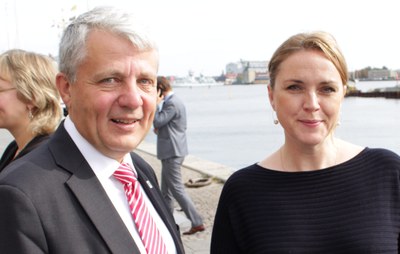
In an increasingly globalised world, more and more crime is committed across country borders. Combating trafficking demands both cross-sectoral and international co-operation, and the Secretary General believes, therefore, that there is much to be won by common initiatives in the Nordic and Baltic Regions.
“I can see that co-operation between international and regional organisations can be strengthened in the future. The same applies to co-operation across policy sectors, and between authorities and NGOs. It is also important to ask oneself whether legislation can be improved to ensure the rights of victims of trafficking”, said Dagfinn Høybråten in his speech at the meeting.
More experience exchange, skills and co-operation
Earlier this year the Nordic Council of Ministers launched an initiative for a smarter, faster and more effective fight against trafficking. The purpose of this initiative is to increase exchange of experience, skills and co-operation in specific cases.
- Text: NIKK
- Categories: Gender equality and welfare policy
- Published: 2014-10-06
The Nordic Countries Stand United Against Violence
Zero tolerance for gender-based violence is a theme identified by the Nordic Council of Ministers as particularly important in the Nordic gender equality work. As a result, conference participants from across the Nordic region met in late September in Iceland to discuss how men’s violence against women can be prevented.
Under the banner Zero Tolerance: Seminar on Actions to Prevent Gender-based Violence, eleven speakers talked about successful examples from the Nordic countries. The Istanbul Convention served as an important springboard for the conference: there was a strong focus on strategies to prevent and combat violence, to protect victims and to prosecute the perpetrators. (Read more about the Convention to the right on this page).
‘Patriarchal structures behind the violence’
José Mendes Bota, the Council of Europe’s Special Rapporteur on Violence against Women, was one of the first speakers at the conference. When talking about the underlying reasons for the violence, he showed no hesitation:
‘Men’s violence against women is ultimately a result of patriarchal structures. All men bear a responsibility for the violence women have to endure. Even if the majority of all men do not engage in violence, we all have a responsibility to work against it, to say no.’
One-third of all women victimised
Another issue that received attention was the large number of unreported cases. A new prevalence study by FRA – the European Union Agency for Fundamental Rights – was presented at the conference. The study, based on interviews with 42 000 women in 28 EU countries, shows that one-third of the women had been the victim of physical or sexual violence after turning 15 years old.
The women in the EU study were also asked about the consequences of the violence. Many of them, especially those who had experienced sexual violence, talked about feelings of guilt and shame and an unwillingness to report the crimes to the police. Only a small fraction of the victims end up reporting them or requesting support.
Talking about the violence helps
The healthcare system is the primary channel through which victims of violence are reached. Development of routines to detect violence and adequate knowledge among healthcare staff are therefore of central importance. Helena Ewalds from Finland’s National Institute for Health and Welfare presented the work in her country to routinely ask patients questions about violence:
‘The best way to prevent violence is to talk about it. Routinely asking questions about violence in the healthcare system can mean increased security for both patients and staff. It may initiate a process in the patient, which in turn can lead to the victim receiving the support he or she needs.’
Carin Götblad, Sweden’s national coordinator against violence in intimate relationships, had similar thoughts. Last spring, she submitted 50 propositions to the Swedish Government, including that healthcare and social service providers should routinely ask questions about violence.
‘Asking questions about violence is controversial, but the results show that we have a lot to gain from it. We need to ask in a non-accusing way. Let’s compare it to how we already are asking questions about smoking and drinking,’ he said.
Another strategy to improve the care of victims is to talk to them in their own homes. María Gunnarsdóttir presented ‘keeping the window open’ – a method that has proved successful in Iceland.
‘When the police get to a crime scene where there is suspicion of domestic violence, they have noticed that the victims are more open to receiving help. So therefore there are social workers present to guide the victims to healthcare providers and other support functions.’
Women’s shelters – for whom?
The issue of shelters for abused women caused intense debate. Many of the conference participants agreed that the state needs to accept greater responsibility, as also pointed out in the Istanbul Convention. Finland recently passed a law providing that the national government must offer and pay for shelters for victims of violence. Norwegian legislation places this responsibility on the municipalities. José Mendes Bota agreed that society should do more, but said that the discussion is misdirected.
‘We need temporary shelters for the perpetrators, not their victims. It’s important that the victims get to stay in their home environment.’
Some countries – for example parts of Iceland – have laws providing that the perpetrator must leave the home. However, this does not solve the problem for abused women who want to exit a relationship without contacting the police or other authorities.
Successful cooperation
Dag Simen Grøtterud coordinates the work of the Oslo police against violence in intimate relationships. He said that all police officers in Oslo have received training both on risk assessments of perpetrators and on how to best deal with victims. The Norwegian police’s use of SARA and MARAC, risk assessment manuals that are also used in the other Nordic countries, were presented as ‘best practice’.
The conference showed clearly that all Nordic countries agree that prevention, early detection, structured risk analyses and broad cooperation are all key to combating men’s violence against women. The intergovernmental Nordic cooperation appeared successful.
Iceland’s gender equality minister Eygló Harðardóttir closed the conference.
‘Focusing on prevention work with men who commit violence against women and children is crucial. It is also important to gather statistics, work together and support research on abused women and children.’
- Text: NIKK
- Categories: Gender equality and welfare policy
- Published: 2014-10-01
The Same Challenges Remain After 40 Years
The Nordic countries may be world leading in gender equality, but the challenges that caused the Nordic Council of Ministers to start cooperating around gender equality policy in 1974 remain practically the same. This was concluded at a conference celebrating 40 years of Nordic gender equality cooperation.
The Icelandic Presidency of the Nordic Council of Ministers arranged the conference in Reykjavík on 26 August.
‘We can be proud of being world leaders in gender equality,’ said Iceland’s Minister for Gender Equality Eygló Harðardóttir when she opened the conference.
In most Nordic countries, the representation of women and men has evened out considerably since 1974. Women’s entry into higher education and the expanded provision of childcare and parental insurance have led to more Nordic women entering the workforce than elsewhere in Europe. However, the labour market remains strongly gender segregated and corporate management continues to be dominated by men.
The list of speakers at the conference included Margot Wallström, former EU commissioner and UN representative for the monitoring of women in war zones. In the 1990s, Wallström served as minister in several social democratic governments in Sweden.
Major changes in views of manhood
‘I recognise a lot of today’s challenges from my years as a minister. Back then, we focused on political representation, the labour market, education and men’s participation in the gender equality work. The role of men is probably the area that has seen the most change over the 40 years. There has been a “men’s liberation” perspective that has changed the view of what it’s like to be a man.’
Iceland’s former president, Vigdís Finnbogadóttir, noted that there were more men at the conference than at similar conferences 20 years ago.
‘We used to ask, “Where are the men?” So, we would like to thank all of you men who are here today.’
But she also pointed out that women’s access to power and influence is undermined because they lack access to the media, are expected to spend a lot of time making themselves look good and carry the primary responsibility for family and household work.
‘Women and men don’t have the same opportunities to exercise their citizens’ rights.’
Wallström noted that women continue to stay at home with young children more than their men despite focused efforts in the Nordic countries to even out the balance.
‘The parental insurance in the Nordic countries is very generous, but men don’t take advantage of it nearly as much as we would like them to. There are economic reasons for this, but it’s also a matter of attitudes. So how can we achieve change? Through legislation, change in attitudes, tax and insurance reforms and positive discrimination. Sometimes the implementation of quotas is necessary to achieve change that otherwise would take decades to materialise, if ever.’
No miracle cure
Iceland has pushed the issue of parental leave quotas further than any other Nordic country: one-third is reserved for the father, one-third for the mother, and the parents are free to decide what to do with the remaining third. Sociologist Ingólfur V. Gíslason has followed the effects of the Icelandic work and concludes that men have developed closer relationships with their children and take more responsibility for their families and households than in the past. However, women continue to struggle in the labour market.

‘We still can’t see that the quotas have led to any improvements in the salary gap. Women are still taking out a vast majority of the parental leave days, so it hasn’t been a miracle cure by any means.’
Kerstin Alnebratt, director of the Swedish Secretariat for Gender Research, discussed the focus on men in the gender equality work in a new perspective.
‘We say that we want the men on board and get frustrated when they don’t understand that. Of course both women and men should be involved. But there is a risk that the focus on men diverts attention from the fact that the great development we have seen would not have been possible without the hard and persistent work of our strong women’s organisations.’
Need for knowledge
All Nordic countries have institutions that document and distribute research-based knowledge related to gender equality. This, said Auður Styrkársdóttir, director of the Icelandic women’s history archives, is a great asset in the Nordic gender equality cooperation.
‘I believe we would not be where we are today without this research. And for the Nordic cooperation to keep making an impact, we need continued research.’
Nina Groes, director of KVINFO in Denmark, agreed.
‘The issue of gender equality tends to stir up emotions, since it often gets to people at a personal level. It is therefore important that we have knowledge that puts things in a context. Research per se isn’t enough – we need research that is communicated and made accessible.’
‘We need research-based knowledge, but we also need politicians who are willing to implement it. We’re trying to achieve this by inviting them to various events,’ said Minna Kelhä, development manager at Minna – Centre for Gender Equality Information in Finland.
Does the cooperation exist?
The need for engagement at the political level and the necessity of breaking the Nordic consensus culture were two themes addressed by several conference participants. Kerstin Alnebratt pointed out that one important role of research is to offer a critical perspective, even if it may generate tension.
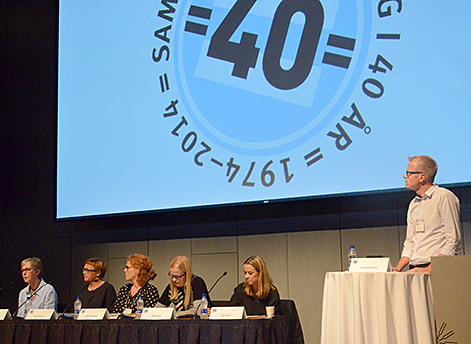
‘We keep discussing the Nordic gender equality cooperation as if it really exists. But does it really? We only have one gender equality minister here today. It’s remarkable that we still after 40 years know so little about each other. We have changed our focus to the European cooperation. And the Nordic countries have chosen some different paths. We just assume that the Nordic cooperation is something we agree on, but we don’t talk about it.’
Hege Skjeie, professor in political science at the University of Oslo, said that clear differences may lead us forward.
‘The stronger the consensus about gender equality policy, the more we lose momentum. When the parties have to compete about defining the gender equality policy, it leads to progress and has a mobilising effect. We can see this happening in Sweden around the Feminist Initiative party.’
- Text: NIKK
- Categories: Gender equality and welfare policy
- Published: 2014-09-30

From Part Time to Full Time – Conference for Gender Equality in the Nordic Region
NIKK, Nordic information on Gender, will host a Nordic participative conference in Reykjavik 12 November 2014. The conference aims for change: how do we turn part time into full time in the Nordic labour markets?
The Nordic countries share many features. One is that many part-time workers in the different countries would rather work full time. Another is that a majority of the countries’ part-time workers are women. The Nordic gender equality ministers see this as a gender equality problem and have commissioned NIKK to investigate the situation further.
A research report on why more women than men work part time will be presented this autumn. NIKK is asking how change can best be achieved and are therefore inviting experts, researchers, politicians, trade unions, employer and practitioners in the fields of gender equality and the labour market – to a participative conference.
The idea is to share knowledge and participate in creative dialogue and experience exchange, help create a shared platform with recommendations to policy-makers and employers.

“Our hopes are that the conference can convey input to the Nordic Council of Ministers and the labour market parties, which will contribute to change and a gender equal labour market. We also hope that the participants’ exchange of experience will inspire them to new ways to work in their respective organisations”, says Bosse Parbring, head of NIKK:s project Part Time Work in the Nordic Region.
The conference is arranged in cooperation with the Icelandic Presidency of the Nordic Council of Ministers, which will also host a conference on equal pay on 13 November 2014.
- Text: NIKK
- Categories: Gender equality and welfare policy
- Published: 2014-09-29
