
Conference on Best Practice in Gender Mainstreaming
On October 24th, the Ministry of Children, Gender Equality, Integration and Social Affairs will hold a conference on gender mainstreaming of the core services at the municipal level in the Nordic countries.
The occasion is the presentation of the results of a cross-Nordic study on good practice and the effects of municipalities’ work with gender mainstreaming. At the conference the study will be presented along with recommendations on how the municipalities in the Nordic countries can work with gender mainstreaming. Five good practice-cases from the study will be presented by practitioners and put into a broader perspective on gender equality and public service by professors or persons of relevant knowledge. The public service areas in focus at the conference are urban planning, employment, healthcare, children’s daycare and care for the elderly.
The conference targets leaders and employees in the public sectors in the Nordic region, who work with, or are interested in, gender mainstreaming. The conference also targets leaders and employers who want tools for documenting the effects of gender mainstreaming.
The conference will be held in the Scandinavian anguages. There will be interpretation from the Scandinavian languages to English in all program events in plenum and in session 1 (urban planning) and 3 (healthcare).
- Text: NIKK
- Categories: Gender equality and welfare policy
- Published: 2014-09-25

Nordic Gender Equality Projects Granted Funding
The Nordic Council of Ministers has made its decision about the Nordic Funding Scheme. Funding has been given to 13 activities.
These activities will share a total of 2.7 million Danish Krone from the Nordic Council of Minister’s funding scheme of 2014. These activities are chosen because they aim to further Nordic gender equality.
Via the funding scheme, the Nordic Council of Ministers want to promote Nordic cooperation for gender equality. NIKK has been administering the funding scheme since 2013. This year’s activities will start up during the autumn of 2014 and will be completed some time during 2015.
The activities involve all of the Nordic countries, the Nordic self-governing regions and the Baltic states. The projects are:
- Mapping Promising Nordic Practices in Gender Equality Promotion at Basic Education and Kindergartens
- Gendered Violence- Nordic-Baltic Dialogue
- Network for Comparative Studies of the Nordic Model
- Building and Developing the Gender Equal Nordic Region
- NKMV conference 2014
- EAMI FEMI – The Society of Nordic Indigenous Women
- Establishing a Nordic Mentoring Network
- Nordic Women’s Economic Citizenship
- Nordic Conference on Sexism and Sexual Harassment in the Hotel, Restaurant and Tourism Trades
- MenEngage Network Nordic
- Law: The Court and Practising Gender Equality
- NORA conference: Voices in Nordic Gender Research
- Exit prostitution work in the Nordic-Baltic region
More information on the various activities will come; NIKK will follow and report on the projects starting the autumn of 2014.
- Text: NIKK
- Categories: Gender equality and welfare policy
- Published: 2014-09-23

Full-time Work Too Overwhelming?
Family life is not the only reason women choose to work part time. Stress in the workplace also matters.
They choose to work part time after having kids, as they prioritise family life over the career ladder. And then they get used to working part time and rarely go back to working full time after the kids have grown up.
This is a classic explanation to why more women than men work part time – not least in the public sector. But is this the whole truth?
No, according to some recent studies.
For example, figures from the YS Employment Outlook Survey from 2012, conducted by the Norwegian Work Research Institute, show that many Norwegian women work part time primarily for health reasons.
”So automatically linking women’s part-time work to family considerations can be misleading, since there are usually other factors involved,” says Norwegian working life researcher Cathrine Egeland.
Egeland is involved in NIKK’s project Part-Time Work in the Nordic Region and is right now systematising the most important reasons why women and men in the Nordic countries choose to work part time.
A large Danish research project on part-time work in the Danish regions reached the same conclusion in 2012. The project was started by the Danish regions in cooperation with a number of Danish trade unions and showed that personal conditions and high workloads are main reasons why for example hospital and eldercare workers choose to work part time.
The work environment is stressful, the report found – in particular for workers who are in direct contact with citizens, such as nurses, teachers and social workers. Most of those who participated in the study were pessimistic about the thought of working full time – even if it would benefit them financially.
Thus, the findings indicate that the work environment should be kept in mind when discussing women’s preference for part-time work. But exactly which problems do they encounter at work?
Harmful eldercare
When the Danish Working Environment Authority in 2009 decided to look closer at the work environment in the Danish eldercare sector, it made major headlines in Danish media.
More than one-third of the nursing homes and eldercare centres were reprimanded for significant weaknesses in the psychological work environment. The time pressure was too great, the workload too heavy and the demands too overwhelming, the study found.
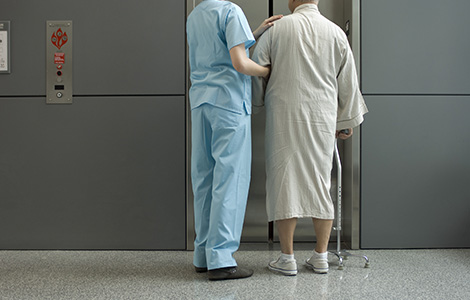
A home care assistant working the evening shift could for example say that she had up to 52 home visits scheduled from 3 to 11 pm. During this time, she was expected to help some clients use the toilet, treat painful bedsores and keep dying individuals company. In addition to the driving, of course.
Eldercare is one of the sectors in Denmark and the rest of the Nordic region with a large proportion of female workers. And many of them work part time. It is also a sector with a relatively high rate of sick leave – and this may not be surprising.
Because in a job where you do not feel you are in control, there is a risk you will get physically ill. This was found in a large Finnish research project.
In the project, researchers studied the relationships between health, sick leave and the feeling of control over one’s work time among about 25 000 public employees in 10 Finnish communities.
‘Lack of control over one’s work time may lead to frustration with one’s work situation. Poor predictability can lead to stress and anxiety and may increase the risk for health problems such as cardiovascular disease, inflammatory reactions and mental problems. Both problems may lead to increased sick leave,’ says Ari Väänenen, geriatrics researcher at the Finnish Institute of Occupational Health, which coordinated the study.
‘Voluntary’ part-time work?
The high-pressure work environment in the health and human care field is nothing new. But why do the predominantly female workers in these fields choose to work part time while workers in other equally demanding sectors do not?
‘Health and human care jobs in the municipal sector are often used as an example of this. But the work conditions in some male-dominated sectors can also be stressful and demanding – without a high rate of part-time workers,’ says Egeland.
One explanation, according to many researchers and practitioners, has to do with gender roles and how men and women share responsibilities in the private sphere.
For example, the Danish study on part-time work in different regions clearly indicated that the demanding work conditions that the female part-time workers experienced were closely linked to the sharing of responsibilities in the household.
‘When women work part time, they often do it because they already work full time at home. So it’s not because they’re lazy. On the contrary. One problem with this is that it helps maintain women’s lower salaries, and their pension accounts of course also suffer,’ said Grete Christensen, head of the Danish health worker confederation Sundhedskartellet, when the report was presented in 2012.
So, if you work full time in the private sphere, you will probably choose a part-time paid job.
A recurring theme in the debate on part-time work among women is how ‘voluntary’ their work really is.
It is not just a matter of how the work is distributed between the genders, it is also about how society is organised, says Anna-Karin Wall from at the Swedish Municipal Workers’ Union.
‘About 30 per cent of the labour force work evenings and weekends, but less than half of all Swedish municipalities offer childcare during these hours,’ she says.
An interview survey from the Swedish Trade Union Confederation shows that one parent in four cannot work full time due to the hours preschools are open – and that this was a bigger problem for mothers than fathers.
‘I think it’s difficult to distinguish between voluntary and involuntary part-time work. Is it voluntary when a woman with irregular work hours has to work part time due to lack of childcare? Is it voluntary when she feels forced to work part time because her parents’ eldercare is not working well?’ she asks.
- Text: NIKK
- Categories: Gender equality and welfare policy
- Published: 2014-08-20

‘Hate Speech Scares Women Away from the Public Debate’
The sexism in everyday life and internet-based harassment is receiving attention at the Nordic level. If women are scared away from participating in the public debate, society has a democracy problem, says Kira Appel, chair of the Nordic Committee of Senior Officials for Gender Equality.

Women are disproportionally affected by sexist comments and hate speech in the public debate, says Kira Appel.
‘This seems to be a growing problem both nationally and globally, including in the Nordic countries. Men are criticised for what they say, while women, regardless of what the debate is about, are often harassed because they are women. There is a huge difference.’
At a meeting in May, all Nordic gender equality ministers expressed deep concern about the development. Denmark, the country currently holding the presidency of the Nordic Council of Ministers, was asked to arrange a seminar on everyday sexism and internet harassment later this year.
The seminar is part of the Nordic cooperation programme on gender and gender equality in the public space. The objective is to point out best practice and give practical recommendations to relevant Nordic actors.
Appel hopes that the causes and effects of sexism in everyday life will be unveiled.
‘Studies on stalking show that harassed women often become fearful and withdrawn and may even change their behaviour. If women are scared away from participating in public arenas and in the public debate, society has an important democracy problem.’
Unique Nordic report

In 2013, the Nordic Council of Ministers published the first ever report to address antifeminism and right-wing extremism, including online, in a Nordic context. The list of concrete measures is based on the input from 25 experts (see infobox).
Helga Eggebø, senior adviser at the KUN centre for gender equality in Norway, is currently analysing the results of a new study on experiences of interned-based harassment. She points out that the victims are not limited to individuals active in the public debate.
‘Electronic violence has become part of the violence in close relationships. Today people tend to stay connected and therefore accessible 24/7, making it increasingly difficult to resist attacks.’
Women are often harassed because they are women, but also men are attacked on the basis of personal factors, such as sexuality.
‘Somebody might say you’re crazy or that you don’t have a right to express your views due to your age or position. Or somebody might say they know where you live or where they can find you.’
Whose freedom of speech?
The issue of freedom of speech poses a challenge to the work against hate and sexism in the public debate.
Appel sees the increased number of channels where more voices can be heard as a positive development.
‘More opportunities to express views and opinions, also anonymously, is good for democracy. The flip side of the coin is that we’re also seeing more hate speech, threats and harassment.’
Eggebø refers to US research showing that the freedom of speech has become a rhetorical weapon: Feminists opposing something somebody says or does are often accused of trying to limit other people’s freedom of speech.
‘You think there’s consensus about who’s attacking and who’s attacked, but there’s a conflict. Both sides can feel attacked. There’s no agreement on how the situation should be defined.’
Ombudsperson calling for action plan
In a report presented in April, Sunniva Ørstavik, gender equality and discrimination ombudsperson in Norway, called for a comprehensive national action plan against expressions of hate. She wants to combat both legal and illegal hate speech, for example through research and preventive work in schools, measures she says will not limit people’s freedom of speech.
‘Internet trolls are generally perceived as pathetic loners,’ says Eggebø.
‘This image can serve as a coping mechanism, but is not always true. We have interviewed victims who have been able to identify the perpetrators, and according to them they can be totally normal people.’
- Text: NIKK
- Categories: Gender equality and welfare policy
- Published: 2014-08-11
Nordic Forum Welcomes Debate
The criticism has been widespread after the conference that was supposed to bring the Nordic women’s movement together. The work to create a multifaceted movement is far from over,’ says queer researcher Ulrika Dahl.
‘Criticising one’s context, I want to point out, is not the same as betraying it. It’s a way to express engagement,’ said Ulrika Dahl in her speech during the closing ceremony of the Nordic Forum.
In her speech she questioned the conference on several points, and today, with some distance, she has a hard time seeing the point in turning feminism into a trade show.
‘Walking around and looking at brochures and roll-up signs, eating sweets and filling a fabric bag with stuff doesn’t lead to a revolution, it leads to administration,’ she says.
A large number of people and organisations have expressed anger and disappointment with the Nordic Forum. And almost two weeks after the conference, a lot remains to be said.
‘The work to create a feminist movement that is multifaceted and not white-dominated is far from over,’ says Dahl.
Thousands of people gathered
Caroline Matsson, head of the Nordic Forum conference, welcomes the debate. Although the event could have been an even broader platform, it did in fact gather thousands of visitors and hundreds of organisations with different perspectives and activities, she says.
‘As conference hosts, we are of course listening to the criticism. We do think, though, that the project as such has indeed been broad based,’ she says.
Zakia Khan, project leader in the feminist anti-racist think tank Interfem and board member of the Swedish political party Feminist Initiative, hopes that the criticism against the Nordic Forum will lead to critical self-reflection in the large women’s organisations.
‘They haven’t fully integrated the intersectional perspective. They understand it in theory but haven’t implemented it in practice,’ she says.
It felt surreal
When the Norwegian gender equality minister, Solveig Horne from the Norwegian Progress Party, entered the stage during the closing ceremony of the Nordic Forum, many people thought it was the last straw, Khan believes.
‘It was surreal. I thought of the international women’s movement and that many organisations don’t want to arrange any conferences because the anti-feminist forces in politics are so strong. International activists are afraid that conferences can lead to setbacks, and it felt like that’s exactly what happened in Malmö,’ she says.
Critique proven right
Ulrika Westerlund, head of the Swedish Federation for Lesbian, Gay, Bisexual and Transgender Rights (RFSL), also reacted to Horne’s participation. However, both Westerlund and Khan had already become critical of the conference long before her entrance. RFSL contacted the steering group of the Nordic Forum already last summer to discuss what they perceived to be a lack of inclusion and programme heterogeneity.
‘Once at the conference, I felt that everything that we had warned about was confirmed,’ says Westerlund.
Zakia Khan describes the Forum as characterised by ‘compact whiteness’.
‘It didn’t have to be that way. It all depends on who makes the programme, who receives information about it and who feels invited,’ she says.
Wanted to engage the entire society
Westerlund hopes that the criticism against the Nordic Forum will bring attention to the great breadth of the feminist movement.
‘There is a lack of connection between the advanced discussions in academia and among activists and the policy work at the government level. I hope this discussion can reduce that gap,’ she says.
She feels that the Forum hosts consciously chose not to include certain perspectives in areas where there are well-known conflict lines within the feminist movement.
‘There are issues where feminists often have very different opinions. Sex trade legislation and surrogate motherhood are two examples. The Forum would have been a good opportunity to let more views be heard. Instead it ended up a bit one-sided,’ she says.
The conference general, Caroline Matsson, emphasises that the Nordic Forum was based on the Beijing Platform and that the thematic focus has been grounded in the objectives identified at the UN women’s conference in 1995. She adds that the purpose of the conference was to engage the entire Nordic region and the entire society, and not primarily the women’s movement in Sweden.
‘As a conference host we definitely have a responsibility to ensure that a variety of perspectives are presented. We feel we did this but could of course have done more,’ she says.
The format not an obstacle
Gro Lindstad represented the Norwegian organisation Fokus in the conference steering group. She too would have liked to see more issues and perspectives presented at the conference, but stresses that this was not the responsibility of the hosts alone.
‘Everybody was invited to give ideas for the conference and present different perspectives. It’s true that it cost money to participate, but several organisations could have teamed up and shared the cost,’ she says.
She thinks that the attendance of 22 000 over the event weekend gives a clear signal.
‘It shows that the format of the conference was not an obstacle. We’ll never be able to host a Nordic Forum where everybody is happy,’ she says.
Caroline Matsson believes that the discussion that has followed the conference can lead to many good things.
‘We need to keep talking about inclusion and about how we are organising ourselves in civil society,’ she says.
- Text: NIKK
- Categories: Gender equality and welfare policy
- Published: 2014-07-11
”It is well established that we treat children differently”
Girls and boys are still treated differently, and change will not be possible without a political willingness. Researcher Mia Heikkilä’s message was clear during a Nordic Forum seminar on gender equality work in Nordic schools and preschools.
‘This form was sent home to families in Malmö today,’ said Kristina Hultberg, who works with gender in schools, and showed the audience a family information form with one field for mum and one field for dad.
The City of Malmö has launched a project for gender equality in school and preschool, and representatives from the project talked about the progress made during a seminar at the Nordic Forum.
The way official forms are designed can give a good indication of prevailing norms, said Hultberg.
‘It’s very concrete and raises questions about how we talk about families,’ she said during the seminar, where participants from Nordic countries discussed gender equality work in education.
Researcher Mia Heikkilä talked about the results presented in a report on sustainable gender equality work in Nordic schools and preschools ¬– Hållbart jämställdhetsarbete i förskolan och skolan i Norden. The report shows that effective steering documents are critical to successful gender equality work. It is important that the school legislation and national curricula are supportive of the work, said Heikkilä. She added that revised steering documents for the school sector are underway in Iceland, and that Finland and Denmark should follow suit.
Cecilie Nørgaard, consultant on gender perspectives in education and culture, feels that Denmark in particular is falling behind the other Nordic countries.
‘We have a lot to learn, especially in the work against gender stereotypes. In Denmark it is still a legitimate standpoint that women are one way and men another,’ she said.
She believes it is important to lift the status of gender equality work and gender research.
‘Right now it’s not considered a field of knowledge but rather a field of opinions.’
Norm-critical approach needs to evolve
Heikkilä’s study shows that the gender equality work differs across the Nordic countries. Her report points to several positive examples but also weaknesses.
‘The study shows that intersectional approaches remain uncommon, and that’s a problem,’ she said.
Lisa Andersson Tegnér also pointed to the need for more norm criticism in schools and preschools. Instead of encouraging tolerance, the teachers should help children question what is considered normal, she said.
‘The approach of teaching tolerance is sometimes like hanging one of those reflective vests on certain children, for example on Oscar because he joined a dance class,’ she explained during the seminar.
The first step in a norm-critical approach, she said, is to acknowledge how you, as a teacher, take part in creating norms.
‘We have to be self-critical and talk about what we see in ourselves, even if it can be a hard thing to do. It is well established that we treat children differently, and now it’s time to step up and show some responsibility.’
- Text: NIKK
- Categories: Gender equality and welfare policy
- Published: 2014-07-11
‘Nordic co-operation key to gender equality’
The Nordic co-operation is a strong factor behind the Nordic progress in gender equality, says Eygló Harðardóttir, Nordic co-operation minister and Icelandic minister of gender equality. Harðardóttir is participating in Jämställ.nu’s ‘gender equality party’ during the Almedalen Week and will host Iceland’s jubilee conference Sammen om ligestilling i 40 year in late August.
‘No other part of the world can show the same progress in gender equality as the Nordic region. We place in the top 10 in the World Economic Forum’s gender equality rankings. And Iceland has in fact topped the list ever since they started making it. We have a lot to be proud of and it’s important that we also participate actively outside the Nordic boundaries. We do this through our UN representatives and our contributions to various UN organisations, such as UN Women.’
The Nordic Council of Ministers decided already in 1974 that each Nordic government should appoint a person to interact with the other Nordic governments on gender equality issues. This was the beginning of extensive Nordic gender equality co-operation over the years, which Harðardóttir is convinced has contributed to improvements across the entire region.
‘We have worked together for 40 years. We share knowledge, make plans together, exchange experiences and learn from each other’s good examples. The Nordic success in the area also means we’re good at social welfare and democracy development. Without the participation of women in society, we would never be where we are today,’ she says.
One of the things she is most proud of when it comes to the Icelandic gender equality work is the country’s parental leave policy. Icelandic parents are entitled to 9 months of paid parental leave – 3 months for each parent and 3 months that the parents can split any way they want.
‘I’m not sure that long periods of parental leave are in the children’s best interest. We want to extend it to 12 months in Iceland, and I believe that will be enough. Instead I think we should focus on providing sufficient childcare services after the parents go back to work,’ she says.
However, Harðardóttir feels that there is still room for improvement in Nordic gender equality. She lists equal pay for equal work, gender-segregation in the labour market, possibilities to combine employment and family life, and gender-based violence as some areas that need particular attention.
‘In 2015, Iceland will celebrate the 100-year anniversary of women’s right to vote. Some of the things we talk about today were already on the agenda back in those days. Equal pay is one example. We can still improve in many areas. No country in the world has achieved gender equality, including the Nordic countries. And we can still learn a lot from other countries, such as the US when it comes to women in management positions.’
She also believes that men need to get more engaged in the gender equality work.
‘They have to see that it concerns them too and that it’s about improving their quality of life – for example when it comes to health and their lower levels of education. At the same time I think the Nordic countries should stress how a more equal distribution of parental leave and caring responsibilities can lead to gender equality and better competition in the labour market.’
Could it be that the international view of the Nordic region as already gender equal is in fact hindering further improvements?
‘We’re going to address future challenges, including this question, at the jubilee conference. We have come a long way – but is it long enough? For me personally it isn’t long enough until we have achieved full gender equality.’
Maybe it’s a never-ending task, says Harðardóttir.
‘There’s always a risk for setbacks. It happens all the time in the struggle for human rights. Women’s right to decide over their own bodies is currently being challenged in several parts of the world, as people’s reproductive rights have come under increasing pressure. This is of great concern.’
Now she is looking forward to finding out where the Nordic gender equality co-operation is headed during the Icelandic jubilee conference Sammen om ligestilling i 40 år, which will be held 26 August in Reykjavik. In the meantime, she will participate in jämställ.nu’s gender equality party in Almedalen on 2 July under the heading This is Gender Equality, the True Story.
- Text: NIKK
- Categories: Gender equality and welfare policy
- Published: 2014-07-04

Maria Grönroos Elected to Board of Atgender
Maria Grönroos, deputy manager of the Swedish Secretariat for Gender Research and director of NIKK, was elected into the board of Atgender at a conference in Barcelona last week. Grönroos hopes that the organisation will promote cooperation across national boundaries and bring feminist forces in Europe together.

How does it feel?
‘It feels great! I’ve been engaged in Nordic and European cooperation around gender research for a long time, and I see Atgender as the leading European organisation for anybody involved in gender research, knowledge-based activism, policy making and gender equality work.’
How would you describe the role of Atgender?
‘The main purpose of Atgender is to gather feminist actors and voices in Europe around issues related to research and education, but also policy making and gender equality work. There are a large number of actors out there, but they are usually pretty small in their respective national contexts. It is therefore important that we gather our forces and share our knowledge and experiences with each other. At last week’s conference in Barcelona, both researchers and bureaucrats pointed to important weaknesses in Europe. They mentioned xenophobic forces that are also anti-feminist, as well as EU policy that is turning back the clock in a feminist perspective. Examples include the abortion issue, discussions about positive action and making individuals solely responsible for their salaries, care burden and work situation in the name of freedom of choice.’
What are your responsibilities as a board member?
‘A number of tasks have already been assigned to the members. I will be in charge of economic issues, together with two tax experts, and I will also work with member communication and the journal subscriptions that are available to members.’
What do you think Atgender should focus more on?
‘Atgender should focus more on recruitment of members – also among bureaucrats and activists. That way we could achieve the critical mass needed to attract more funding to gender researcher and to reach out with education beyond academia. I also think it’s important that we together build an infrastructure of contacts, networks and communication that will enable more cooperation between countries.
- Text: NIKK
- Categories: Gender equality and welfare policy
- Published: 2014-07-04
Gender-segregation in Labour Market Leads to Part-time Culture
The gender-segregated labour market is a main reason why women are more likely to work part time in the Nordic countries than elsewhere in Europe. This point was emphasised at a seminar arranged by NIKK during the Nordic Forum conference in Malmö.
In a European perspective, Nordic women have a comparatively high employment rate. However, the share of women who work part time is also higher than in other European countries, and Norway tops the list.
‘The economic situation in Norway is of course one reason for this. Norwegian women don’t need to work full time since the male-dominated sectors, such as the oil industry, tend to pay very high salaries,’ said Cathrine Egeland, who together with Ida Drange will write a report on part-time work for NIKK.
But this is not the only reason for why part-time work is more common among women than men. Another reason has to do with the gender distribution of household work.
Their study shows that the Nordic women’s high employment rate is not the primary reason for the high share of part-time workers in this group.
Gender-segregated labour market the root of the problem
‘The reason is first and foremost the gender-segregated labour market – that women work in certain sectors and men in others. And a part-time culture has been formed in the female-dominated sectors. The employers are demanding flexibility in a way you don’t see in the male-dominated sectors.’
The rate of part-time work among women is particularly high in the Faroe Islands – about 51 per cent, according to Faroese gender equality minister Johan Dahl. Dahl sees this as a major gender equality problem.
‘It reflects the power structures in society and keeps us from utilising all the competence that the country has to offer. It also leads to women ending up in relationships where they become dependent on their men for the rest of their lives.’
In addition, 20 per cent of the male labour force in the Faroe Islands work abroad. It is difficult for Faroese employers to compete against for example the high salaries paid in the Norwegian oil industry.

Finland saw a similar development in the 1970s when many Finns moved to Sweden to work, drawn by better work conditions. However, Tapio Bergholm, senior researcher at the Central Organisation of Finnish Trade Unions, says that this is coincidentally one of two historic reasons for why Finnish women today in fact have a lower rate of part-time work than their Nordic sisters – only 15 per cent. The second reason is World War II.
‘These two historic events led to a shortage of labour in Finland, which increased the need for women to work full time. Because of this, the part-time culture you see in the other Nordic countries was never established in Finland.’
Women should afford to get divorced
In contrast, Sweden has a strong part-time culture in the female-dominated sectors. Over half of all female members of the Swedish Trade Union Confederation, LO – an umbrella organisation covering several female-dominated sectors – work part time.
‘One of LO’s most important priorities is that people should be able to afford to get divorced. Many female LO members can’t. Add to this that many female-dominated sectors are characterised by weak employment security and poor work conditions. People should have the right to full-time work, but it is also important that the jobs are designed in a way that makes it humanly possible to work full time. This is an incredibly important gender equality issue,’ said Joa Bergold, investigator at LO.
The irregular work hours often found in female-dominated sectors also deserve attention.
‘Women in typical LO jobs often work evenings and weekends. We need childcare with more flexibility. Almost one-third of all LO women have problems working full time because of the hours Swedish pre-schools are open.’
Another discussion at the seminar concerned whether part-time work really is the primary problem. Maybe we should instead focus on the male norm of full-time work, and possibly consider a general reduction in working time. However, this type of solution would first have to be carefully analysed in a gender equality perspective,’ said Bergholm from the Central Organisation of Finnish Trade Unions:
‘Finland has bad experiences of reducing people’s work hours. When we tried it in the 1980s, women and men reacted differently. Women made all work days a little shorter so that they could do more household work, whereas men instead took a whole day off every week to spend more time on hobbies and other leisure activities.
- Text: NIKK
- Categories: Gender equality and welfare policy
- Published: 2014-07-04
Ministers under Attack at Nordic Forum
The Nordic gender equality ministers received both boos and applause during the panel discussion that preceded the heavily criticised closing ceremony at the Nordic Forum in Malmö, Sweden.
The Nordic countries are continuously competing for the top spots on the list of the world’s most gender-equal countries, yet they keep struggling with problems that were identified already in the 1970s. This was pointed out at Sunday’s panel discussion, which was held before the closing ceremony and attracted a large crowd. Domestic violence, gender segregation in the labour market and the male-female income differences were some of the topics on the agenda.
‘Men should be as likely as women to work in day care, and there should be as many women as men in the fishing industry,’ said Iceland’s gender equality minister Eyglo Harðardóttir.
She admitted that Iceland – which has the most gender-segregated labour market in the Nordic region – still has a long way to go. Harðardóttir described Denmark as a role model in the area of labour market policy but also took the opportunity to send a less flattering message to her Danish counterpart Manu Sareen.
‘We can learn from your work against gender segregation in the labour market, and we hope that you want to learn more about the Icelandic parental leave system,’ she said.
In contrast to its Nordic neighbours, Denmark does not have a ‘papa month’ or other legislation regulating how parents share their parental leave.
‘We don’t mind parents sharing their parental level, but we want the decision to be up to them,’ said Manu Sareen and was booed by the audience.
‘What’s personal is political,’ proclaimed a voice in the crowd.
Also the Norwegian gender equality minister Solveig Horne met resistance from the audience.
‘You’re turning back the clock,’ somebody said and added that Horne’s party, the Norwegian Progress Party, does not support the law against the purchasing of sexual services.
During the panel discussion, Horne defended her party’s position regarding the sex trade law. She said that there are signs that the legislation may in fact make the situation for women in the sex industry more difficult.
‘The countries that have adopted the law have seen a worsening of the situation,’ she said.
The gender equality ministers were also held accountable for the weaknesses in the work against men’s violence against women. Despite the fact that the problem has been on the political agenda for decades, the number of women who need protection has not gone down and the responsibility for the victims still largely lies with voluntary organisations, somebody said. The Swedish gender equality minister, Maria Arnholm, admitted that the situation is ‘dismal’, while her colleague from Faroe Islands, Johan Dahl, talked about a need for an increased focus on the perpetrators.
‘We must protect the victims, but we must also offer treatment to those who commit the violence,’ he said.
All Nordic gender equality ministers attended the panel discussion except Finland’s Susanna Huovine, whose spot was filled by Ambassador Harry Helenius. Helenius emphasised the importance of pointing to how men are affected by gender inequality. He also talked about the urgency of engaging men in the gender equality work.
‘Both women and men benefit from gender equality and we won’t succeed unless everybody gets on board,’ he said and was supported by the rest of the panel members.
One of the major challenges in the next few years will be to change the norms around masculinity, said Arnholm. She described norm criticism as an important tool and stressed the need for a focus on children and young people. Both Arnholm and Harðardóttir also talked about the importance of designing gender equality work that is sustainable and geared towards long-term progress.
‘It’s frustrating that it’s taking so long, that we haven’t come farther despite all the work. Gender equality must be treated as an important issue at the highest political level,’ said Arnholm.
- Text: NIKK
- Categories: Gender equality and welfare policy
- Published: 2014-06-25
