
Many Obstacles for Danish Dads
The work in the Nordic countries to increase gender equality in the area of parental leave is often used internationally as a positive example – but the situation is more complex than it may seem. Differences in the right to parental leave depending on the place of work, resistance from management, the notion of ‘normalcy’ and the connection in society between masculinity and work, have a strong influence on the low rates of parental leave among Danish men.
‘In contrast to other Nordic countries, the Danish national system for parental leave does not reserve a certain number of days for fathers. Danish men’s take-up of parental leave is also the lowest in the Nordic region: about 7.7 per cent of the days,’ says Lotte Bloksgaard.
Bloksgaard, assistant professor at Aalborg University, has studied parental leave among Danish men and what affects their use of it. In a session titled Comparing Care Policies and Practice, Bloksgaard presented her research at the Nordic masculinity conference in Reykjavik last week.
In Denmark, the minimum right to parental leave is set out in law, but paternal leave is also regulated through collective agreements and employer contracts. However, 25 per cent of Danish employers are not covered by collective agreements.
‘Consequently, the right to paternal leave – and therefore also men’s opportunities to go on parental leave – varies depending on sector and employer.’
Bloksgaard has studied three places of work with a varying degree of ‘family friendliness’. For example, some offered both paid ‘daddy leave’ and paid parental leave (available to both women and men).
‘I found that when an employer implemented an earmarking policy, meaning that a certain share of the parental leave could only be utilised by the father, the men generally took out their allotted number of days. But they rarely touched the days that were available to both parents.’
One of the studied employers, a shop, did not offer any parental leave besides the legislated minimum. Coincidentally, none of the fathers at this establishment took out any parental leave. When first interviewed by Bloksgaard, a mid-level manager, Ulrik, stressed the importance of taking out paternal leave for his first daughter. He said that not even ‘wild horses’ could to stop him. He had already decided to request two months of paternal leave and in so doing become the first man at his job to ever go on parental leave. In Bloksgaard’s second interview with the man, he admitted that he would not go on parental leave after all, because of ‘new responsibilities at work’.
Several other men also perceived resistance from the human resource department or managers.
‘Even if you’re entitled to parental leave, you’re influenced by what colleagues do, by what’s considered normal, by company culture and by the support you get from managers and the human resource department,’ says Bloksgaard.
She mentions that in Denmark, there is still a strong notion that masculinity is linked to work capacity.
‘The fact that fathers have to negotiate their parental leave without legislative support leads to reduced opportunities to act as responsible parents.’
- Text: NIKK
- Categories: Gender equality and welfare policy
- Published: 2014-06-13
Search on Gender – in All Nordic Countries!
Nordic cooperation on gender and gender equality is about to become a lot easier! The three unique web portals GenderFund, GenderJob and GenderKalenderN, launched at the Nordic Forum in Malmö, will give you everything you need to navigate in the field of gender and gender equality in the Nordic region.
‘We want to encourage cooperation and mobility in the Nordic region! Perhaps the best candidate for a position in Sweden lives in Finland. And maybe there’s a conference or seminar on the same theme you’re interested in, and the portals can give you valuable suggestions on lecturers and topics. The calendar will also come in handy if you want to ensure that your event won’t collide with something else that’s going on in the region. The new portals will help open up the borders in the area of gender and gender equality,’ says Josefine Alvunger, Head of Operations at Nordic Information on Gender, NIKK.
NIKK has coordinated the launching of the three websites genderfund.org, genderjob.org and genderkalendern.org. If you are looking for research or project funding, or for scholarships or stipends, you may want to give GenderFund a try. GenderJob helps you find job vacancies in the gender and gender equality field across the Nordic region and beyond. And the GenderkalenderN calendar will help you find everything from feminist culture festivals to EU conferences on research policy. You can share the events on social media and customise your own unique searches. You can also sync all the information with your private calendar in Outlook. The three websites share two central features: their Nordic perspective and their focus on gender and gender equality.
‘Nordic and national searches are equally simple, as are searches within specific subject areas. This makes the portals useful both nationally and at a cross-Nordic level,’ says Alvunger.
The three web portals are launched jointly by eight national knowledge centres for gender and gender equality, including Kvinfo in Denmark, Kilden in Norway, Minna in Finland and the Swedish Secretariat for Gender Research in Sweden.
‘Since all national experts are involved in the cooperation, we can cover just about everything that has to do with gender and gender equality in the Nordic region. We have built a solid infrastructure and hope it will be useful in the Nordic gender equality cooperation,’ says Alvunger.
- Text: NIKK
- Categories: Gender equality and welfare policy
- Published: 2014-06-13
They are Denied Independence
Men with intellectual disabilities are often denied their independence and their right to make their own decisions. This has consequences for their masculinity formation.
‘It’s interesting to see how our perception of independence changes depending on who we’re talking about. Nobody does everything alone! If I, a university researcher, would purchase household services, it would be seen as a sign of strength and independence. When persons with intellectual disabilities get the same kind of assistance, they are viewed as lackingindependence.’
Kristín Björnsdóttir studies masculinity and intellectual disabilities at the University of Iceland. In a session titled Men & Ability, she presented her research at the large Nordic masculinity conference in Reykjavik last week.
When Björnsdóttir interviewed 12 Icelandic men 26-46 years old, only some had moved away from their parents. Others lived in group homes or received other forms of public assistance.
‘When I grew up, most people with intellectual disabilities were institutionalised in Iceland. Today there is a new generation of adults with intellectual disabilities who are not locked up in the same way,’ said Björnsdóttir.
However, the interviewed men were still subject to restrictions against their will. For example, they could not choose what to eat, where to live or when they could have guests over. Two of them had also been forcefully sterilised.
‘They talked a lot about the importance of making their own choices, but in practice they were denied all types of decision-making.’
The men also perceived that the world around them viewed them as demasculinised because of their disability. This was for example linked to a notion of ‘weakness’ and a perception of them as both asexual and hypersexual.
‘It is also taken for granted that all disabled persons are heterosexual. Only two of the men knew of any alternative preferences.’
Some of them used sexism to build their masculinity.
‘Since the world doesn’t see them as ”real men”, some adopt stereotypical gender roles and a sexist discourse.’
The way the education of this group of people is organised in Iceland is also very sexist. Classes are often divided by gender. While women are offered ‘beauty courses’, men can learn more about sport or driving a car.
‘There’s a stereotype that persons with intellectual disabilities somehow remain children forever. Their primary identity is based on their disability and not gender. By adopting very traditional masculinity roles, men with intellectual disabilities can revolt against this notion and enter the adult world.’
- Text: NIKK
- Categories: Gender equality and welfare policy
- Published: 2014-06-12
The Nordic Women’s Movement Mustering up Strength
Motivational speeches, seminars, concerts and feminist theatre. Conference-goers at the Nordic Forum in Malmö have a lot to look forward to. This Thursday, members of the Nordic women’s movement will gather for the largest conference in 20 years.
The conference, which is expected to point out the direction for tomorrow’s gender equality policy is scheduled to open in just a few days. Almost 15 000 people will meet in Malmö for four days of seminars, panel discussions, film screenings, concerts and a lot more. Conference general Caroline Matsson is particularly happy about the great mix of lectures and discussions and cultural and hands-on events.
‘We shouldn’t just talk about action but also actually do something. It’s an inspiring programme full of positive energy,’ she says.
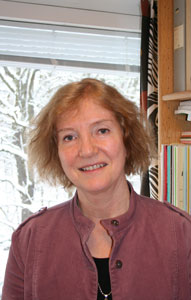
There will be a DJ workshop and a comics-making workshop. Drude Dahlerup, professor of political science at Stockholm University and UN Women adviser, likes the idea of making room for culture at the Nordic Forum.
‘The process of change is in many ways led by culture and culture workers. That’s what happens when politicians lose momentum and stall,’ she says.
Dahlerup was there when the Nordic women’s movement met in Oslo in 1988 and in Åbo in 1994. She particularly remembers the conference in Oslo as a fantastic manifestation.
‘It was euphoric. We showed that we can work together, across political divides. It was big, very big,’ she says.
The conference in Åbo in 1994 was different, not least because of the conflicts surrounding the EU membership.
‘It led to serious friction and fragmentation in the women’s movement, at least in Denmark,’ says Drude Dahlerup, who believes that next week’s conference can help the movement muster up new strength.
‘This time no major issues should get in the way. And we actually stand very united against right-wing extremism,’ she says, but stresses that the movement is certainly not free from conflict and debate.
‘Definitely not. There are socialist feminists, liberal feminists, existentialist feminists, antiracist feminists, queer feminists and radical feminists to name a few, but that’s not a bad thing. I love the lively debates within the movement,’ she says.
Entire womens’ movement not included
Fakhra Salimi leads the Norwegian organisation MiRA – Mira Resource Centre for Black, Immigrant & Refugee Women. She will participate in several events at the Nordic Forum, but is disappointed in the planning of the conference and feels that the whole women’s movement has not been included.
‘There isn’t a single racialised woman in the steering group. I think that’s a big failure. Racialised women have been invited to participate but not to help set the agenda,’ she says.
MiRA has asked to be included in the steering group for the Nordic Forum without success. The steering group consists of an umbrella organisation from each Nordic country and no new organisations have been accepted into the group since it was formed in 2011.
Salimi says that racialised women were also excluded from the group that wrote the draft of the final document that will be handed over to the Nordic gender equality ministers after the conference. She feels that somebody should have reacted. She remembers that the same thing happened in Oslo in 1988; racialised women were invited to participate in the conference but did not have an opportunity to influence the agenda.
‘Åbo in 1994 was different. We were included from the beginning, so what’s happening now feels like a step backwards. We really thought we had come further than that,’ she says.
Conference general Caroline Matsson agrees that the representation has not been perfect.
‘It has been a clear goal to include everyone. But if MiRA are disappointed, it’s of course important that they express their views and that we as conference hosts listen to what they have to say,’ she says.
‘These are important issues. We need a discussion about our work and about who gets to be part of it,’ says Matsson, who has not been involved in the design of the steering group but serves as spokesperson for the conference.
Inequality in the labour market important focus for the movement
Creating an inclusive women’s movement and formulating a type of feminism that is broadly relevant is the most important challenge for the Nordic women’s movement, according to Salimi. She also mentions the inequalities in the labour market as an important area to keep focusing on.
‘Racialised women in particular are used as spare labour and are also overrepresented among involuntary part-time workers,’ she says.
Dahlerup too believes that the conditions in the labour market and ‘the deterioration of employment security’ need to be addresses as central issues by the women’s movement. She also mentions the sexualisation of young women and hatred against women in the public space as important challenges. Dahlerup says that the Nordic women’s movement has had to learn how to handle backlashes since the conference in Åbo in 1994.
‘Back then, we thought we could only move forward. We were sure that change happens if you just give it time, but that’s not true,’ she says.
She feels that the political scene has changed fundamentally, especially in a global perspective.
‘Right-wing forces are advancing their positions and the international women’s movement has to fight hard to maintain status quo. I want the Nordic countries to push a clearer agenda and show leadership, like we did in the 1980s and 1990s,’ she says.
Conference general Matsson hopes and believes that the Nordic Forum will have ripple effects also outside the Nordic region.
‘We have participants from over 40 countries. Afghanistan, Bangladesh, Ghana, Mexico – it’s great!’ she marvels and goes on to say that authorities, organisations and politicians in the Nordic countries have shown compelling interest.
‘We have invited the whole society to help formulate tomorrow’s gender equality policy and the response has been huge,’ she says.
She wants to particularly encourage conference participants to attend the opening ceremony on Thursday and the closing on Sunday.
‘That’s when you realise how many we are. In between those events, we’ll be rather scattered. Some might be there just for the films and others for the gender mainstreaming seminars,’ she says.
She also wants to encourage the conference-goers to challenge themselves and expand their horizons.
‘Don’t attend only the stuff that feels familiar and safe. Try to discover something you don’t know anything about or listen to somebody who doesn’t share your opinions. If you do, I promise the conference will be a great learning experience.’
- Text: NIKK
- Categories: Gender equality and welfare policy
- Published: 2014-06-11

White Masculinity in Focus
Two giants within masculinity research, Raewyn Connell and Michael Kimmel, opened the Nordic conference on masculinity in Reykjavik last week. Both of them focused on how class, ethnicity and gender interact.
Raewyn Connell is an Australian sociologist whose book Masculinities had a large impact in the field of masculinity research in the 1990s. She was particularly interested in strengthening masculinity research in the non-Western world.
‘How and where knowledge is produced is important in the development of masculinity research. Although the English-speaking world and Europe are the most visible regions, there is a lot of research and knowledge production in the colonised world that is changing the way we view masculinity research for example with respect to research methods,’ says Connell.
In the past, the colonised world has mainly served a ‘databank’ for Western researchers studying ‘the other’. However, many non-Western researchers are presenting new, important perspectives on how masculinity and gender can be approached. For example Ashis Nandy, who Connell talked about at the conference, has written about how masculinity was created in British colonial India – among both colonised and colonial men.
Michael Kimmel, professor in sociology in New York, talked about ‘angry white men’ – about the creation of masculinities within right-wing extremist groups.
He started by telling the audience about when Oprah Winfrey invited him to an episode of her show. The title of the episode was A Black Woman Stole My Job. There were several white men in the show, and they all felt they were the real victims of discrimination. The reason for this, they said, was the systematic preferential treatment based on gender and ethnicity that was going on in the labour market.
‘The first thing I asked them when it was my turn to speak was why they thought the jobs were their jobs to begin with. Without confronting men’s perceptions of having a natural right to privileges, we won’t get anywhere with the gender equality work,’ said Kimmel.
He has studied men in Nazi and racist movements, in both Sweden and the US. His US respondents were recruited via neo-Nazi online chat rooms and at gun shows, which are basically travelling exhibitions for people interested in weapons. In Sweden, he interviewed young men in the so-called Exit programme, which targets men who have been involved in but are in the process of leaving right-wing extremist groups.
‘I found that they used masculinity as a lens through which they talked about race and class.’
Kimmel said that right-wing extremist men use masculinity to describe their own experiences, to problematise ‘the other’ and to recruit new men to their movement.
They feel they have been de-masculinised in a ‘feminisation’ of society, where society is taking everything away from them and giving it to others who don’t ‘deserve’ it, such as homosexuals, women and racialised people.
They also problematise ‘the other’ through masculinity. These ‘other’ persons are both too masculine and not masculine enough. Blacks are for example described as both ‘wild and dangerous’ (too masculine) and ‘dependent on welfare payments’ (not masculine enough). In the same manner, they describe Jews as both ‘feminised’ (not masculine enough) and ‘powerful and wealthy’ (too masculine).
And they use masculinity in their recruiting of more white men.
‘These movements like to push the belief that you’ll get ”your girl, job and masculinity back” when you fight for white power,’ said Kimmel as he ended his presentation.
The conference Emerging Ideas in Masculinity Research: Masculinity Studies in the North was held 5-6 June in Reykjavik, Iceland. It was arranged by the Nordic masculinity network NEMM together with the Icelandic Presidency of the Nordic Council of Ministers. The conference attracted almost 200 participants from both Nordic and non-Nordic countries.
- Text: NIKK
- Categories: Gender equality and welfare policy
- Published: 2014-06-11

Nordic Network Sharpening Arguments Against Sex Trade
Sex trade is a major industry that continuous to flourish worldwide. But the Nordic Network against Sex Trade is not discouraged: Prostitution must stop!
‘We don’t think men should have the right to buy a woman’s body,’ says Hanne Størset, network spokesperson and board member of the Norwegian Feminist Group Ottar.
At the Nordic Forum in Malmö, they will gather activists interested in sharpening their arguments and discussing strategies to combat prostitution and human trafficking.
Why do we need Nordic cooperation against sex trade?
‘In order to make our voices heard, we need to get organised. After all, our opponents are very well organised. Internationally, prostitution is subject to frequent debate, and we need to get better at presenting our arguments. There are strong forces that don’t see prostitution as a problem.’
There are disagreements within the Nordic feminist movement as well. What would you like to say to feminists who think prostitution should be legal?
‘They tend to focus on individual women and their right to “work” as prostitutes, but we don’t think prostitution should be considered a job and want to get away from this focus on the individual. We see prostitution as a social problem linked to the superior position of men, since most customers are men and mostly women are for sale. We think more politicians should ask themselves whether that’s really the type of society they want.’
You talk about a Nordic model. Can you describe it?
‘In large parts of the Nordic region, prostitution is viewed as an expression of men’s violence against women. It is this view that has made it possible to criminalise the buyer. Sweden was a forerunner with such legislation, and Norway and Iceland have followed. It’s typical for the Nordic model that the buyers and not the sellers of sex are criminalised. Prostitutes shouldn’t be viewed as criminals but instead as crime victims. They need help to get out of their situation.’
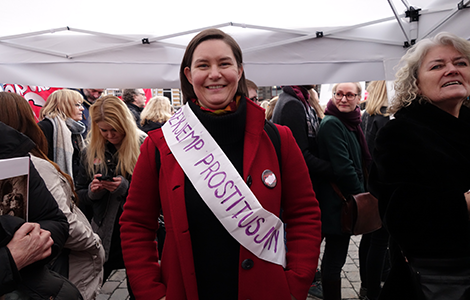
What has the sex trade legislation in Sweden, Norway and Iceland meant?
‘For me personally, it has to do with security. These societies are sending a clear message that women are not for sale. At a practical level, it leads to fewer people getting involved in the industry and it helps the police in their work against human trafficking. Legislation is important, but it isn’t a fix-all solution. We want society to help the women more. We for example think that they should qualify for financial support, like other crime victims.’
What are some future challenges?
‘There are still some differences between the Nordic countries. We’re fighting for legislative change in Denmark and Finland, and in Norway we’re trying to keep the current sex trade law intact. Sweden and Iceland are looking pretty good at the moment, though. Earlier this spring, the EU expressed support for the model of criminalising sex trade. It’ll be interesting to see where this will lead. Our network wants to push the development forward and actively promote the Nordic model.’

This is an article about one of the projects granted funding through the Nordic Gender Equality Fund.
- Text: NIKK
- Categories: Gender equality and welfare policy
- Published: 2014-06-10
Ups and Downs of Being a Woman in Faroese Politics
Being the only woman in parliament isn’t always easy. This article is about Karin Kjølbros, who shared her story at a Nordic seminar on politics and gender equality in Torshavn.
Karin Kjølbro is a former Member of Parliament and women’s movement activist in the Faroe Islands. In 1978, she and a colleague became the first two female politicians in the Faroese Parliament. Life could be quite complicated in a political environment dominated by men.
‘In 1988, we voted on whether sexual orientation should be covered by the national discrimination act. Thirty-one out of the 32 members voted no, and I, the only woman in the group, stood up and shouted yes. My male party colleagues tried to pull me down, but I stood up again.’
When interviewed by Drude Dahlerup for a book about female politicians in the Nordic region, she described her political life as full of ups and downs – or ‘blomster og spark’ in Danish. This also became the title of the book, which was published in 1985.
Kjølbro says that as a women’s activist, she gained strength from what she saw was happening in the other Nordic countries.
‘175 Faroese women travelled by ship to the Nordic Forum in Oslo 1988. In Oslo, we became inspired to create for example women’s lists. We were also inspired by Vigdís Finnbogadóttir becoming President of Iceland. Although we didn’t have television in the Faroe Islands, we managed to follow the developments in the other Nordic countries, and what happened there made us stronger.’
Kjølbro participated in a conference on gender equality that was arranged by the Icelandic Presidency at the Nordic House in Torshavn 27-28 May.
- Text: NIKK
- Categories: Gender equality and welfare policy
- Published: 2014-06-09
Knowledge and Paper Art at nikk.no
One year after the launching of NIKK’s new website, brand new web overviews are now being published. This is the first time condensed comparative information about Nordic gender equality work is published online.
The new web resource provides a Nordic overview with milestones for the Nordic gender equality work, country reports, a list of knowledge resources and a unique ‘fortune teller’ in paper with facts about gender equality in the Nordic region. Just in time for the Nordic Forum, an online quiz will also be added.
‘This will hopefully increase the interest in the Nordic gender equality efforts, and more specifically in the Nordic gender equality cooperation,’ says Josefine Alvunger, Head of Operations at NIKK.
Comparative qualities in focus
The overviews offer good insight into the gender equality work in the Nordic countries and autonomic areas. The national websites started publishing national material a while back, but comparative information has been missing.
‘We wanted to give a brief overview of shared issues and concerns, and of similarities and differences between the countries. If you want to read more about something, for example a certain country, there are plenty of links to click,‘ says Alvunger.
The comparative perspective was also the biggest challenge when writing the overviews. The processing of statistics and other data was particularly difficult, and the routines for this work are still under development at NIKK.
‘You can’t just line up a bunch of tables and think you’re done. The data have often been generated differently and in different national contexts, so simply comparing them at face value will lead to false conclusions. The data also have a tendency to become outdated very quickly,’ says Maja Lundqvist, who has been part of processing the material presented under Nation by Nation.’
‘We wanted to make something new’
NIKK has also designed a paper ‘fortune teller’ with select information from the country overviews. Folded right, it displays NIKK’s core message. The ‘fortune teller’ will be used at the Nordic Forum in Malmö 12-15 June, the big Nordic conference for women’s rights. NIKK hopes it will spark new discussions about gender equality policy in the Nordic region.
‘We wanted to make something new. That piece of folded paper says something interesting about the Nordic countries: We are similar and “small” enough to fit inside a fortune teller, but there is unlimited information to learn about the different countries – our website keeps growing and is under constant development!’ says Alvunger.
The overviews are intended for anybody who works with, studies or simply wants to learn more about gender equality work in the Nordic region. At the moment, the texts are published only in Swedish and English, but Finnish and Icelandic versions are underway. The next step will be to develop the overviews with comparative data and statistics.
Footnote:
The material has been compiled by Sandra Engelbrecht, processed by Maja Lundqvist and Fredrik Bondestam at Nordic Information on Gender, and finally reviewed and verified by national experts.
- Text: NIKK
- Categories: Gender equality and welfare policy
- Published: 2014-06-09

Paternal leave, difference feminism and part-time work discussed in the Faroe Islands
The Nordic countries are using gender equality to build their national identity internationally. But major challenges remain across the entire region. Gender differences in parental leave and part-time work are two examples discussed at a Nordic conference on gender equality in working life held in Torshavn, Faroe Islands.
Johan Dahl, trade and gender equality minister from the Faroe Islands, participated in the conference and noted that the Faroese labour market suffers from many gender equality problems. At present, the islands’ greatest challenge is emigration. Mainly young women are moving away, and the population of only 48 000 inhabitants is ageing.
‘The Faroese gender structures remain traditional. We have large income differences and big problems with female representation in politics and part-time unemployment. The unequal power distribution between the genders may be one reason women are moving away,’ said Dahl.
Nordic women working part time
Bosse Parbring, project coordinator at NIKK, presented Part-Time Work in the Nordic Region, a project exploring part-time work among Nordic women and men.
In most Nordic countries, about one-third of the women work part time. Finland is an exception with 15 per cent. However, the total share of women working outside the home is also lower in this country than elsewhere.
The effect of part-time work on pensions varies significantly across the Nordic region. The effects are smaller in Denmark and Norway than in the other countries. There is hardly any effect at all for those who work part time for only a short period. The reason for this is that the national pension systems have compensation mechanisms for people with low past incomes.
‘But this is only true if you work part time for a short period. Many women work part time for a long time, with major effects on their pensions – in all countries,’ said Parbring.
Men are considered family breadwinners in the Faroe Islands
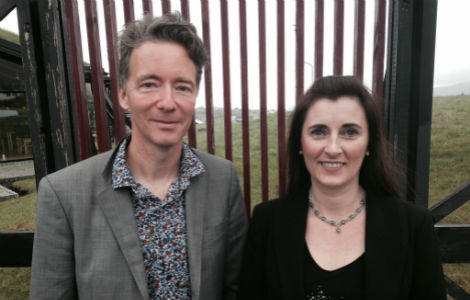
Erika Hayfield, researcher at the University of the Faroe Islands, has studied part-time work in the Faroe Islands. The Faroese women have the highest rate of part-time workers in the Nordic region – 51 per cent (the corresponding figure for men is 11 per cent). The rate remains high throughout the women’s working life and thus does not peak only at the ages when many women raise children. Moreover, more than one-fifth of the women who work part time would like to work more.
One problem is that more than 3000 Faroese men work away from the islands, for example at sea or on oil rigs. This number corresponds to one-fifth of the male labour force. It is difficult for Faroese employers to compete with the high salaries paid for example in the Norwegian oil industry. This causes problems for women in heterosexual relationships, especially if they have small children.
Hayfield said that in the Faroe Islands, men are still largely viewed as family breadwinners. She expressed great concern that the Faroe Islands is turning into a society where women even more than in the past are put in charge of the unpaid household work – a society based on the housewife model.
‘It’s important that the Faroese debate moves away from the notion that gender differences are biologically rooted, or “natural”. This attitude makes progress in gender equality policy difficult. For example, the proposed expansion of parental leave has met strong resistance due to the widespread view that women are more naturally suited for parenting.’
Nordic parental leave increases with reserved parental leave
Ingólfur V Gíslason from the University of Iceland talked about the gender distribution of parental leave in the Nordic region.
The rate of parental leave increased from 2000 to 2013 in all Nordic countries except Denmark. Also in Denmark, only married or co-habiting fathers are entitled to parental leave. This is the case in Finland as well.
In 2012, only 7.4 per cent of all parental leave in Denmark was paternal leave. Iceland had the highest rate, although it was still below 30 per cent. Iceland also has the highest number of days of parental leave reserved for each parent. One-third of the available days of parental leave are reserved for each parent, and the parents are free to decide how to split the remaining third.
‘There is a negative trend in the Nordic region, though. The Danes have cancelled their plans to introduce reserved parental leave. The new Norwegian government is reducing the number of days reserved for the father, and they are making it easier to transfer days to the mother. And Iceland has postponed a planned expansion of the country’s parental leave policy from 9 to 12 months with a 5-5-2 distribution,’ said Gíslason.
Little parental leave among Faroese men
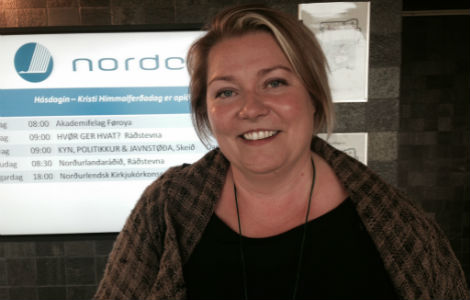
Katrin Kallsberg, chair of the Faroese national gender equality committee, said that Faroese men take only 5-6 per cent of the granted parental leave. And almost half of them never go on parental leave at all.
‘At the same time, two-thirds of the men say they would like three months of reserved paternal leave if it were possible in the Faroe Islands.’
Kallsberg stated cultural factors as a reason for the present situation. The national gender equality committee recently presented a study on attitudes among Faroese adolescents. Many conservative opinions were noted among the boys: Almost one-third of them expressed that women should not work at all outside the home, almost half believed that men are better leaders and over one-third said that if a man and a woman are competing for a job, the man should be given preference.
Difference feminism in Denmark
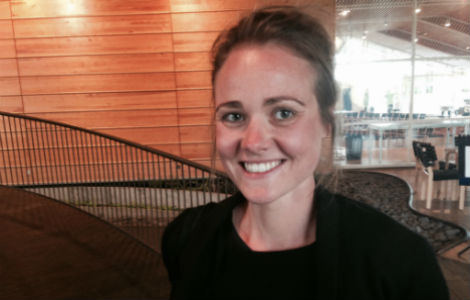
Lív Patursson, gender scholar at Lund University, talked about a current debate in Denmark. Danish families with children are finding it increasingly difficult to combine family life with a professional career. Common consequences include mental stress, increased divorce rates and negative demographic effects. Patursson wanted to problematise the individualistic attitude to the problem often heard in Denmark, for example from the country’s gender equality minister Manu Sareen, who recently encouraged women who wanted to pursue a career to ‘skip the yoga’.
A comeback of Danish difference feminists (sometimes called ”uterus feminists” in Scandinavian countries”) can also be witnessed. Their solution is also exclusively individualistic – women should stay home more with their children and forget about a career.
Gender equality as a Nordic marketing scheme
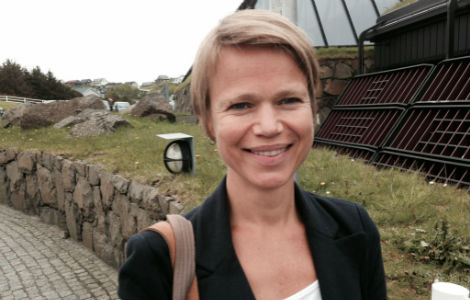
Eirinn Larsen, researcher and historian at the Centre for Business History, Norwegian School of Management in Oslo, talked about the view of gender equality as being ‘typically Nordic’.
The Gender Gap Index presented each year by the World Economic Forum places the Nordic countries in the top 10.
‘It is important for the marketing of the Nordic countries that other countries see them as gender equal. But the whole thing is more a matter of branding than real substance.’
She said that the view of the Nordic countries as gender equal is problematic, for example because it makes further gender equality work more difficult.
‘We still have many gender equality problems in the Nordic region. I would say that gender equality is not an overly Nordic feature. But the desire to seem gender equal certainly is.’
The conference was arranged 27-28 May by the Icelandic Presidency of the Nordic Council of Ministers for Gender Equality.
- Text: NIKK
- Categories: Gender equality and welfare policy
- Published: 2014-06-05

NIKK and the Nordic Council of Ministers at the Nordic Forum
The Nordic Forum in Malmö 2014 is set to begin next week. The event is the Nordic women’s movement’s big conference for women’s rights, and NIKK will of course be there. See below for information about all the activities that we and the Nordic Council of Ministers will arrange at the conference.
Booth D:27 in the exhibition area – free and open to everyone!
NIKK and the Nordic Council of Ministers are sharing a booth at the Nordic Forum – more exactly booth D27! We will present our resources, talk about gender equality in the Nordic region and celebrate that the Nordic gender equality cooperation turns 40 this year! We will also offer an online quiz – come and find out what you know about gender equality in the Nordic region.
Project café: The Nordic Council of Ministers’ funding scheme for gender equality
Saturday 14 June, 2:00 – 5:00 pm at our own booth D:27
On Saturday afternoon we are expecting a lot of people at our booth as we have invited all Forum participants who have received funding from the Nordic Council of Ministers’ funding scheme. We will mingle, share experiences, present our work and activities to each other and discuss the Nordic gender equality cooperation in practice. Come join us – it’s free of charge and open to everyone!
Programme for conference participants
Projects granted money from the Nordic Council of Ministers’ funding scheme for gender equality

The Nordic Forum will showcase examples of Nordic gender equality cooperation in practice though presentations of the projects that received money from the Nordic Council of Ministers’ funding scheme in 2013 to participate at the Nordic Forum. Here is a list of Forum activities. (Note: The activities are not arranged by NIKK.) Several of the events are held in a Scandinavian language. Here we list only the ones that are offered in English.
Youth empowerment and non-formal education with gender perspective
Thursday 12 June, 2:00 – 3:30 pm. Venue: Gudrun
Organiser: The Åland Islands Peace Institute/Nordic-Baltic Network for Gender Equality in Youth Work
The workshop is aimed at examining how youth activities with gender perspective can empower young people to challenge gender stereotypes and facilitate their personal, social and economic fulfilment. Thematic concepts of gender perspective, gendered norms and empowerment will be illustrated by best practice examples of Nordic-Baltic experiences of the Girl and Boy group method. The workshop form is a moderated panel discussion with NGO representatives from Åland, Finland, Latvia and Lithuania consisting of:
- Justina Donielaite, Project Manager, The Åland Islands Peace Institute
- Liene Gatere, Youth Affairs Coordinator, Resource Center for Women “Marta”, Latvia
- Aiste Jankauskaite , Project Manager, Missing Persons’ Families Support Center, Lithuania
- Kalle Laanterä, Project Manager, Poikien Talo (Boys’ House), Finland
- Malin Söderberg, Project Manager, The Åland Islands Peace Institute
- Mari Uusitalo-Herttua, Director, Tyttöjen Talo (Girls’ House), Finland
Women, Peace and Security: Are the Nordic countries leading the way?
Friday 13 June, 12:00 – 2:30 pm. Venue: Taikon
Organiser: Operation 1325, Forum 1325 Norway, 1325 Network Finland and WILPF Denmark
When adopted in 2000, UN Security Council Resolution 1325 on Women, Peace and Security was in many ways groundbreaking. The Nordic countries were among the first countries to develop national action plans for its implementation. But where do we stand today, almost 15 years later? Nordic experts and civil society representatives working on women, peace and security present an overview of todays’ national implementation of Resolution 1325 and the work ahead in the Nordic countries.
- Åsa Eldén, Secretary General, Operation 1325 (se)
- Lis Garval, Former Minister, Counsellor on Gender, Peace and Security (dk)
- Pirjo Jukarainen, PhD docent, University of Tampere and Acaide Oy (fi)
- Maj Britt Theorin, Former President, Operation 1325 (se)
- Torunn Tryggestad, Researcher, PRIO – The Peace Research Institute Oslo (no)
- Kristiina Vainio, Vice President, 1325 Network Finland (fi)
- Helga Þórólfsdóttir, Independent Consultant on Gender and Security for the Icelandic Ministry for Foreign Affairs (is)
The Nordic model: Prostitution is violence against women
Friday 13 June, 02:00 – 03:30 pm. Venue: Furuhjelm
Organiser: Nordisk nettverk mot sexkjøp (Nordic network against sex trade)
What is the ideology behind the Nordic model? How far have we reached in our fight in the Nordic countries for the right to a life free of prostitution? What kind of political opposition do we meet in our struggle for a society where women are not commodified? We will present the ideological background for the legislation and provide an overview of the current situation in Sweden, Norway, Denmark and Finland.
- Tanja Auvinen, Nuorten Exit / Exit ry
- Kajsa Ekis Ekman,
- Nina Hedegaard, the 8 March Initiative
- Hanne Helth, the 8 March Initiative
- Wiveca Holst, Roks
- Asta Håland, the Feminist Group Ottar
- Rachel Moran, SPACE International
- Tanja Rahm, SPACE International
- Ane Stø, the Feminist Group Ottar
“Post 2015”
Saturday 14 June, 10:00 – 11:30 am. Venue: Pankhurst
Organiser: The Nordic national committees of UN Women
With 2015 fast approaching, various processes have been initiated in order to define the post-2015 agenda. There is widespread agreement in civil society that a more vigorous commitment to human rights and structural changes implies a different agenda for post-2015. Issues that will be emphasised in the seminar are gender norms and stereotypes, gender mainstreaming, inclusion and protection of SRHR, and elimination of all forms of violence against women.
Phumzile Mlambo-Ngcuka, executive director UN Woman
Journalism with a feministic perspective
Saturday 14 June, 2:00 – 3:30 pm. Venue: Taikon
Organiser: Allt är Möjligt and Feministiskt Perspektiv
Exchange of experiences on gender in news media representation and journalistic content. Participants from Estonia, Iceland and Sweden will present the latest from each context on monitoring and producing gender aware journalism. Considering the goals regarding gender and media in the Beijing Platform of Action, and focusing on visions for a journalism with a feministic perspective.
- Thora Kristin Asgeirsdottir, web editor, Smugan
- Anna-Klara Bratt, editor-in-chief, Feministiskt Perspektiv
- Maria Edström, researcher, Nordicom
- Reet Laja, chairperson, ENUT
- Jenny Rönngren, Allt är Möjligt – moderator
Media activism
Saturday 14 June, 4:00 – 5:30 pm. Venue: Taikon
Organiser: Feministiskt Perspektiv, Allt är Möjligt
Seminar for sharing experiences, methods and best practices on media activism against sexism in advertising and media content. Context, examples and visions in Sweden, Estonia and Iceland. A networking opportunity for panellists and audience members to explore possibilities of media activism based on the goals regarding gender and media of the Beijing Platform of Action.
- Ilvi Cannon, board member, ENUT
- Björg Eva Erlendsdottir, journalist, Stigamót
- Eva Lindholm, Allt är Möjligt – moderator
- Simone Lindsten, president, Allt är Möjligt
A United North for UNSCR 1325: Women, Peace and Security
Sunday 15 June, 11:00 am – 12:30 pm. Venue: Furuhjelm
Organiser: Operation 1325, Forum 1325 Norway, 1325 Network Finland and WILPF Denmark
This workshop will gather specialised civil society actors working with UNSCR1325 and women, peace & security to an interactive meeting. We will focus on the Nordic countries’ NAPs and our governments’ processes of developing, implementing and monitoring these. What can we learn from each country’s NAP and processes? What are our different experiences and what methods do we use to influence decision makers? Join us and share your own ideas or just learn from colleagues working in the same field!
- Ida Harsløf, Co-president, Women’s International League for Peace and Freedom Denmark (dk)
- Magnea Marinósdóttir, Advisor on Women, Peace and Security (is)
- Elina Multanen, Executive Director, Finland National Committee for UN Women (fi)
- Madeleine Rees, Secretary General, Women’s International League for Peace and Freedom (uk)
- Jon Rian, Program advisor, FOKUS – Forum for Women and Development (no)
- Maj Britt Theorin, Former President, Operation 1325 (se)
- Text: NIKK
- Categories: Gender equality and welfare policy
- Published: 2014-06-04