
Girls’ Groups Effective Method against Trafficking
In Lithuania, the work with girls’ and boys’ groups has become an important tool in the fight against trafficking. ‘The basic purpose of the method is to strengthen adolescents and start discussions about gender norms,’ says Justina Donielaite, project coordinator at the Åland Islands Peace Institute.
The first girls’ groups were formed in the Åland Islands about 20 years ago. Today there are boys’ groups as well, and the method has spread to the Baltic countries, Eastern Europe and the Caucasus region. The central idea of the method is to facilitate a democratic and non-hierarchical dialogue between a small group of adolescents and their leader. The details of the work may differ somewhat from country to country, but the core approach is always the same, Donielaite explains.
‘We want to encourage critical thinking and give young people strength to make their own decisions and handle conflicts.’
How does the work differ between countries?
‘In Lithuania, the method is intended to prevent sex slavery, and some participants are victims of trafficking. Some groups in Lithuania focus on girls with intellectual disabilities since they run a higher risk of being victimised. In the Nordic countries, the purpose is usually to promote gender equality and prevent violence.’
You cooperate with organisations in non-democratic countries. Have you had any problems?
‘In the Kaliningrad area in Russia, it has been a challenge to get the leaders to understand that the adolescents should be the ones to decide which topics to discuss. They don’t really believe that young people can raise relevant issues. Maybe this shouldn’t be surprising in a country where many things are decided from above. In some countries, like Azerbaijan, the main challenge has been to establish girls’ groups as an after-school activity, since girls traditionally have only been allowed to leave home to go to school.’
Are some subjects difficult to talk about in some countries?
‘Yes. In the material for the groups in Russia, we’ve had to remove the chapter on rights of LGBT persons. Otherwise the method couldn’t be used there. Overall, many leaders feel unsure about how to talk about sexuality, so there is definitely a need for more training there. Many young girls think that they have to agree to sex even if they don’t want to, so it’s a very important subject.’

The work with girls’ groups has been talked about a lot, but how do the boys’ groups work?
‘In the beginning there were only girls’ groups. Then a few years ago, boys started asking us for groups. Strengthening only girls wasn’t enough. Boys are also limited by norms, but unfortunately we have problems finding male leaders. It is important that girls and boys meet in separate groups since preconceptions about gender are forcing them to relate to entirely different ideals. Mixed groups may also make participants feel pressured to behave according to the norms.’
You received funding from the Nordic Funding Scheme 2013 for a network-building project. What are your plans?
‘We’re hosting an event at the Nordic Forum. We will point to the need for a gender perspective in work with young people and the method with girls’ and boys’ groups. Those of us who work with the groups also have a lot to learn from each other, and we need to work together to spread the method and ensure that high quality is maintained. The focus on the gender equality perspective is important. Without it, there is a risk that groups end up reinforcing norms instead of challenging them.

This is an article about one of the projects granted funding through the Nordic Gender Equality Fund.
- Text: NIKK
- Categories: Gender equality and welfare policy
- Published: 2014-05-07
Climate Change Affecting Gender Equality in the Arctic
Climate change and growing industries have changed people’s lives in the Nordic and Russian Arctic. What happens to the gender equality when traditional subsistence methods are phased out? This is the focus of a new project involving researchers across the region.
The northern parts of the Nordic region are changing rapidly. Traditional livelihoods such as reindeer herding, hunting and handicraft are decreasing in importance and many inhabitants are instead drawn to the growing mining industry. Life has fundamentally changed in many ways, says Päivi Naskali, professor at the University of Lapland and leader of the project titled A Gender based approach to livelihood change in the Nordic Arctic.
Why this project?
‘We want to bring attention to gender equality and the changing gender order in the Nordic Arctic and Northwest Russia. We want to facilitate dialogue and strengthen the cooperation between researchers at different universities, but also between researchers and actors working with gender equality issues in the region.’
In a gender equality perspective, what are the consequences of the changes in the Nordic Arctic?
‘Many people are hoping that the new industries will encourage young people to stay in the region. However, since most of the new jobs appeal more to men, many women are choosing to move away. In the long term, this may reduce the vitality of the communities and increase the share of older inhabitants. We need more research in this area. Towards the end of the project we will hopefully be able to give some recommendations to local decision-makers. They need to focus on creating educational opportunities and jobs that appeal to young women.’
What are your plans for the project?
‘Researchers are going to interview people who live in the region and work in different sectors, such as reindeer herding, mining and home services. The results will be discussed at a number of workshops and at a final seminar in September 2014. The intention is for this initiative to form a basis for a future, more extensive, research project. We’re hoping that we, through our meetings, will be able to set the direction for such a project.’
Why is it important to address these issues in a Nordic perspective?
‘Gender equality is generally not considered to be an important topic, especially in Finnish Lapland and Northwest Russia. It is important to learn from each other and share experiences. It is also important that we gain more knowledge about the Sami community and the relevance of the changes in terms of gender equality. Traditional livelihoods such as reindeer herding, fishing and handicraft are closely linked to the Sami identity. The effects of mining on the Sami communities and their gender systems need to be studied more.’
This is an article about one of the projects granted funding through the Nordic Gender Equality Fund.
- Text: NIKK
- Categories: Gender equality and welfare policy
- Published: 2014-04-30

Conference and Seminar on Gender Equality: Who Does What? Gender Segregation in the Labour Market and Division of Labour in the Home
How does gender segregation of the labour market and division of labour in the home effect gender equality? Why are there so few men in the fields of care and education? Why do men not take longer paternity leave? Do men participate at home or do women work part-time in order to make things work at home? Who is responsible for gender equality in the labour market and in the home? Does the labour market in rural areas take the needs of both men and women into consideration? These are among the questions discussed in The Nordic House in Torshavn on May 27th.
The conference will host researchers and specialists from the Nordic countries as well as discussion panels where issues are discussed in depth. Results from a research project on
part-time work in the Nordic countries will be presented with insight into the second phase of the project, continuing throughout the year 2014.
On the 28th of May there will be a seminar on gender, politics and gender equality focusing on women’s suffrage and its impact on gender politics, men’s collaboration in the future and political commitment regarding gender equality. The programme includes addresses from politicians and lectures by specialists in Nordic gender history.
The event is part of the Icelandic Presidency of the Nordic Council of Ministers in 2014 and is jointly organised by The Ministry of Welfare in Iceland, The Centre for Gender Equality, Iceland, in cooperation with the Nordic Council of Ministers.
- Text: NIKK
- Categories: Gender equality and welfare policy
- Published: 2014-04-28

Nordic Protection of Battered Women Relying on Volunteers
All Nordic national governments have violence against women on the political agenda. However, many women and children who need protection must still turn to voluntary organisations. The network Nordic Women Against Violence wants to spread awareness among decision-makers and stimulate discussion about women’s shelters.
‘To reduce the violence once and for all, we need better preventive work. We have the same number of women and children at the shelters today as we had 20 years ago,’ says Tove Smaadahl.
She has been involved in the women’s shelter movement for 35 years and has followed the work to protect battered women closely. She is currently the head of the Norwegian national secretariat for coordination of women’s shelters, Krisesentersekretariatet.
You and your Nordic cooperation partners will host an event at the Nordic Forum in Malmö 12–15 June. Can you tell us about it?
‘Through the network Nordic Women Against Violence, we have made a film about the work of the Nordic women’s shelters. We’re going to show the film at the Forum. We have already shown the film in several U.S. cities, and it’s really inspiring. It portrays the creativity and engagement that can be found in the movement. After the film, we’re going to have a discussion about the violence prevention work and the challenges that the shelters are facing. Many of them are struggling financially.’
Looking at the Nordic countries, are there any differences?
‘The Swedish shelters have the largest share of volunteers. I think it’s fantastic that their movement is so strong, but the focus on volunteerism makes the financial side of it unpredictable. Norway is the only Nordic country where the municipalities have a legal responsibility to offer protection to women and children exposed to violence. This has given some shelters a more solid financial base. However, it has also forced some shelters in small municipalities to close when local governments have decided to buy the shelter services from a neighbouring municipality.’
Why do the Nordic women’s shelters need to cooperate?
‘Sometimes when a woman has to flee the country, it can be coordinated through the network Nordic Women Against Violence. It’s not easy to hide in the small Nordic countries. The network enables shelters and other actors to exchange experiences and put joint pressure on politicians. Those of us who are involved in the shelters can see what the problems are and it is our responsibility to try to make things better.’
What are some of the problems?
‘For example, we encounter many women who came to our part of the world through marriage. To gain permanent residency status, they have to stay married to their husbands for 2–7 years depending on where they are from. This can make it difficult to leave a destructive relationship. We need new rules so that these women will be able to stay in their new country without being married to an abusive husband.’
How can men’s violence against women be stopped?
‘The violence is a criminality and public health problem, and the Nordic governments have to invest more in preventive work. There have been huge campaigns to combat other public health problems, such as smoking, but we still haven’t seen a similar initiative for this type of violence.’
This is an article about one of the projects granted funding through the Nordic Gender Equality Fund.
- Text: NIKK
- Categories: Gender equality and welfare policy
- Published: 2014-04-23
Media’s Gender Equality Work Has Stagnated
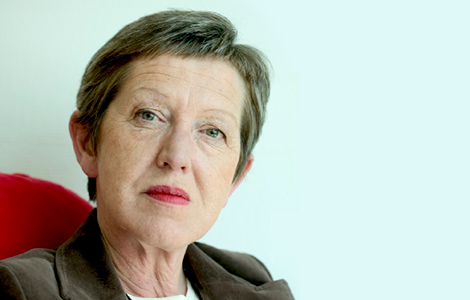
The Swedish network Allt är möjligt, which is Swedish for ‘everything is possible’, brings together Nordic actors for discussion on the responsibilities of media in the gender equality work. Sexist advertising, media activism and challenges in journalism are some of the topics that will be addressed by the network at the Nordic Forum in Malmö.
Almost 20 years ago, the UN made a major contribution to the global gender equality work by presenting the so-called Beijing Platform. The document encourages media to increase the opportunities for women in the industry. It also discourages stereotypical portrayals of women in media. Since the publishing of the platform, the share of female journalists has increased. However, men remain heavily overrepresented in the media content.
‘Here in the Nordic countries, we like to think we’re world leading and that the mission has been accomplished. This is probably why the development has stagnated,’ says journalist Jenny Rönngren, who is on the board of Allt är möjligt and managing editor of the Swedish online journal Feministiskt Perspektiv.
Why is Nordic cooperation on gender equality in media important?
‘We need to exchange ideas about how we can achieve change. Feministiskt Perspektiv is one such strategy. It is an attempt to formulate a different type of journalism. Half of all Swedish journalists are women, but when it comes to media content, the development seems to have stalled. For example, only 30 per cent of the people interviewed in media are women. And this hasn’t changed since the Global Media Monitoring Project’s first assessment in 2000.’
What’s the reason for this lack of development?
‘I think it has to do with our self-image in the Nordic region and in Nordic journalism. There’s a notion that our journalism is pro-gender equality, while the truth is that it only serves to cement the existing norms. It is a problem that the media consider gender equality a special interest, or a political agenda. In contrast, many large organisations in the rest of the world think of gender equality as a fundamental aspect of their operations.’
At the Nordic Forum in Malmö, you will talk about the Nordic media activism and the work against sexist advertising. Are there any differences in how the Nordic countries are handling this issue?
‘Yes. For example, Norway, Denmark, Finland and Iceland have laws against discriminatory advertising, whereas Sweden only has an advertising ombudsman to which complaints can be made. The Allt är möjligt network is encouraging Sweden to follow the example of its Nordic neighbours. The Swedish ombudsman has no means of imposing sanctions, so their reprimands are not always effective.
What can media-critical activism look like in the Nordic countries?
‘Social media has become an important tool and can set off an explosion. Protests by single individuals can spread almost instantly to hundreds of thousands of people, and the attention this can spark is important. There’s also a point in catching the criticism and giving it a longer life. In Sweden we’re trying to do this with the webpage Reklamera, which is run by Allt är möjligt and the Swedish Women’s Lobby. Activists can use the page to post observations and feedback, and there is a working group that can help proceed with reported cases.’
What are the biggest challenges for Nordic media in the near future?
‘The economic crisis has made many organisations pressured for resources and time. Since gender equality work is often perceived as something external to regular operations, it is often the first thing to go in tough times. This is a major problem and I think the whole thing is backwards. As I see it, gender equality work is a way for an organisation to invest in sustainability and future relevance.’
This is an article about one of the projects granted funding through the Nordic Gender Equality Fund.
- Text: NIKK
- Categories: Gender equality and welfare policy
- Published: 2014-04-15
Article Series About Nordic Gender Equality Cooperation
A large number of organisations, government agencies, networks and businesses in the Nordic region work actively to further gender equality. They make assessments, contribute to the debate and promote change.
To stimulate the Nordic cooperation, in 2013 the Council of Ministers for Gender Equality began allocating money to organisations wishing to arrange joint activities across national boundaries. NIKK is administrating this initiative, and if you want to find out which groups and activities were granted funding in 2013, you can read the new article series Nordic Gender Equality Cooperation in Practice. In a number of articles that will be published here at old.nikk.no, the organisations will talk about their visions and how Nordic cooperation can lead to new perspectives and increased impact.
In the first call for applications in 2013, the Nordic Funding Scheme made a total of DKK 1.2 million available for gender equality projects. Eighty applications were submitted, 11 of them were approved. The cooperation projects that were granted funding focused on topics such as media activism, networking against sex trade and the conditions of women in war and conflict.
- Text: NIKK
- Categories: Gender equality and welfare policy
- Published: 2014-04-08

The Conditions of Women in War and Conflict – Time for the Nordic Countries to Act
Women tend to suffer greatly in war and conflict, and men usually set the agenda when rebuilding communities. It is time for the Nordic countries to stand up in the work for a just peace process, says the Swedish organisation Operation 1325.
If the aims of the UN resolution on women, peace and security are ever to be achieved, it is time to get to work. There is no hesitation in the voice of Jenny Molin, project coordinator of Operation 1325, and a new report from George Washington University supports her point. In the report, researchers have ranked different countries’ action plans for the resolution, and Sweden can be found in the bottom half of the list.
‘There are no clear aims, no time plan and no earmarked budget, and the follow-up is also poor,’ says Molin.
Operation 1325 will host a couple of events at the Nordic Forum in Malmö. Can you tell us about them?
‘Together with partners that work with resolution 1325 in Norway, Finland and Denmark, we’re giving a seminar and a workshop on how different organisations work with women, peace and security. We’re gathering people who work with these issues in the Nordic countries.’
Why should the Nordic countries focus on issues related to conflict and security?
‘We work closely with NATO and are present in conflict areas. We participate in peace processes and we like to lead the way within gender equality. If we’re going to promote ourselves as good examples, we also have to live up to it.’
Resolution 1325 aims to strengthen the protection of women in conflict situations, as well as increase women’s participation in peace and security work. The Resolution was adopted by the UN Security Council in 2000 with an intention for individual countries to put it into practice through national action plans.
‘The Nordic countries were quick to develop action plans, but now it seems like we may not be as successful as we would like to think we are,’ says Molin.
Since the report from George Washington University has not yet been published, she cannot say anything about the results for the other Nordic countries.
‘They may have placed higher than Sweden,’ she says.
What happens if the action plans are not good enough?
‘There’s a risk that the work gets neglected. Just looking at an action plan is of course not enough, however. An action plan doesn’t give a full picture of what a country does, but it does point out who’s responsible for different parts of the work.’
Why do more women need to participate in peace processes?
‘It’s really a matter of democracy. Peace processes affect entire populations, and it’s wrong to leave women out of it. Besides, research shows that the chances of sustainable and long-term peace go up when women’s rights organisations get involved. When these organisations get to influence the agenda, the legitimacy of the peace process increases.’
This is an article about one of the projects granted funding through the Nordic Gender Equality Fund.
- Text: NIKK
- Categories: Gender equality and welfare policy
- Published: 2014-04-08
Our Future Relies on the Work of Women
More older and fewer younger citizens. In order for the Nordic welfare societies to respond to the needs of their citizens in the future, they need to utilise women better in the labour market.
Imagine it is the year 2030. You are 85 years old and you have a broken leg after falling at home. You really should not live at home by yourself because you are no longer able to do the necessary household chores. Yet, nor can you move to an elderly care centre anytime soon since the waiting list is long – not because of lack of room but because of staff shortages. Your leg is bad enough to land you in a hospital. Same story there: there are simply not enough hands to give you the service you need. There are not enough workers to keep you clean, and sometimes you have to
wait seemingly forever to use the toilet.
This depressing scenario is not unrealistic. All demographic forecasts point in the same direction. In the future, there will be more old people and fewer young ones to take care of them. Old people will live longer, and they will need help. But the labour supply will go down since a large portion of the current labour force will retire and the number of young people is low.
Danish Regions, involved in the management of the Danish healthcare sector, is one of the many actors that are concerned about the future of the Nordic countries.
‘We haven’t really quantified the expected labour shortage, but we do know that a lot of workers will retire soon and that the number of people entering the labour market will be relatively low,’ says Ole Lund Jensen, administrative director at Danish Regions.
The Swedish Association of Local Authorities and Regions estimates that Swedish schools and preschools will need to recruit 100 000 new workers from 2010 to 2019. The numbers for social services and the healthcare sector are 100 000 and 80 000, respectively.
‘To add even more complexity, fewer people are choosing nursing and other key occupations as a career. So there is clearly a risk that employers will have problems recruiting qualified labour,’ says Anna-Karin Wall from the Swedish Municipal Workers’ Union.
A central feature of the welfare-related sectors expecting future labour shortages is that they are all female-dominated and have large shares of part-time workers. In Denmark, statistics from the national wage statistics office of Danish local authorities, Fælleskommunale Løndatakontor, show that in 2010, one-third of all women in the public sector worked part time. This led Danish Regions to proclaim that the predicted shortage of nurses in Denmark could be resolved if only women could work more hours.
‘Our standpoint hasn’t changed,’ says Lund Jensen.
So, the large number of part-time workers in the welfare sectors carries a tremendous potential. In response, Danish Regions has recently launched a full-time policy where all recruitments in the Danish regions must be for full-time positions.
This is a promising strategy, according to Swedish statistics.
‘If all workers in Swedish local and county governments started working full-time, it would correspond to 150 000 full-time positions. So there is a huge potential there,’ says Wall.
Right to Full-Time Work
But all of this may be easier said than done. Many employers are not interested in replacing the many part-time positions with full-time dittos. They often do not think in terms of labour hours, but instead in terms of number of workers, Helle Holt explains. She is a senior researcher at the Danish National Centre for Social Research and a member of the reference group for the NIKK project Part-Time Work in the Nordic Region.
‘Employers in retailing and the health and social care sector share an important characteristic: They have a high proportion of female workers and prefer to hire many part-time workers rather than fewer full-time workers, since it gives them more flexibility when drawing up work schedules,’ she says.
This approach has been referred to as a ‘part-time culture’ in the Nordic debate. It is precisely this culture that Danish Regions wants to put an end to by mandating full-time positions. The culture is not unique to Denmark, says Sven Fernlund Skagerud, project leader in Falun Municipality in Sweden.
He has spent many years helping Swedish municipalities convert part-time jobs to full-time positions.
‘The two main challenges are leadership and cultural change: leadership because the transition is substantial and complex, cultural change because the transition is hard to accept,’ he says.
In a Nordic context, Sweden has been a pioneer in this area. The right to full-time work has been on the political agenda since the 1990s, and the first Swedish municipality introduced the full-time principle for some of its employees around the same time.
Later, in 2002, Bollnäs became the first municipality to apply the principle on all its workers – with the assistance of the national government at the time, which offered financial support to both municipal and private employers that were willing to adopt the full-time model, says Fernlund Skagerud.
Several Swedish municipalities have followed suit in subsequent years – by converting to full-time work across the board or for select positions, primarily in elderly and disability care. And the experiences so far have been positive. In fact, evaluations of municipalities that have made the transition have identified benefits in terms of both quality and finances.
‘Some municipalities point to other positive effects as well, such as higher overall worker satisfaction and better continuity in the services provided,’ says Skagerud.
He believes that the high level of welfare in the Nordic countries cannot be maintained without a transition from part-time to full-time work.
’Many people and employers are hesitant on financial grounds. Instead they should ask whether we can afford not doing it. Solving municipal tasks must be made attractive, and introducing a full-time culture is part of this ambition.’
Goodbye to Part-Time
If tomorrow’s welfare society will depend on women working full-time, there is some work to be done. With the exception of Finland, the Nordic countries are topping the European ranking when it comes to female part-time work, according to the EU’s most recent Labour Force Survey.

Norway and Iceland are not included in the survey, but figures from NIKK’s report Part-Time Work, Gender and Economic Distribution in the Nordic Countries show that Norway’s share of women working part time is larger than the European average of 31.7 per cent, whereas Iceland is almost five percent below the average. Thus, if the potential of female workers is to be utilised fully, the Nordic countries have some work ahead in a European perspective. Initiatives such as those by Danish Regions and Swedish municipalities are important but will not suffice, says Anna-Karin Wall.
‘We need to do away with the part-time norm once and for all,’ she says.
‘The fact that part-time work is more common in female-dominated sectors probably has to do with women’s paid work having been considered a complement to men’s work rather than as an independent source of income significant enough to support a family. This structure lives on. Women make less money than men just about everywhere in the labour market, despite often having more education.’
But will changing the part-time culture be enough? It is not that simple, says Helle Holt. One reason is that the labour market conditions vary across the Nordic region. For example, Denmark is experiencing an economic crisis and high unemployment among both women and men. As a result, both genders are showing rising rates of part-time work.
‘In contrast, Norwegian employers have problems finding enough workers. This important difference of course affects the part-time debate in the two countries. In Norway it makes sense to discuss whether there are too many part-time jobs, whereas in Denmark nobody dares even suggesting it, since there are hardly any jobs of any type,’ says Holt.
Still, the forecasted scenario is difficult to escape: In a not too distant future, the Nordic welfare societies will experience a troubling labour shortage, economic crisis or not. Some of the required labour resources are already in place but are not taken full advantage of. The costs of this under-utilisation of the labour force have wide-ranging effects on society, says Holt.
‘We know that if women could work as many paid hours as men and also participate in the labour market to the same extent, the increase in labour performed would correspond to 500 000 full-time jobs. This would – if there are enough job opportunities – significantly increase tax revenues at the local, regional and national levels.’
- Text: NIKK
- Categories: Gender equality and welfare policy
- Published: 2014-04-07
Gender Equality Labelling of Nordic Schools?
In schools and preschools across the Nordic region, children and adolescents are often treated based on gender stereotypes, and tools to change this pattern are largely lacking. Against this background, the Nordic Council has decided on the possibility of introducing a system for ‘gender equality labelling’ of Nordic schools and preschools.
Girls are expected to sit nicely and pay attention to the teacher, whereas boys are assumed to be noisy and impulsive. These stereotypes have clear consequences in the school and preschool environment, says Satu Haapanen, member of the Nordic Council.
A girl who does not fit the standard mould may be perceived as a troublemaker, and a boy who tries to live up to masculine ideals may have problems conforming to school norms.
‘Boys perform worse than girls in all Scandinavian countries, and it’s all rooted in our expectations. These issues need thorough attention,’ says Haapanen.
Certification – a Tool for Change
The idea behind the proposed certification system is to enable schools and preschools that invest in gender equality work to show the community that they take these issues seriously.
‘The Nordic countries have worked hard with gender equality for a long time, but the implementation has not always been successful. We still lack concrete tools,’ says Haapanen.Sociologist and gender equality consultant Cecilie Nørgaard agrees.
‘A labelling system will enable schools and preschools to show outsiders that they deal with the gender dilemma actively and critically,’ she says.
Swedish National Union of Teachers Sceptical
It was Nørgaard who first presented the idea of gender equality labelling at a conference arranged by the Nordic Council of Ministers in 2013. Haapanen liked the idea, and when she presented it to the Nordic Council’s Citizens’ and Consumer Rights Committee last winter, it was approved by a wide margin.
Since then, the proposition has been circulated to several different organisations for consideration. The feedback has been mostly positive, but some are hesitant. The National Union of Teachers in Sweden opposes the idea, arguing that the gender equality work in schools and preschools is a national responsibility that should be secured through legislation and monitoring efforts.
‘All schools should be gender equal,’ says Anders Almgren, deputy chair of the National Union of Teachers in Sweden.
‘I don’t like the idea of making schools compete against each other. When one school is better at gender equality, it means that another school is worse,’ he continues.
Haapanen sees no conflict between a strong national legislation and a Nordic gender equality certification system.
‘All schools should of course be gender equal, but we’re not there yet,’ she says.
She is a former teacher and sees a need for innovation to push the gender equality work forward. Almgren agrees that teachers need specialised training to be able to respond to the gender equality challenges. However, he believes that this should be the responsibility of national and local governments.
‘A labelling scheme will only motivate schools that are run by strong enthusiasts,’ he says.
In contrast, Nørgaard expects to see the strongest motivation effect among schools and countries that have fallen behind in the gender equality work.
‘I think a labelling system will help emphasise gender issues and give them a higher status,’ she says.
Standardised Training Programme a Guarantee for Success
The exact design of the labelling system remains to be developed. However, one important requirement for the schools and preschools that want the certification will be to have all of their staff complete a standardised training programme.
‘This will ensure that the training is based on knowledge and not myths about gender,’ says Nørgaard.
Initially, her idea of gender equality labelling was meant as a national initiative in Denmark. She is glad to see that it is now being discussed at the Nordic level.
‘This way we can benefit from knowledge from different countries and keep building on our tradition of joint gender equality initiatives,’ she says.
(Update: 09.04.2014)
- Text: NIKK
- Categories: Gender equality and welfare policy
- Published: 2014-04-02

Methods to Prevent Domestic Violence not Always Used
Structured efforts to combat violence in close relationships may save lives, but a lot of work remains to be done in the Nordic countries. The prevention methods that have proved to be successful are often not used, says Helena Ewalds, who has led a Nordic project on risk assessment in domestic violence cases.
The average number of Finnish women killed every year by their partner: 21. In Sweden the number is 17, and in Norway a little lower.
‘Effective risk assessments can save lives, so this is very important,’ says Ewalds, development manager at the Finnish National Institute for Health and Welfare.
Ewalds has led a recent Nordic project titled Risk Assessment in Intimate Relationship Violence in the Nordic Countries. The final project report, due to be presented in early April, will describe the two most common risk assessment methods used in the Nordic countries. However, says Ewald, many public actors do not use any method at all.
‘Some think that it’s already part of their professional role to deal with these issues, but this isn’t enough. They need these aids,’ she says.
The project has brought representatives from social services, healthcare and the police in the Nordic countries together to discuss the different methods and share experiences.
The primary method used in Finland is called MARAC (Multi-Agency Risk Assessment Conferences), whereas in Sweden and Norway, there seems to be a preference for a method called SARA (Spousal Assault Risk Assessment). Other countries use both methods interchangeably. Both methods are generally considered to be effective but differ in that MARAC focuses on the victim and SARA on the perpetrator.
SARA works better for the police. One drawback, however, is that its usefulness is limited to cases that the police are aware of.
‘Risk assessments are important in social service and healthcare, too, and MARAC is more appropriate in those areas,’ says Ewalds.
MARAC is based on multi-professional cooperation, and assessments centre on the security of the victim. Besides risk assessment, MARAC also includes planning and follow-up of protection measures.
In order to better identify the violence, Ewalds says that social workers and healthcare staff should routinely ask clients and patients about experiences of violence in the same way they already ask about alcohol and tobacco use.
‘Talking about it is an important first step,’ she says.
She feels that the Nordic countries have become better at handling violence in close relationships in the last ten years, but adds that the progress remains ‘incredibly slow’.
The work needs to be structured better, she says. It needs to be made more clear how the work should be carried out and who bears the chief responsibility. The ambiguity in these areas became evident early in the project when Ewalds and her colleagues sat down to contact the authorities in charge.
‘It is not always obvious who is coordinating the violence prevention work in the different countries. It seems like voluntary organisations are still playing an important role,’ says Ewalds.
- Text: NIKK
- Categories: Gender equality and welfare policy
- Published: 2014-03-31
