
Nordic gender equality in New York
The Nordic countries have joined forces on gender equality for 40 years. The Nordic Council of Ministers for Gender Equality are celebrating this with a number of events in conjunction with the annual session of the UN Commission on the Status of Women (CSW) in New York, which opens on 10 March.
This year’s priority theme is the challenges and achievements in the implementation of the Millennium Development Goals to promote gender equality and empower women and girls.
“The international community has succeeded in reducing child mortality, which is clearly a success. On the other hand, I am concerned about the setbacks in the struggle for a woman to have the right to decide over her own body. This is an issue that the Nordic countries have fought for in the UN and which we do not intend to give up”, say Eygló Harðardóttir, Chair of the Nordic Council of Ministers for Gender Equality 2014.
The Nordic countries are consistently in the top ten of the global gender equality index. On 13 March the Nordic Council of Ministers and the Nordic Consulates General will highlight the Nordic model for gender equality at an evening event in the UN headquarters. Using lectures, films and a panel debate, the event will investigate the opportunities for finding solutions for other countries in the world.
Stereotypes put obstacles in the way
In a joint panel discussion on 12 March on the theme Promoting Gender Equality and Empowering Women and Girls Through Education the Nordic ministers will share their experiences of strategic decisions, policies and concrete measures to get women and girls to consider natural science and technology to a greater extent when choosing their profession and to increase the number of women in senior positions.
On 13 March the Nordic Council of Ministers will take over Scandinavia House with the expert panel Do Everything: Break Stereotypes when Choosing Education and Work. The seminar will focus on the different challenges and obstacles to gender equality in education and working life that the Nordic Region still struggles with. The main focus will be on the fact that young people continue to make gender-stereotyped choices at all levels in education.
“In Iceland, we do not, for example, have one single male midwife today, in Denmark only a very few men have chosen this profession – and that is just one example. Everyone wins from breaking unnecessary stereotypes”, says Eygló Harðardóttir.
- Text: NIKK
- Categories: Gender equality and welfare policy
- Published: 2014-02-10
The Nordic film industry remains male dominated
The Nordic film industry is still far from gender equal. New statistics presented at the Gothenburg Film Festival show that among the 98 Nordic films that premiered in 2012, only one had women in all key positions, behind and in front of the camera.

The figures presented at the seminar Gender Balance in the Nordic Film Industry were crystal clear: Men are dominating the Nordic film industry. Although comprehensive statistics are lacking, the available information, presented by the knowledge centre Nordicom at the University of Gothenburg, shows that the three key positions producer, director and scriptwriter are typically held be men. The role of director in particular is highly dominated by men: In Sweden, 93 per cent of the feature films that premiered in 2012 were directed by men. In Norway, the figure was 78 per cent, in Finland 82 (the Finnish statistics also include documentaries) and in Iceland a full 100 percent.
Moreover, men are in the majority also in front of the camera. In six out of ten feature films that premiered in the Nordic countries in 2012, males played the leading parts.
Terese Martinsson, who in her Bachelor’s project in Cultural Studies at the University of Gothenburg has studied the relation between filmmakers and leading parts, concludes that it really does not matter whether the makers of a film are men or women – the film is still most likely going to focus on a male.
‘Maybe that’s what surprised me the most, that women are not more eager to tell stories about other women,’ she says.
Blown away
Among the Nordic films that premiered in 2012, Martinsson found only one where all key positions – director, producer, scriptwriter and leading parts – were filled by women: Stars Above from Finland.
‘This just blew me away,’ she says.
But despite the gloomy statistics, the seminar also brought some good news. The Nordic film industry is leading the way in providing gendered statistics, compared with both other countries and other media. This is critical for change to ever be achieved, according to several seminar participants.
Several industry representatives pointed out that there may be change in sight, at least in Sweden. The Swedish Film Institute’s clear message in the context of gender equality has trickled down to the grass root level and encouraged young women to make their presence known, said Sofie Björklund from one of Sweden’s strongest local film companies, Film i Väst.
‘A lot has happened in the last 10 years. Today, a majority of the applications for the company’s support to young film makers are submitted by young women who choose film topics independently and believe in what they do,’ says Björklund.
A work culture incompatible with family life
The question of how the structure of the film industry contributes to exclude women was addressed by Marjo Valve, Film Commissioner at the Finnish Film Foundation, in a follow-up discussion on how the Nordic film institutes are working with the gender equality issue.
‘A career in the film industry may periodically require 12-hour workdays and is therefore difficult to combine with normal family life. This pulls many women out of the industry. Instead they might go into teaching.’
The resistance to gender quotas for film production support is, according to Valve, widespread.
‘There is no gender equality agenda for the Finnish film industry. If women do well in the statistics, it’s either a mere coincidence or something that individual women have accomplished all by themselves.’
At the same time, female cinema-goers are the commercially most important audience for the Finnish film industry.
‘Our most frequent Finnish cinema visitor is a middle-aged woman. And the films made by women for women are the ones that have been the most successful at the box office,’ said Valve.
Quality is not objective
Also Hjalmar Palmgren, head of the Swedish Film Institute’s film production support, was self-critical. Although the agreement that went into effect in 2013 lays down that the production support should be split equally between men and women, this does not automatically imply a gender-equal film industry.
‘You always hear that quality, and not gender, should be what matters. But this requires an objective quality measure. We used to have a system where men were given easy entry into the industry because of their gender, and not based on quality. There is no reason to believe that women make worse films and attract smaller audiences. The whole discussion is just silly – it’s a non-issue!’
Palmgren also expressed strong support for the Bechdel test (that two named women in a film talk to each other about something other than a man), which sparked intense discussion in Sweden last year. Palmgren said that U.S. figures show that the films that passed the test also did better at the box office.
‘I think the test is great! I don’t understand the strong reactions. It shows how our culture is shaped, how we talk to each other in society, not just what the film industry looks like.’
- Text: NIKK
- Categories: Gender equality and welfare policy
- Published: 2014-02-05
Gender equality in focus when Iceland takes over Nordic Council of Ministers
Income differences and gender equality in the western Nordic region are in focus when Iceland takes on the presidency of the Nordic Council of Ministers. This year marks the 40-year anniversary of the Nordic cooperation on gender equality.
‘We still have a lot to learn from each other,’ says Ingi Valur Jóhannsson.
The gender segregation in education lingers on and women are still being paid less than men.
‘The Nordic countries are at the forefront, but we’re nevertheless at a standstill in some areas,’ says Valur Jóhannsson, chair of the Nordic Committee of Senior Officials for Gender Equality under Iceland’s presidency.
The work for gender equality in the labour market continues
The presidency of the Nordic Council of Ministers rotates between the five different Nordic countries. At the turn of the year, Sweden passed the baton to Iceland. This year’s programme is almost ready and there will be a special focus on the western Nordic region, with the autonomous countries Faroe Islands and Greenland.
Valur Jóhannsson says that the Faroe Islands in particular is facing major challenges, not least because many women are choosing to move away to more populated areas.
‘The weaknesses in gender equality may be one reason women are leaving. Gender equality is an important factor if you want to solve socio-economic problems,’ he says.
Last year, the work of the Nordic Council of Ministers focused on education and the labour market, and these areas will receive priority this year as well.
‘We’ll take over what was started during the Swedish presidency,’ says Valur Jóhannsson and mentions for example the project Part-Time Work in the Nordic Region, which concerns part-time work in a gender equality perspective.
The differences in working time affects men’s and women’s economic opportunities at the individual level, but they also affect the gender equality in the labour market in a wider sense. The project Part-Time Work in the Nordic Region is managed by NIKK and will conclude with a conference in Iceland in November. A conference on the salary gap between men and women will be held at the same time.
‘We will present research in the area and methods to reduce the differences. The fact that womens’ salaries keep lagging is a major problem,’ says Valur Jóhannsson.
Karin Bengtson chaired the Nordic Committee of Senior Officials for Gender Equality during the Swedish presidency. She supports the continued prioritisation of gender equality in the labour market.
‘A lot of work remains. The gender inequality in the labour market has consequences also in other areas. It affects for example pensions and the distribution of household work between men and women,’ she says.
Among the gender equality initiatives made under the Swedish presidency, she also mentions a project focusing on exchange of experiences regarding men’s violence against women. Representatives from for example the police and social services in the Nordic countries have met to discuss risk assessments – when should society intervene against this type of violence, and how?
‘Countries act differently in this respect, and it’s interesting to study the effects,’ says Karin Bengtson and continues:
‘Since the Nordic countries share roughly the same level of development, we can learn a lot from each other,’ she says, and Valur Jóhannsson agrees.
Nordic gender equality work turns 40
Glancing at the neighbours has inspired the countries to launch new reforms, he says. When Norway introduced gender quotas for corporate boards, Iceland and others followed suit, and the countries have inspired each other in the context of parental insurance in a similar way.
‘There are numerous examples,’ says Valur Jóhannsson.
The 40-year milestone of the Nordic gender equality work will be acknowledged with a conference in August, to which the Icelandic presidency has invited persons who have been at the forefront of the work. Valur Jóhannsson hopes that the event will reach a broad audience. This is also the objective of other initiatives throughout the year.
‘We need to reach the public and young people in particular. That’s how we can achieve real change,’ he says.
- Text: NIKK
- Categories: Gender equality and welfare policy
- Published: 2014-02-05
Gender and green growth “the Nordic Way”
“Women and men leave different ecological footprints. They approach environmental issues and sustainability in different ways. Their preferred means of transport vary, as do their general consumption patterns. Moreover, women in the world’s developing countries are affected more severely by climate change and natural disasters than men. These are some of the reasons why the gender dimension is being integrated into all activities forming part of the Nordic Prime Ministers’ green growth initiative.”
So reads the introduction of the article “Green growth is also a gender issue” in the latest issue of the web magazine “Green Growth the Nordic Way”, issued by the Nordic Council of Ministers. In this issue two areas in which the Nordic countries have played a pivotal role on the world are explored: development and equal rights. The main article, quoted above, focuses on gender issues as an integral part of the focus on green growth.”“The gender perspective needs to be put on the climate change research agenda. We need to understand the situation today and explore ways to benefit more extensively from applying the gender dimension in research. This would promote green growth and gender equality at the same time,” says Kirkegaard”, said Charlotte Kirkegaard in the article, who is working with gender mainstreaming in the Nordic Council of Ministers. Read the article on nordicway.org Illustration: Nordicway.org
- Text: NIKK
- Categories: Gender equality and welfare policy
- Published: 2014-01-07

The Nordic region – a gender equality paradise?
Warning: Undefined array key "file" in /home/nikkhems/public_html/wp-includes/media.php on line 1788
Although the Nordic countries have been good about bringing more women into academic leadership positions, they are only at the EU level when it comes to the percentage of female professors.
Are there joint Nordic strategies and measures for improving the gender balance in academia? And are the Nordic countries a step closer to gender balance in research? These are a few of the questions Solveig Bergman sought to answer in the report she wrote on commission from the Committee for Gender Balance in Research (the KIF Committee).

“The Nordic region excels in one area only – that is, the leadership of the national research councils and the institutional leadership in academia. And this is mainly due to quota provisions!”
“The Nordic countries have more women rectors and more women on the boards of the national research councils compared with other European countries,” says Bergman, who is a researcher at the Norwegian Centre for Violence and Traumatic Stress Studies.
“The provisions on gender quotas for government-appointed bodies have been instrumental in increasing female representation on the boards of the Nordic research councils. The rules requiring 40 percent representation of each gender have been crucial,” she notes.
Iceland, Finland and Norway require that at least 40 percent of both genders are represented in public committees and commissions. In practice, the same principle is followed in Sweden, while Denmark requires balanced gender composition but does not specify a percentage distribution.
Both research and politics
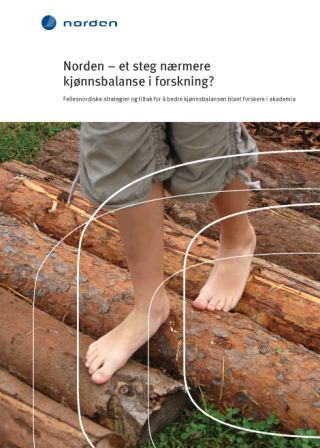
The new report The Nordic region – a step closer to gender balance in research? compiles what we know about legislation, research, statistics and measures, and it makes recommendations as well. The target groups are both the research sector and the gender equality sector.
“The topic of gender balance in academia often falls between two stools – research and gender equality. For us it’s important that politicians and bureaucrats from both sectors are the report’s main target groups,” Bergman emphasizes.
She hopes the report will result in more cooperation at the Nordic level.
“This is a long-awaited report. There is a need for Nordic cooperation and gender equality measures at the Nordic level, as well as at the European and international levels. Plus, Nordic cooperation can give a boost to the Nordic countries that lag behind the others,” she explains.
Scandinavian variation
The report shows that Norway and Sweden are unique; they are clearly the best in implementing gender equality measures in academia.
“But although Norway and Sweden have done the most with special measures to improve the gender balance, Finland is the country in the Nordic region with the most women in higher research positions,” says Bergman.
“Also, in a historic perspective Norway and Sweden have had a more positive attitude towards quotas and other women-specific measures than Finland. Despite this, Finland has long had the highest percentage of women professors in the Nordic region.”
Denmark has also had more faith in attitudinal change and less acceptance of specific initiatives. The situation for professors in Denmark is very imbalanced, with 85 percent men and 15 percent women.
“By the same token, I’m pleasantly surprised by Denmark. They have more good measures than you would think, both nationally and at the educational institutions.”
Iceland and Finland are best in the class
Recent figures show that Iceland, along with Finland, is now the Nordic country with the highest percentage of women professors in the Nordic region.
“Despite the small numbers that tend to inflate percentages, the trend on Iceland is interesting nonetheless,” says Bergman.
To gain a broader picture, it is also important to look at various recruitment patterns in the different countries, according to Bergman. For instance, the total number of professors varies widely and not all countries have a promotion system like Norway’s. In Norway there are two ways to become a professor, either by getting hired in a professor position or by being promoted to the professor level in a position the person already holds.
Not only numbers, but structures
The report also has a chapter on research policy reforms. Autonomy, excellence, internationalisation and innovation are a few of the topics touched on in the report.
“Often reports on gender balance and gender equality in academia only discuss the quantitative distribution of positions, but we believe it’s important to look more at structural factors such as research policy reforms and new trends that are now making headway in academia,” Bergman continues.
Due to the new focus areas, gender equality efforts in academia have become more diverse and more complex. According to the report, incorporating a gender equality perspective when new areas are introduced, such as the excellence initiatives, innovation or internationalization, has proven to be a challenge. And although gender equality is a stated objective in academia in the Nordic countries, there are few comprehensive studies of university and research policy in a gender equality perspective.
EU better than the Nordic region
Compared with the pan-Nordic level, Bergman believes that the EU has a longer tradition of discussing structural factors and difficulties that impede gender equality in research – even though the individual Nordic countries have been talking about the issue for a long time.
“One of the main points in the report is that the joint Nordic research and gender equality policy under the Nordic Council of Ministers has not addressed these issues – something that the EU has done.”
“Take the centres of excellence, for example. These centres are given high priority within the EU and the Nordic region, but they have a lower percentage of women than in academia at large. Why is this?” Bergman asks.
The report refers to a survey of the Research Council of Norway’s Outstanding Young Investigators scheme (YFF), the Centres of Excellence scheme (SFF) and the Centres for Research-based Innovation scheme (SFI). The survey found that clarifying the expectations of the applicants and taking gender equality into account in the application process may have a positive impact on the gender distribution of the applicants and those selected to receive funding.
“However, raising awareness and clarifying expectations is only one answer. There is far too little research on excellence. Excellence policy entails many different things, such as how research activity is organised and which publication patterns are given priority. And all of this must also be studied in a gender and gender equality perspective,” says Bergman.
”This issue has not been discussed enough at the Nordic level, while the EU has worked with it since the report Gender and Excellence in the Making was released in 2004.”
Natural science as the ideal
Hierarchies in research is another topic that should be discussed in the Nordic region, according to Bergman.
“Are the natural sciences still idealised in the research sector? What happens then to the humanities and social sciences? If a centre in the social sciences or humanities is granted excellence status, does it have to resemble the MST subjects, such as language technology?” Bergman asks.
“Some reports conclude that the excellence initiatives have been a setback for gender equality, but we don’t have all the answers. More research is needed, both on national and Nordic research initiatives,” she states.
According to Bergman, it is important to remember that gender equality and gender balance deals not only with women and men, but also with subjects, academic hierarchies, scientific content and priorities.
“What happens with the interpretive humanities and social sciences in a research world with excellence initiatives where the natural sciences are held up as the ideal?” she asks.
By: Kristin Auckland
Translated by: Connie Stultz
The source of the article is Kilden, Information Centre for Gender Research in Norway
Download the report here
- Text: NIKK
- Categories: Gender equality and welfare policy
- Published: 2013-08-12
Various Routes are Taken in Nordic Equal Opportunities Policy
The Nordic countries are often thought of as an ideal when it comes to gender equality and they are highly ranked in international comparisons. However, this does not reflect the whole truth about equality in the Nordic countries.
‘Sweden, Norway and Finland follow a Nordic model which means that their equality policies are characterised by a relatively strong legislative and institutional anchoring. Denmark differs in having a less robust policy,’ says Mari Teigen, a sociologist and research leader at the Institute for Social Research in Oslo.
Maria Carbin is a researcher at Umeå University and was a member of the research team for the EU-project Quing; Quality in Gender and Equality Policies, which lasted from 2006 to 2011. She has, among other things, analysed Danish policy documents concerning equality.
‘The Danish equal opportunities policy more resembles the form that is adopted in the rest of Europe. It has been accorded a low priority status and action that has been taken has been more often in response to directives from the EU and UN than arising out of Denmark’s own political agenda.’
It was, for instance, only after the EU Commission had directed criticism at Denmark that, in 2011, the Danish Institute for Human Rights was commissioned to promote equality between the sexes. Until then there was no independent authority responsible for this issue.
Denmark lacks a strong women’s movement

Maria Carbin considers that the issue of gender has not been problematised in Denmark in the same way as it has, for instance, in Sweden. The issue of feminism occupies a minor position in the debate and concepts such as that of a gender power system do not exist.
‘A weak women’s movement and the fact that Danish political parties have not had any women’s organisations since the 1970s may also have contributed to the fact that women’s issues are not placed high on the agenda,’ says Maria Carbin.
The Quing project and Maria Carbin’s research were completed before the change of government in 2011 when the Social Democratic Party came to power in Denmark and hopes were raised for a more active equal opportunities policy.
Karen Sjørup, who does research on equality issues, among other things, at Roskilde University, feels that such hopes have not been fulfilled.
‘We have a new minister for gender equality who is also responsible for the church. So far he has been very taken up with the issue of same-sex marriages and the situation of men, but apart from that not very much has happened.’
A high degree of employment among women and an extensive childcare system contributes to the fact that Denmark is often ranked highly in international comparisons of gender equality. Highly educated women are beginning to be seen in the higher echelons of trade and industry, but Karen Sjørup feels that this gives a misleading picture of the women’s situation on the labour market.
‘Most women are low-paid and do not have a university education. There is also a wage gap between women and men due to the fact that professions dominated by women are less valued than the traditionally male professions. The government does nothing to alleviate that gap and it’s a factor that does not register in international rankings either.’
Karen Sjørup confirms that Denmark lacks a strong women’s movement, but she speaks of several active networks which are pressing for change and working on concrete projects to promote equality.
‘These networks are generally ignored by the government and the projects receive no funding from the state,’ she says.
The Icelandic ‘glass rock’
In Iceland an increased number of women entered politics in the wake of the economic collapse. In the election of 2009 the share of women in the Icelandic parliament – the Althing – increased from 32 to 43 per cent and Iceland acquired a woman prime minister for the first time.
Thorgerdur Einarsdóttir, who is Professor of Gender Studies at the University of Iceland finds that it is to some extent the economic crisis, but above all the election victory of the Social Democrats and the Left-Green Movement, which explains just why this happened in 2009.
As in other countries, there is a clear tendency for the red-green parties to have more women in their lists than it is for the bourgeois parties. After the resurgence of the bourgeois parties in the most recent election, in 2013, the proportion of women in the Althing has somewhat decreased.
The state of women’s representation in politics explains why over the past four years Iceland has topped the rankings in the Global Gender Gap, which measures the levels of equal opportunities in 134 countries. However, Thorgerdur Einarsdóttir’s research shows that even if women have formally obtained more power the process is ambiguous.
‘Far-reaching liberalisation in Iceland has led to an equality paradox. At the same time as the women have obtained more visibility in public life, a relocation of power has taken place from politics to the market, which means that the level of influence they actually have has decreased.

Icelandic researchers also talk about ‘the glass rock’, a term which implies that women acquire high positions in politics and working life when times are particularly hard and they are thus exposed to a greater risk of failure.
‘In the wake of the economic collapse a woman was elected prime minister and was given the difficult task of reorganising the economy. However, after one term she no longer has the confidence of the voters,’ Thorgerdur Einarsdóttir says.
She says that the equality issues have not been given any space at all within this year’s election campaign, although the outgoing red-green government had put in place a wide range of policies aiming at increasing equal opportunities for women. An integration of equal opportunities into the state budget, prohibitions against strip clubs, an Act of Parliament on the sex trade in accordance with the Swedish model, as well as gender quotas on boards of directors according to the Norwegian model are some of these.
‘If you wanted to be critical you could say that these are ultimately just symbolic issues. They are measures which have not been expensive to put in place and which, in the absence of sanctions, unfortunately are not always being followed,’ Thorgerdur Einarsdóttir says.
Good policies – needing implementation
Mari Teigen in Oslo is one of twelve researchers who have been working on an investigation into equal opportunities policies in Norway which has received much attention and which has resulted in the reports A Structure for Equality 2011 and Policies for Equality 2012.

The mandate of the investigation has been extensive, with a focus on gender, class and ethnicity. Mari Teigen considers that the work has been characterised by innovative thinking in both its analyses and proposals for implementation.
‘The most important conclusion is that the integration of gender and social equality does not work in the way it has been thought to. Many more international studies point in the same direction. The policies might be good but the implementation remains inadequate.
When the investigation was submitted its chair Hege Skjeie, a professor at Oslo University, described the integration of gender and social equality as ‘the strategy of the powerless’. By this he means that the strategy is based on the expectation that people who do not themselves necessarily possess any competence in matters of equality apply an equal opportunities perspective to anything they do. Moreover, the issues of equal opportunities constantly have to compete with the other issues for which the respective authority or administration is responsible.
In order to alleviate the deficiencies in implementation there is a need for more effective guidance in relation to equal opportunities policies.
‘We propose that the ministry responsible for issues of gender and social equality is backed up by an authority, a regional directorate, which distributes funding and is given an overarching national responsibility,’ says Mari Teigen.
The investigation acknowledges considerable deficiencies when it comes to equal opportunities in politics, the educational system and working life, and it also focuses attention on women’s need for protection against assault and violence. Concrete measures are proposed in every field.
‘We have made a point of putting forward measures which have not been tested before,’ Mari Teigen says.
The twelve researchers of the investigation had no links with interested parties in the labour market. This, finds Mari Teigen, enabled them to formulate appropriate measures.
At the same time it implies that the parties do not have a duty to implement the measures.
‘The Swedish Delegation for Gender Equality in Working Life is at an advantage here. It has a broader composition and the work has been established more effectively right from the beginning.
The articles source is magazine Genus number 1/2013.
- Text: NIKK
- Categories: Gender equality and welfare policy
- Published: 2013-08-06
Should Daddy Stay Home with the Baby?
Reserving some of the parental leave period for the father is currently a hot topic in all Nordic countries. The Norwegian right wing has announced that they will do away with the ‘daddy quota’ if they win the election, and in Denmark the government’s promise to introduce the policy was recently put off.

Reserving some of the parental leave period for the father is currently a hot topic in all Nordic countries. The Norwegian right wing has announced that they will do away with the ‘daddy quota’ if they win the election, and in Denmark the government’s promise to introduce the policy was recently put off.
‘We’re very concerned about the political signals from the right wing. The large proportion of women in the labour market is a competitive advantage for Norway, and if the daddy quota is abolished, the female talent pool in the labour market may shrink,’ says Kristina Jullum Hagen from the Confederation of Norwegian Enterprise (NHO), Norway’s major organisation for employers and the leading business lobby. Norway has just decided to increase the daddy quota to 14 of 58 weeks, yet there is a general election in September and the right wing has announced that they want to abolish the daddy quota. The families should be free to decide how to split the parental leave, they say.
The earmarking policy is being discussed in Denmark, too. The centre-left government consisting of the Social Democrats, the Socialist People’s Party and the Danish Social-Liberal Party has forwarded the earmarking issue to a working group for further discussion. The quota policy was initially part of the government agreement, but at this point the outcome is uncertain.
‘The parental leave legislation has become a highly politicised issue. In Denmark in particular, but also in the other Nordic countries. Should there only be a mummy quota, or should fathers be given the same treatment? Should the state regulate family life to achieve a more gender-equal society? Parental leave legislation touches upon some major questions related to parenthood and parents’ care and breadwinning responsibilities, so it only makes sense that opponents and supporters of earmarked parental leave react so strongly,’ says Anette Borchorst, professor in political science at Aalborg University.
5-month daddy quota
Gender equality supporters in the Nordic countries like to use Iceland as a good example. Since the year 2000, the country has had three months of the parental leave reserved for the father and three months for the mother. This year Iceland decided to extend the parental leave period by three months, with five months reserved for the father, five months reserved for the mother and two months for the family to decide about. The extension was supported unanimously by the Icelandic parliament and will go into effect in 2016.
‘In Iceland we’re very proud of being one of the most gender-equal countries in the world. Our parental leave legislation was poor prior to 2000. When we finally decided to make new rules, it was only natural to split the leave equally between men and women,’ says Ingólfur V. Gislason, Icelandic senior lecturer in sociology. He feels that the splitting of parental leave into three parts has been crucial to Icelandic family life. ‘Fathers have really used their quota. They have become closer to their children than in the past.’
Maternal leave
Supporters of generous parental leave rules in the Nordic countries use two main arguments: More time off increases the presence of fathers and helps women focus more on working life. Finland currently has a daddy quota of six weeks and three weeks of paternity leave immediately after the birth of a child. However, parts of the political left wing and The Greens have since 2006 promoted a model with six months reserved for the father, six months reserved for the mother and six months that the family can share.
‘The emphasis on the role of the mother is stronger in Finland than in other Nordic countries. Strong voices in the Finnish debate claim that children should be with their mothers until age three. A daddy quota without an extension of the total parental leave period would be considered a reduction of the maternal leave, so such a policy would never gain broad support’, says Johanna Lammi-Taskula, researcher at the National Institute for Health and Welfare in Finland.
Historical roots
The way parental leave has been shared in the Nordic countries has historical roots, says Sofie Cedstrand, analyst at the Swedish Social Insurance Agency whose PhD thesis analysed the historical processes that led to the different rules for parental leave in Denmark and Sweden.

‘In the 1970s, the Danish gender equality debate was just as intense as in Sweden, and there was a focus in both places on helping women enter the labour market. But in Denmark there was a widespread notion about protecting women and their special conditions. Swedish gender equality supporters managed to reformulate the gender equality discussion to an issue of gender neutrality and individual rights for both fathers and mothers, which made it possible for Sweden to introduce paternal leave as the first country in the world,’ says Cedstrand, who sees the same pattern in the Danish debate today.
‘In 2001, Denmark extended the parental leave period and also removed the four-week paternal leave requirement. But they didn’t touch the 14-week mummy quota. I see that as a remnant of the 1970s gender debate,’ says Cedstrand.
Consequences
Nina Smith, professor in economics at Aarhus University, points to significant gender-related consequences of this attitude. In her most recent study, she found a dramatic effect of Danish parental leave, which is mainly taken by women.
‘Danish women are subject to collective punishment. They are basically considered inferior labour, and less resources are invested in them. The opposite is true for men. There are no collective expectations that family life will affect a man’s career. And men are severely punished if they insist on going on paternal leave, as it makes them look unmotivated in the eyes of their employers,’ she explains.

This is the very reason Kristina Jullum Hagen from the Confederation of Norwegian Enterprise (NHO) is concerned about the right wing’s intention to abolish the daddy quota if they win the election. ‘We’re afraid it will give Norway the same pattern as in Denmark. It will throw us back to a situation where women have to carry the burden of parenthood. We are concerned it will lead to reduced job opportunities and less access to talent, since it will give highly qualified women a weaker connection to the labour market.’
Johanne Mygind, freelance writer nikk@nikk.gu.se
- Text: NIKK
- Categories: Gender equality and welfare policy
- Published: 2013-07-19
NIKK to explore the costs of part-time work
We already know that women work part-time more often than men, but how does it affect them economically? NIKK is determined to find an answer to this question as part of a Nordic project. The results will be presented in October at a conference in Stockholm.
Part-time work is common in the Nordic countries, especially among women. About 41 per cent of all employed Norwegian women work part-time, and part-time work is common in female-dominated occupations. The situation is similar in the other Nordic countries – the only exception is Finland, where it is more common that women work full-time.
As part of the Swedish chairmanship in the Nordic Council of Ministers, the resource and information centre Nordic Information on Gender – NIKK – has been commissioned to conduct a Nordic study of the short- and long-term consequences of part-time work. NIKK will explore the economic effects of part-time work for employees and their families, with an emphasis on how it affects gender equality. Besides salary differences, the study will also focus on pensions and public social security benefits. Since many part-time workers share family financial responsibilities with a partner, the study will look at incomes at both the individual and family levels. What happens in cases of separation or the partner’s death will also be studied.
Marianne Sundström, professor in labour market economics at Stockholm University, will conduct the study together with Master’s student Alma Lanninger Wennemo. The project will have a reference group consisting of Helle Holt, senior researcher at the Danish National Research of Social Research in Denmark, Cathrine Egeland, research director at the Work Research Institute in Norway, Johanna Lammi-Taskula, senior researcher at the National Institute for Health and Welfare in Finland, and Guðbjörg Linda Rafnsdóttir, professor in sociology at the University of Iceland. The researchers will meet at a workshop in Gothenburg on 1 March. A pre-study has been completed by MA Sandra Engelbrecht.
The results of the study will be presented at a Nordic conference arranged by NIKK in cooperation with the Swedish chairmanship in the Nordic Council of Ministers on 22 October in Stockholm. The study will also be presented at the NIKK’s website and in various publications.
Questions can be directed to Bosse Parbring, who is coordinating the project.
Email: bosse.parbring@genus.se
Tel. +46 (0)31 786 92 30
- Text: NIKK
- Categories: Gender equality and welfare policy
- Published: 2013-07-10