
With the aime to engage men in gender equality
What is the link between gender inequality and human trafficking? This theme will be addressed on 23 May in Reykjavik at a conference titled Mobilizing Men and Boys for Gender Equality in the Baltic Sea Region.
The event in Reykjavik is a so-called barbershop conference, which is an Icelandic concept aimed to engage boys and men in the gender equality work. María Mjöll Jónsdóttir, UN director at Iceland’s Ministry of Foreign Affairs, is co-organising the conference. She argues that men’s engagement is essential in order to break away from norms of violence and manifestations such as human trafficking. The conference will begin with a panel discussion at which, among others, Sigríður Björk Guðjónsdóttir, Reykjavík chief of police, and Per Anders Sunesson, Swedish ambassador against trafficking in persons, will talk about their work with boys and men to combat human trafficking.
Tell us about the conference. What else are you going to do?
‘We will have a workshop dealing with gender stereotypes in society and how they affect us, and another workshop will focus on gender-based violence. There will also be an expert panel discussing causes and effects of human trafficking in the region. The participants include representatives from various sectors of society, including law enforcement, international organisations, universities and policy makers.’
Why have you chosen to focus on human trafficking?
‘The event is hosted by the Nordic Council of Ministers and the Council of the Baltic Sea States, both of which have worked hard against human trafficking for a long time. We know that trafficking in persons is a widespread problem in the region, although we don’t know the exact extent of it. The main victims are women who are exploited for sex, but there are also men who become victims of forced labour. To stop the trafficking, we need to focus on norms and attitudes, among other things. The participants we want to reach include those who work in the school systems and young professionals who can benefit from a gender perspective on issues in their work.’
What can the Nordic and Baltic countries learn from each other?
‘We have a lot to learn from each other, not least in terms of best practice, or how the countries involved have solved various problems. I’m looking forward to a fruitful discussion on how we can take this work further.’
Finally, where did the concept of Barbershop conferences come from?
The idea dates back to our former president, Vigdís Finnbogadóttir, who was the world’s first democratically elected female president. When she went to the women’s conference in Beijing, she was struck by the low male attendance. The intention with barbershop conferences is to involve more men in the gender equality work, since they are needed in order to solve the problem. It has attracted a lot of interest internationally.’
- Text: NIKK
- Categories: Gender equality and welfare policy
- Published: 2017-05-14

How to break the cycle of violence? New report maps the situation in the Nordic region
Gender-related violence is a widespread and persistent problem in the Nordic countries. What are the best methods to change the behaviour of the perpetrators and thereby end the violence?
During the Finnish presidency in 2016, the Nordic Council of Ministers initiated a project to map out the different services available in the Nordic countries and the autonomous regions for perpetrators. The project was titled ”Nu Räcker Det”! Nordiska modeller för att få slut på våld i nära relationer (meaning [It’s] Enough Now! Nordic models to end violence in close relationships).
The new report ”Nordic Countries Overview of Work with Perpetrators of Intimate Partner Violence” includes everything from which treatments perpetrators are offered to challenges and results.
Regarding the main results obtained most of the service providers are allocated in an urban area. Moreover, long-term funding is not very common in the Nordic Countries. One third of the staff works part-time, and it is mostly composed by psychologists.
Some of the recommendations in the report: Long-term commitment in terms of financial resources is required. Different referral routes or paths of entry should be accommodated. Staff should be specialized and programmes should focus recognizing the gendered dynamics, impacts, and consequences of violence. Partner should be included in the treatment process in different forms.
- Text: NIKK
- Categories: Gender equality and welfare policy
- Published: 2017-05-03

‘We must create a society where women’s attire doesn’t matter’
The issue of restricting women’s wearing of veils is currently being debated in the Nordic countries. In Denmark, the tone of the debate is rather fierce. In Sweden, many women are reporting verbal attacks and harassment. Nordic Information on Gender (NIKK) talked to one woman from each Nordic country about people’s attitudes to the veil issue and what changes will be necessary to enable women to wear veils freely and without judgement.
In France, Belgium and the Netherlands, there are laws prohibiting the wearing of face-covering veils in public. The veil issue is on the political agenda in the Nordic countries as well. In both Denmark and Norway, there are discussions of a possible veil ban in schools. In Sweden, the National Agency for Education has decided that schools can ban students from wearing face-covering veils in certain situations.
At the same time, an increasing number of veiled women can be seen in the media and popular culture. The fourth and final season of the celebrated Norwegian TV series Skam is focused around a character named Sana, who wears a hijab. At New York Fashion Week, Indonesian designer Anniesa Hasibuan presented her collection of hijab outfits, and in Sweden a play titled Swedish Hijabs addresses stereotypes against Swedish women and has toured the country. What are the consequences of the ongoing debate in the Nordic countries? In NIKK’s survey, one person from each country has answered three questions:
1. What is the attitude to veiled women in your country?
2. Has the attitude changed over time?
3. How does society need to change in order for women to wear veils as they wish?

Natasha Al-Hariri, community organizer, Denmark
1. It’s difficult to give a general description of the attitudes towards hijabis, because it is a piece of clothing that everyone have an opinion about. Our politicians, and especially the government, are very harsh when it comes to hijabi women. I remember a politician that represented the Liberal Party Venstre in Denmark on a tv-show, saying that he understands totally if a company don’t want to hire hijabi women – and thereby more or less promoting discrimination. Really awful, because we do have issues with discrimination, hate crimes and racism. It often get worse right after an attack of any sort in the West, carried out by people who swear allegiance to ISIS. As a hijabi I am extremely aware of myself in public spaces, and even more in times after attacks. On the other hand, it just makes me so happy to see hijabi women used in mainstream media and advertising. It shows a development that starts to see a hijabi women as a human and woman first.
2. Both yes and no. I’ve been challenging the narrative on hijabis for 10+ years, and at times it feels like we have not moved the least. Obviously it is still questionably whether hijabis should be allowed the same jobs as everyone else! Ten years ago hijabis were described as oppressed, dependent, not educated and barely even able of speaking Danish. There were no nuances whatsoever of women wearing the hijab. Today we see that muslim women in general are being portrayed more varied and not only in relation to their hijab. At times it feels like we’ve moved so much, and other times it feels like we haven’t moved at all.
3. The same social change that is needed to stop all sorts of hate crimes against all minorities. That we are all human beings, and that we all have equal rights to be here – and therefore to be treated equally. That is my dream scenario of how the world should be.

Derya Ozdilek, teacher engaging in multicultural work, Iceland
1. I’m from Denmark and have lived in Iceland for four years. Only about 30 women wear a veil here on a daily basis. I would say Icelanders generally don’t think negatively about veils. Rather, they are interested in why we wear it. Sure, a lot of bad things are happening in the world right now, and there is widespread Islamophobia. But we don’t really notice it in everyday life here in Iceland. If people ask me about the veil or what it’s like to be a Muslim woman, I offer them coffee and tell them my story. This helps them understand the difference between the image conveyed in the media and what it’s like in real life. I’m very open and happy to share things, and people know that. This is also my answer to the second and third question.

Bilan Osman, journalist and debater, Sweden
1. There is a historical continuity in viewing the veil as something foreign and oppressive. That attitude is also present in Sweden and affects the way veiled women are treated. The women have to endure a lot of name-calling, and physical violence is also common. This stuff happens frequently in places like buses and trains. For example, some guy might grab a veil and try to rip it off the women’s head. It doesn’t help that we have a debate where the veil is lifted as a symbol of Muslim men’s oppression of women. The whole debate is characterised by ignorance and simplifications. In Sweden, some political parties at the local level are arguing for a veil ban based on the view that the wearing of veils is linked to honour-related oppression. This is not true. The debate is very populist.
2. I believe the way veils are discussed in the public debate has affected the situation in Sweden. In the Sweden Democrat’s election campaign in 2010, women in burkas were used as a symbol of everything that’s bad about immigration. Those types of campaigns and narrow-minded contributions to the debate are making the situation worse. People can use it to confirm their prejudices and to justify attacks on Muslims.
3. I think, above all, that we need to get a basic attitude change. The general approach to the head scarfes is connected to several things. Among other things, people do not know why women wear veil. But actually, there is no excuse for that in today´s information society: google it and learn! Just like working on all forms of racism, you need to start with value-based work at schools and workplaces. I think can also attitudes can change the more women in head scarfes are allowed to appear in all parts of our society. It is in the meeting with others prejudices get challenged. There is also a need of more veiled women in public, as news anchors in television. It normalizes and changes hopefully people’s attitudes.

Sumaya Jirde Ali, debater, Norway
1. I see two different worlds when it comes to people’s reactions. I’m very active on Facebook. The attitude can be very intense and vicious in the comment fields. People bring up my religion and the veil, no matter what the debate is about. If I write “I like carrots”, I get a response like, “You can’t like carrots until you take that stupid bandage off your head”. They want a ban and call me brainwashed, indoctrinated and naive. Then there’s the off-line reality, which is different. I am a very friendly person and have no problem reaching out to people. Only once have I been confronted by a hateful person. The vast majority of Norwegians are good people who treat you respectfully when they soon realise you are not all that different. They don’t care what’s on my head, but what’s in my head. The big differences between the attitudes online and in real life can be difficult to handle.
2. I think it has become more socially acceptable to simply want to ban things you don’t like. It is very unfortunate. Last year, two women were told they couldn’t wear their hijabs at the nursing home where they worked. None of the residents had any objections to it, instead the decision was made because the residents’ home environment must be “safe”. What does that even mean? The hijab debate will go on forever, like so many other debates, but when for example the European Convention on Human Rights legitimises bans and discrimination by giving employers the right to refuse staff requests to wear a hijab, we can’t pretend that everything is like it used to be.
I would not say that my life has become more difficult. I am an outspoken person who won’t take any crap. I’m fully aware of my rights and if anyone denies me or violates any of them, I will let them know. But I’m thinking of all my Muslim friends who are pressured not to wear hijabs anymore because of the social control that exists in society when it comes to this type of clothing. It’s no longer enough to be integrated, you have to be assimilated, which means you need to take off your hijab. It irritates me to no end.
I have Muslim friends who don’t want to wear hijab anymore because the harassment they knew it would generate became too much to handle. I know girls who have been openly attacked, girls who have been threatened, because they wore hijabs. There are a lot of horror stories, and we hear new ones every day.
3. Knowledge is the key to most things. And openness. You can’t ban everything you don’t like. You can’t avoid everything that’s different. If you isolate yourself with like-minded people, you will never achieve the intellectual development your mind is longing for. I believe that it is in the encounters with contrasts that you develop into a better version of yourself, so you need to talk and ask questions. Be critical but objective. And to girls who wear hijabs, I want to say: When people display openness, curiosity and a willingness to learn about the veil/the religion – don’t be offended when they express themselves awkwardly or ask things everyone should know. Instead, be open-minded and courteous. Crush the prejudices instead of confirming them.
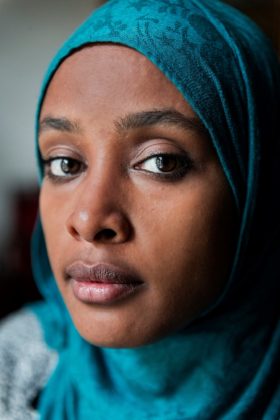
Maryan Abdulkarim, freelance journalist and debater, Finland
1. Like other European countries, Finland has problems with Islamophobia. One expression of this is the veil debate. I think it’s interesting with people who argue that the veil is a symbol of Muslim men’s oppression and in so doing claim to stand up for veiled women’s equal rights. The thing is that the same people would never defend these women’s human rights in any other context. But since the veil is something that deviates from Western culture, that’s what they choose to focus on. I believe the veil debate directs attention away from other, more important issues. In Finland, I sometimes get a lot of criticism when I as a feminist wear a veil in a public context. The critics often don’t want to understand my perspective.
2. In the early 90s, the big Finnish newspapers could publish racist cartoons with veiled women without being criticised. Today, that’s not possible. The Finnish anti-racist feminist movement is stronger than ever, and it’s very assertive. In the last election, our feminist party won a seat in the Helsinki City Council for the first time ever, while the right-wing populist the Finns Party lost several seats. I believe the success of these sentiments has passed its peak.
3.We need to create a society where it doesn’t matter how women dress. The first step is to crush the patriarchy. The present debate is very contradictory. People talk about banning the veil to protect the freedom of women. But what’s freedom if not being able to choose what clothes to wear? I think we should stop talking about the veil. The more attention we give to this garment, the more fuel it adds to the distorted debate. Instead, we should raise the question: Why is it at all acceptable to regulate how people should dress? And why is the focus always on the bodies of women?
- Text: NIKK
- Categories: Gender equality and welfare policy
- Published: 2017-04-28

Important Progress Made at CSW – But the Nordic Countries Are Aiming Higher
The UN member states will work to eliminate the pay gap between women and men in order to redistribute the unpaid domestic work. This promise was made at the United Nations women’s summit, CSW61. But the link between women’s sexual and reproductive rights and their economic independence is too weak in the final document, according to several Nordic ministers.
‘I’m glad we now have a document that guides countries on how to strengthen women in working life, when it comes to salary differences, unpaid domestic work, violence and discrimination. But Norway had higher aspirations for women’s rights than reflected in the final document,’ writes Solveig Horne, Norwegian minister of children, equality and social inclusion, in a commentary.
After two weeks of intense discussions in New York in March, the countries ended the United Nations women’s summit by declaring a series of commitments to promote women’s economic empowerment.
Important progress was made. Among other things, the countries agreed to pursue an equal pay policy by means of for example collective agreements, work evaluations and salary reviews.
‘We are very pleased in particular with the increased recognition of the role of the private sector in achieving gender equality, in particular when it comes to ensuring equal pay for work of equal value,’ says Þorsteinn Víglundsson, Iceland’s Minister of social affairs and equality.
Express disappointment
The member states must ensure women’s full and equal participation in the economy, their right to work and their rights in the workplace. All commitments are expressed in the final document as important steps in order to achieve sustainable development.
The Nordic countries and a large group of ‘like-minded’ states made active efforts in the negotiations to acknowledge more strongly that women’s sexual and reproductive rights are of key importance to women’s economic empowerment. The link between these rights and women’s economic independence is indeed included in the conclusions, but many of the like-minded countries would have preferred a much stronger statement.
In a press release, Denmark’s Minister for Equality Karen Ellemann expresses her disappointment that the final document does not emphasise the connection between women’s economic independence and their sexual and reproductive rights.
‘The final document from the United Nations women’s summit shows that the struggle for women’s rights has lost not only its financial but also its political support,’ she writes, with reference to the fact that CSW61 was held in New York after US President Donald Trump’s cutbacks on US financial aid to organisations that promote women’s sexual and reproductive health and rights.
Sweden will be a strong voice
Sweden’s Minister for Children, the Elderly and Gender Equality Åsa Régner writes in a commentary that ‘parts of the conclusions reflect neither the EU’s nor Sweden’s approach to gender equality and the rights of women and girls.’
She adds that ‘Sweden will continue to be a strong voice on these issues.’
Pirkko Mattila, Finnish Minister of Social Affairs and Health in Finland comments:
‘The Agreed Conclusions bring us forward in increasing women´s labour market participation, which is crucial for women´s economic independence. This is a step in the right direction. The CSW, however, failed to address the issue of SRHR properly; a stronger position on SRHR would have been much needed. These rights are also vital from the point of view of women´s and girls´ ability to complete their education and for future participation in working life.’
- Text: NIKK
- Categories: Gender equality and welfare policy
- Published: 2017-04-11

Feminist Parties Moving Forward in the Nordic Countries
Feminist political parties are enriching the political environment in an increasing number of Nordic countries. On Sunday, the Finnish Feminist Party will participate in the country’s municipal elections. The asylum issue and basic rights of refugees are high on their agenda.
Finland’s Feminist Party started last summer. It will participate in nine of Sunday’s municipal elections and has its highest number of eligible candidates in Helsinki. One important issue in the election campaign in the capital has been the handling of newly arrived immigrants and refugees.
‘We see that fundamental human rights are not respected when it comes to refugees. It is an inhumane process where many are sent back, despite the fact that they will not be safe in their home countries,’ says Katju Aro, leader of the party.
According to Aro, refugees who have had their asylum applications rejected and been kicked out from their asylum housing have set up tents in the centre of Helsinki. They lack housing, food and water and are at risk of freezing to death.
‘Our government wants to convey the message that they must fend for themselves if they don’t leave the country. The government thinks that their responsibility ends when the asylum process is over. But we believe that this treatment violates both human rights and Finnish legislation.’
The Feminist Party’s engagement in the refugee issue is not surprising, says Katju Aro. The party started as a reaction to right-wing populism and growing xenophobia. When the nationalist Finns Party won a landslide victory in the recent parliamentary election, she felt that something needed to be done.
‘Two friends and I have been active in non-profit organisations and pushed feminist issues there, but we felt that it didn’t lead to any changes that were big enough. It was time to take the next step and go into party politics,’ she says.
Inspired by Feminist Initiative
Finland’s Feminist Party has drawn a lot of inspiration from Feminist Initiative in Sweden. Katju Aro says that they studied carefully the Swedish party’s policies, and today the two parties share a similar ideological foundation, where antiracism and an intersectional perspective are of key importance.
‘I think it reflects the issues that are important to Finnish feminists. Or maybe we are a little more progressive than the feminist movement as a whole,’ says Katju Aro.
She continues to say that the interest in the party has been strong since its inception, from both the media and people in general.
‘We have also noticed a change in the established parties since we came into the picture. Now all parties have feminist issues on their agenda. It didn’t use to be that way,’ she says
Katju Aro does not want to speculate about the election results, but hopes to get at least one person into the Helsinki City Council.
‘There is a small chance and it would be a big deal to us,’ she says.
The Women in Iceland Created World History
Feminist parties are not a new phenomenon in the Nordic countries. The first women’s party in Iceland was founded already in 1908. When it participated in the municipal election in Reykjavik, it received 21.8% of the votes and became the largest party in the city council. In 1983, the Icelandic women once again created world history. The newly formed party, the Women’s List, gained three seats in the Icelandic parliament. No other women’s party in the world had ever been able to enter a national parliament.

Ragnhildur Vigfúsdóttir was active in the party and remembers how they put new issues on the political agenda.
‘At that time, only unmarried mothers were entitled to day care for their children. We took on the issue at city level and pushed the right to day care for all children,’ she says.
The Women’s List also focused on the environmental issue and brought attention to men’s violence against women.
After 15 active years, the party was dissolved. It made a significant difference in Icelandic politics, according to Vigfúsdóttir.
‘I’m convinced our work paved the way for Iceland’s current tripartite parental insurance.’
An Intersectional Approach
Swedish political party Feminist Initiative was formed in 2005. The idea was to bring together feminists from different grass-root movements in a single party, thus gathering issues related to antiracism, LGBT and gender equality under the same umbrella.
‘We had an intersectional perspective from the outset. If you are a feminist and want to fight for equality among all people, you can’t just fight for the rights of women. You have to fight for the rights of all discriminated groups,’ says Lotten Sunna, co-founder of the party and currently its spokesperson on issues related to social security.
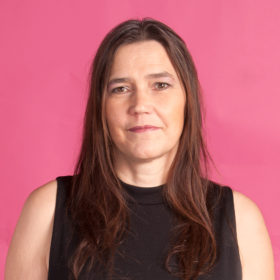
The other Nordic countries have shown great interest in the party. Its leader Gudrun Schyman have visited them many times to talk about the party’s work. Today, both Finland and Norway have similar parties, and a Danish feminist party is in the pipeline.
‘I think it’s because the political development is similar across the Nordic region. Some parties want to close the borders, and we offer an alternative in that view,’ says Lotten Sunna.
She argues that similar trends can be seen outside the Nordic region. England has a feminist party, just as Poland and Germany.
‘It would be wonderful if there were feminist parties in so many countries that we could form a feminist group in the European Parliament that could push the issues. That would be a dream come true,’ says Lotten Sunna.
- Text: NIKK
- Categories: Gender equality and welfare policy
- Published: 2017-04-04
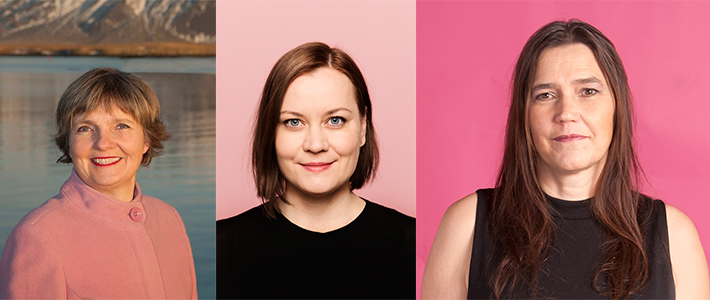
Transgender people given a clean bill of health in Sweden and Denmark
Sweden is following Denmark’s example and will no longer consider trans persons mentally ill. ‘This is an important change,’ says Lukas Romson, gender equality consultant and trans expert in Sweden.
Other Nordic countries will continue to classify transgender people as mentally ill.
According to Lukas Romson, the change is symbolically important and will influence the view of transgender people in both healthcare and the rest of society.
‘There are those who think we are nuts and that we can’t be taken seriously, and they often base their arguments on the psychiatric diagnoses,’ he says.
Earlier this year, the Swedish National Board of Health and Welfare published a press release stating that health care providers should no longer consider transgendered people mentally ill. Exactly how the change will be implemented remains unclear, but the decision is well in line with the ongoing international work within World Health Organization, WHO. In the draft of the next edition of the International Classification of Diseases (ICD) manual, the transgender diagnoses (transsexualism and other gender identity disorders) have been moved from the psychiatric diagnoses to a new chapter.
The updated manual, ICD-11, will be adopted by WHO next year, but Danish policymakers seem to have considered the issue more urgent than that. The Danish parliament decided unanimously already last year that the psychiatric transsexuality diagnosis should be removed. The change went into effect in January this year and Denmark thereby became the first country in the world to declare transgender people healthy.
‘The removal of the diagnosis was an important step, but it is mainly a symbolic measure,’ says trans activist Charlie Hedman.
He is involved in the Trans Political Forum, which has worked hard together with for example Amnesty International Denmark to have the diagnosis removed. Despite the fact that transgender people in Denmark are no longer classified as mentally ill, access to gender-affirming medical treatment still requires a psychiatric evaluation, something Charlie Hedman is critical of.
‘We still have to undergo IQ and personality tests, and we still have to answer strange questions, like whether we think about our parents when we masturbate and whether we enjoy setting things on fire,’ he says.
Reduced quality of transgender medical care
Danish transgender care has received sharp criticism, including from Amnesty International Denmark. The Danish Health Authority is currently developing new guidelines for healthcare providers. Charlie Hedman wants the transgender care to be based on informed consent so that the patients can have the final say about their treatment. In practice, he says, Denmark had such a system until just a few years ago. Back then, trans persons could receive care from their local doctors, but in 2014 the care was centralised to Sexologisk Klinik in Copenhagen. He claims that this led to marked deterioration of Danish transgender care: the evaluation periods have become longer, it has become harder to get treatment and many people feel they are not treated well.
‘Those with money get their surgeries done in other countries. That’s what I did. I went to Germany.’
Foreseeing concrete effects
Lukas Romson foresees concrete effects of Sweden’s initiative not to consider transgender people mentally ill.
‘It may make it easier to get a job in for example law enforcement and the military, occupations where people with a psychiatric diagnosis risk being disqualified,’ he says.
For the same reason, it may become easier to be approved for international adoptions, since many countries do not allow people with psychiatric diagnoses to adopt their children, he adds.
‘There’s a lot happening in the Nordic countries right now. And it’s happening very fast,’ he says and mentions for example Norway’s new gender identity law, which went into effect last year.
The law has made it easier for people to change their legal gender and the fact that it includes both children and adolescents makes it stand out both in the Nordic region and internationally. In the other Nordic countries, people under age 18 have no possibility to change the legal gender.
Other Nordic countries staying passive
There are no indications that Norway, Finland and Iceland are about to remove the transgender diagnoses anytime soon. In Norway, the transgender movement is hoping this will change with the publishing of ICD-11.
‘We won’t push the issue until then, since we want to be sure that a change won’t lead to a degradation of the transgender care,’ says Luca Dalen Espseth, adviser at the Norwegian Organization for Sexual and Gender Diversity.
Charlie Hedman is disappointed that the development in Denmark has not led to any changes in Danish healthcare, although he is still hopeful. The abolition of the psychiatric diagnosis requires a change, he says.
‘We are not mentally ill and now that this is confirmed, we must be seen as people with agency and the right to decide over our own bodies.’
- Text: NIKK
- Categories: Gender equality and welfare policy
- Published: 2017-03-27

Gender power structure and women’s situation in the labour market
A commonly raised question is why women are on sick leave from work more than men. But Sara Hultqvist, author of a recent report on sick leave and gender in the Nordic region, thinks that the question is incorrectly formulated.
‘What should be focused on instead is that some sectors of the labour market, in which mostly women work, offer unacceptable working conditions.’
The report, titled “Sjukskrivningar och genus i Norden – vad vi vet och inte vet” [sick leave and gender in the Nordic countries – what we know and do not know] was produced by the Nordic Welfare Centre at the request of the Nordic Council of Ministers, with an aim to give an overview of the psychological health in the Nordic region from a gender perspective. The statistics show that women’s sick leave rates are higher in all Nordic countries. The biggest gender differences are found in Norway and Sweden, while the gaps are smaller in Finland and Iceland. Three common explanations for the gender differences are women’s ‘double work’ burden, their health and the work environment. But the research in the area is insufficient and has so far been able to explain only a fraction of the gender gap.
‘What’s most striking is that we still know very little. Few studies have proven the link between women’s double work and sick leave. One explanation may be that the tools used to measure these things are too dull,’ says Sara Hultqvist.
She believes the issue should be seen through several layers and with an understanding of how the gender power order affects women’s situation in the labour market. A woman who works double shifts, in the sense that she not only works in the labour market and but also is in charge of family life and household work, may also be single and employed in a low-paid occupation
‘I think a big reason for women’s high sick leave rates is the gender-segregated labour market, where female-dominated sectors are assigned less value,’ she says.
The report from the Nordic Welfare Centre calls for a plethora of studies exploring the issue from new angles. The need for categories other than ‘man’ and ‘woman’ is emphasised. In the current discourse, the healthy man is considered a norm that women should strive to comply with.
‘By instead looking at categories such as class, education or age, we might discover other patterns and models,’ says Sara Hultqvist.
She also thinks it is important to look at the organisation of the work. According to a recently published report from the Swedish Work Environment Authority, sectors dominated by women are characterised by problems in the work environment, a higher risk of health problems and a higher probability that employees quit due to illness or dissatisfaction. Sara Hultqvist calls for more case studies of occupational groups such as preschool teachers, healthcare personnel and social workers.
‘At present, there are mainly register-based studies of the inequality. But there is a need for more specific case studies in which workers are interviewed about the causes of the health problems. They probably know best why they’re not doing well.
A major problem in the development of the report was the lack of compatible data for the Nordic countries. For example, there are no comparative statistics on short spells of sick leave as occasional days and weeks off are only reported to the employer, which makes some types of health problems invisible.
‘I’m for example thinking of men’s violence against women, which can lead to brief sick leaves, or menstruation-related issues that keep women from going to work,’ says Sara Hultqvist.
Are there any differences among the Nordic countries in terms of how they address the sick leave problem?
‘There are differences in the type of research being done. In Norway, there are several studies on biological differences between male and female bodies. And in Sweden, there is a focus on gender rather than biological sex,’ says Sara Hultqvist.
- Text: NIKK
- Categories: Gender equality and welfare policy
- Published: 2017-03-20

‘One problem is the salaries’
Nordic representatives will contribute to the international debate on gender equality in the workplace and the labour market at CSW61, the theme of which is Women’s Economic Empowerment in the Changing World of Work. But how effective are the Nordic solutions? Nordic Information on Gender talked to Lynn Roseberry, one of the experts involved in the event.
The sixty-first session of the Commission on the Status of Women, which is the principal global intergovernmental body dedicated to the promotion of gender equality and the empowerment of women, is currently underway. The event gathers thousands of participants every year, and the Nordic governments attend with delegations that include both experts and NGOs. This year the Nordic Council of Ministers will arrange a panel debate titled “Gender Equality the Nordic Way: What Can We Learn from It?”. Lynn Roseberry, associate professor at Copenhagen Business School, will participate in the debate.
What’s the present status of gender equality in the Nordic region?
‘Overall, the Nordic countries are international forerunners in the area of gender equality work, but this doesn’t mean there’s nothing more to do. We still have big problems with men’s violence against women in the Nordic countries, and with online sexism and hate speech. We are also trailing many other countries when it comes to for example the gender distribution in politics. And large differences can be found among the Nordic countries.’
What are the biggest challenges when it comes to the labour market?
‘One problem is the salaries, which are not fair. In for example Denmark, the unexplained salary gap between women and men is eight per cent. One explanation for this is that the women work more part time and go on parental leave more than men. There are laws regulating the equal pay issue, but the problem is that they don’t work. The same is true for the gender equality plans that each workplace is supposed to establish. They don’t change norms and attitudes. The gender quota laws are not making much of a difference either. They just change the gender balance at the top level of companies.’
What are the solutions to these problems?
‘We need new methods. The gender segregation in the labour market is one big problem. It starts early – already when kids choose which educational paths to pursue – and then there are a whole bunch of factors that reinforce the gender inequality. One example is the recruitment process. Many job advertisements are gender coded. For example, a male-coded advertisement reading ”We are looking for a strong person who will work in a highly competitive environment” will attract more male than female applicants. Today there is computer software that can identify this practice. I also advocate gender-blind recruitment, meaning that factors such as gender, age, ethnicity and marital status are removed from the assessment of job applications.’
‘Voluntary training on gender equality issues for management staff is also important. I advocate the establishment of formal mentoring networks, especially in male-dominated workplaces. Men often benefit from informal mentors, while women become invisible in these environments. One solution to this is to pair women with men in a formal structure. However, it is important that there is a person in charge of the mentoring network and that the initiative is approved at the management level.’
- Text: NIKK
- Categories: Gender equality and welfare policy
- Published: 2017-03-14

Joint feminist struggle changed society in the Nordic region
Trump in the White House and growing right-wing populism in Europe. It is easy to feel frustrated with the situation in the world. However, it is important to remember the feminist advances that have been made and the multifaceted struggle that is underway around the globe. Today NIKK (Nordic Information on Gender) talks about reforms that have been critical to women’s economic independence and that may never have seen the light of day without feminist resistance and Nordic cooperation.
Which reforms in Nordic gender equality history have had the greatest effect on gender equality? According to Kirsti Niskanen, professor in history at Stockholm University, the issue of women’s economic independence runs as a common thread through the entire 20th century.
‘The liberation in the family sphere has been a gradual process. Throughout history, women’s economic independence have been tied to the home and household in a completely different way than men’s.’
Kirsti Niskanen says that these issues, to be able to earn an income and create a life for themselves, are essential components of the feminist struggle. Today we are witnessing how other rights, such as the right to abortion, are under attack.
‘But to be able to choose whether you want to have children or not, economic independence is of central importance. The same is true for violence in intimate relationships. It is difficult to leave a destructive relationship if you can’t make enough money,’ she says.
Still to this day, women have a weaker position in the labour market than men do. According to Kirsti Niskanen, the parental insurance has been a step in the right direction, as it has enabled women to take a job outside the home. At present, the right to paternal leave differs across the Nordic countries. But they have one thing in common: Men continue to stay home with young children much less than women.
‘The unequal use of the parental insurance affects the position of women in the labour market, their wages and lifelong income. So I believe individualised parental insurance and the right to full-time work are important issues for today’s feminist movement.’
Inspiring feminist struggle
The society we live in today is a result of legislative changes, which in turn are the results of an intense struggle. The women’s movements in the different countries have sometimes joined forces, collaborating across national borders and gaining inspiration from each other.
A first key reform was the new marriage law that Sweden adopted in 1920, Norway in 1927, Denmark in 1925 and Finland and Iceland in 1929. In Sweden, the new legislation removed men’s guardianship of their wives and gave women full rights to their own property. This issue, in combination with women’s suffrage, which was introduced in the Nordic region 1906–1921, was one of the most important to the women’s movement.
‘The vulnerability of married women was a hot topic throughout the late 19th century in Europe. Prior to the reform, married women could own property in Sweden, for example real estate and land, but only the husband was allowed to sell it,’ says Kirsti Niskanen.
Because of previous laws in Norway and Denmark, the new marriage law did not imply the same dramatic change in these countries as it did in Sweden. For example, Danish women had been able to own whatever property they brought into their marriages since 1899. Nevertheless, the last fragments of men’s legal advantage in the family sphere disappeared with the new legislation also in these countries.

‘In Norway, the new law provided that family finances should be managed jointly by the two spouses,’ says Hilde Sandvik, history researcher at the University of Oslo.
The issue engaged the women’s movements across the Nordic borders.
‘At the political level, a special Scandinavian family law commission was established. In 1915, female representatives from Norway, Denmark and Sweden were appointed to the commission, and their inquiry paved the way for the new legislation,’ says Bente Rosenbeck, professor at the Department of Nordic Studies and Linguistics, University of Copenhagen.
‘There weren’t many jobs’
In 1939, Sweden adopted another law of key importance. It prohibited employers from firing women on the grounds of engagement or marriage. Until then, it was common that women were forced to quit a job when they got married. Back then, many people thought that married women should not be working outside the home, since there was a risk they would push men out of the labour market. In Norway, which was in the midst of a recession, the Confederation of Trade Unions argued that married women should stay out of the men’s way in the labour market.
‘There weren’t many jobs, so it was a commonly held belief that only one person in the family should work. Consequently, married women stayed home,’ says Hilde Sandvik.
In Sweden, a commission was formed and asked to look closer at the position of women in the labour market. Karin Kock, Sweden’s first female professor of economics, carried out the first study of the gender distribution in the Swedish labour market. The commission found that women did not compete with men at all. Instead, they found that the Swedish labour market was highly segregated – men and women worked in different sectors. And if women had similar jobs as men, they had lower valued tasks and wages.
‘The results led to a change in direction, and Sweden became the first European country to prohibit employers from firing women on the grounds of engagement or marriage. This was a very important reform that had a tremendous effect on married women’s opportunities to participate in the labour market,’ says Kirsti Niskanen.
Debate on joint and individual taxation
The taxation issue was the next big challenge for the Nordic women’s movement. At the time, spouses paid taxes on their combined income, so-called joint taxation. This could make the tax liability so high it was hardly worth it for married women to work. Moreover, if both spouses worked outside the home, they often had to pay for childcare and a maid. Individual taxation changed this, there were no longer any financial argument for the old model of family providing.
‘There was an intense debate on joint and individual taxes in the 1960s. The housewives’ association and a successful action group called “Rädda familjen” fought for joint taxation, just as parts of the national Social Democratic women’s group,’ says Kirsti Niskanen.

´The individual taxation meant a change of system. It put an end to the house wife era. Women’s professional work became a rational choice, both from the family’s and the woman’s point of view, she continues.
The issue received attention in Denmark and Norway as well. In Norway, spouses gained the right to individual taxation in 1959. In Sweden and Denmark, laws regarding individual taxation were adopted in 1971. ‘As a result, married women’s finances were no longer tied to those of their husbands,’ says Bente Rosenbeck.
Since the issue was discussed across the Nordic region, each country could refer to what was going on in the other countries when making their points. This increased the opportunities to push for changes that in turn helped increase the gender equality.
- Text: NIKK
- Categories: Gender equality and welfare policy
- Published: 2017-03-08

Male dominance at Nordic cinemas
Only six per cent of all films shown at Icelandic cinemas last year were directed by women, according to a gender equality review of film offerings in Sweden, Denmark and Iceland. The results of the review will be presented at the Stockholm Feminist Film Festival.
A vast majority of films shown at cinemas and on television in the Nordic countries are made by men. In Iceland, 94 per cent of all films shown at cinemas last year were directed by men. In 2015, this figure was 87 per cent for Denmark and 86 per cent for Sweden. The same pattern is found for screenwriters. In Sweden, the share of male screenwriters was 74 per cent in 2016. In Iceland and Denmark, the figure was 84 per cent.
Both the review and the Stockholm Feminist Film Festival are part of a project titled Increase the Gender Equality in Nordic Film. The project has received funding from the Nordic Gender Equality Fund, which is administered by Nordic Information on Gender (NIKK). Stephanie Thögersen is director of the film festival and contact person for the Nordic fund project.
Tell us a little bit about the review. How did you carry it out?
‘We looked at all films that premiered at cinemas in Sweden, Denmark and Iceland in 2015 and 2016 and kept track of whether they had male or female directors, screenwriters, producers and protagonists. We also analysed the gender equality in the films shown at the major film festivals in the three countries, and in Sweden we even included the films available via the online streaming service Netflix.’
What differences between the countries did you find?
‘We found gender inequality across the board. The fact that Iceland had a whopping 94 per cent male directors, which is higher than the other studied countries, may be due to their own film output being lower. This makes them more vulnerable to the film production in other countries.
In Denmark, domestic films make up almost one-third of all films shown at cinemas, compared with 17 per cent in Sweden. This means that Denmark could achieve a higher level of gender equality in the films shown in the country by dealing with their own production. And the film institutes in both the Denmark and Iceland are starting to do just that. Maybe we have helped push them in the right direction.’
How good are we at gender equality in film in the Nordic region?
‘Sweden has come a long way in its work to make the film industry more gender equal. The funding from the Swedish Film Institute is divided almost equally between women and men. The film institutes in the Nordic countries can hopefully join forces in their efforts to increase the gender equality in the production and showing of films. If all Nordic countries decided to increase the share of woman-made films at cinemas, it could have a noticeable effect. Not just here, but also on the European and international film market. ‘
What can the Nordic countries learn from each other in this area?
‘A lot of interesting work has been done in the Nordic countries to increase the gender equality in film. The Swedish Film Institute was a pioneer with analyses and clear gender equality objectives, and now Denmark and Iceland are gaining momentum. It would be great if all countries kept statistics like the ones we created and then followed the development and worked actively to change things. The Nordic countries should promote this model in the EU.’
What would you like the review to lead to?
‘We want the film industry to take a greater responsibility, not only for which stories are told by Nordic films but also for which stories the Nordic film audience has access to. As for what we will do next, we will continue to monitor the development and work for increased gender equality in the film offerings for example by arranging a yearly film festival to show that there is an abundance of fantastic films made by women out there.’
- Text: NIKK
- Categories: Gender equality and welfare policy
- Published: 2017-02-27
