
Conditions and co-operation for LGBTI people who belong to multiple minority groups in the Nordic countries highlighted in new publication

Several projects funded by the Nordic Gender Equality Fund and the Nordic LGBTI Fund focus on issues related to LGBTI people belonging to multiple minorities. The publication Standing out even in groups to which you belong provides an insight into some of the Nordic co-operation projects, the challenges they have identified and the concrete results they have seen.
LGBTI people in the Nordic countries who belong to multiple minorities are in a particularly vulnerable position. These groups are subject to multiple forms of discrimination and marginalisation based on, for example, racism, homophobia and ableism. Sometimes the term intersectional discrimination is used to capture how different types of oppression interact and affect the conditions for a particular group or individual.
Studies show that LGBTI people with non-normative abilities or a foreign background are more likely than other LGBTI people to report exposure to bullying, violence, threats and hate crimes. The publication Standing out even in groups to which you belong aims to shed light on the living conditions of LGBTI people belonging to several minorities and to disseminate knowledge and experiences from the projects in order to increase their sustainability, benefit more people and inspire others to Nordic co-operation.
“Standing out even in groups to which you belong”

- Text: NIKK
- Categories: Gender equality and welfare policy, LGBTI
- Published: 2025-06-10
Nordic project identifies several paths towards pay equity

The project ‘Pay equity in the Nordic region’ is now crowned with a third publication focusing on the undervaluation of women’s work in the Nordic region. This marks the end of the two-year NIKK equal pay project, which has covered topics such as legislation and policy, Nordic labour market models, structural factors and how to measure gender pay gaps.
Today, women in the Nordics are among the most active labour market participants in the world, but the goal of equal conditions in the labour market is far from being achieved. With this in mind, the Nordic Council of Ministers initiated the project ‘Pay equity in the Nordic region’ in 2022. A crucial issue for the project was to broaden the focus from equal pay for equal work, to equal pay for work of equal value. The overall aim of the project was to promote dialogue and the exchange of experiences and knowledge on how to address pay gaps between the Nordic countries and the social partners.
The latest report released under the project is Towards pay equity: Explaining the undervaluation of women’s work in the Nordic countries.
The publication discusses various explanations for the undervaluation of women’s work in a gender-segregated labour market, based on a survey of social partners and other key actors in the Nordic countries. By combining different statistics on gender pay gaps with theoretical approaches and survey responses from key stakeholders, the report provides a deeper understanding of the complex mechanisms underlying the gender pay gap.
Jimmys Sand is an analyst at the Swedish Secretariat for Gender Research and author of the report:
Unequal pay is based on a combination of structural factors, in particular the high degree of gender segregation, and social norms on, mainly, skills and caring responsibilities. Tackling this requires a combination of policy reforms as well as measures under the control of the social partners. These include efforts to promote gender equality in unpaid care work, as well as paid work in the labour market.
It is hoped that the three publications, together with the Nordic network that has been formed, can promote further work to reduce pay gaps and the gender-segregated labour market in the Nordic region.
Jimmy Sand sees an important role for the social partners in particular:
“In the Nordic countries, there is a strong norm that employers and trade unions are responsible for wage formation without political interference. They therefore have a great responsibility not only to stand up for gender equality as a principle, but also to take action through co-operation to bring about real change.
- Text: NIKK
- Categories: Economic equality, Gender equality and welfare policy
- Published: 2025-06-09
New data on the working conditions of transgender people summarised in Nordic publication

In the Nordic countries the living conditions of many LGBTI people are worse than those of the majority population. Trans people are a particularly vulnerable group who face various obstacles in life, not least working life.
Based on the report Trans People’s Working Life Conditions in the Nordic Region (2024), NIKK is continuing the project with the publication Trans People’s Working Life in Figures. The aim is to highlight the results of the EU LGBTIQ Survey (2024) on the conditions of transgender people in relation to working life in Denmark, Finland and Sweden. These are the three Nordic countries that were included in the survey. Additional insights are also provided by national studies in the field from Iceland and Norway.
Susanna Young Håkansson is an analyst at the Swedish Secretariat for Gender Research and author of the publication:
Last year, we published a knowledge review on the working life conditions of trans people in the Nordic countries. It describes how the conditions under which many trans people live have serious consequences for their finances, quality of life and health. At the same time, questions about the consequences of poor structural conditions and an insecure working life for life in general are almost completely absent from the material. These perspectives are examples of areas where more Nordic knowledge is needed to improve the living conditions of trans people in the Nordic region. The new publication Trans People’s Working Life in Figures is a step in that direction.
By summarising data on the working life conditions of transgender people in the Nordic countries produced by the European Union Agency for Fundamental Rights (FRA), the publication can shed light on how working life conditions are linked to other living conditions. It also highlights the implications for health, housing and other conditions for a secure life. It shows that it is important to highlight differences and variations within the transgender group, as well as to show how specific gender identities affect transgender people’s experiences in working life.
The statistics from the third edition of the EU LGBTIQ Survey were published in 2024 and are one of the largest surveys globally on the conditions of LGBTI people. Overall, the results show that LGBTI persons, and in particular trans and intersex persons, continue to face hate-motivated violence, direct and indirect discrimination and other forms of victimisation, despite legal protection. At the same time, the results also show signs of progress on some indicators of transparency and safety. For example, fewer LGBTI people than before report avoiding certain places out of fear or avoiding holding hands with a partner in public.
Susanna Young Håkansson believes that the new publication can support the work for transgender rights in the Nordic countries.
It is hoped that our new publication will help Nordic labour market actors to more clearly identify the structural discrimination that exists and continue their efforts to combat it.
Trans People’s Working Life in Figures: Nordic results from the EU LGBTIQ Survey III

- Text: NIKK
- Categories: Gender equality and welfare policy, LGBTI
- Published: 2025-05-27
New study on how statistics can be used to reduce pay gaps

Within the framework of NIKK’s project Pay Equity in the Nordic Region, the report Paths to Equal Pay for Equal Work – An Exploratory Study of National Statistics in the Nordic Region has now been published. The report examines how available public statistics can be used to analyze pay gaps between women and men.
Although the gender gap has narrowed slightly over time, there are still large differences between different professions and sectors. Comparing statistics on pay and gender can illustrate gender inequality in salary setting, but all Nordic countries have their own specific challenges and shortcomings when it comes to national statistics. This affects the ability to compare salaries between occupations of equal value.
It is already known that women and men are paid differently for equal work, but women and men also work in different occupations with different pay levels. According to an EU directive, it should be possible to compare pay levels between different works if they are of equal value, i.e. have the same requirements. However, such comparisons have been carried out sparingly and have not yet led to a reduction in the pay gap.
On behalf of the Nordic Council of Ministers, the second report in a series of three is now published. It is hoped that the report will make an important contribution to efforts to reduce the gender pay gap in the Nordic region. The report presents a study of how available official statistics can be used to analyse pay differences between women and men in work of equal value at national level in Finland, Norway and Sweden. Recommendations from the study indicate the basic requirements that national statistics would need to fulfil and which statistics should be available for analyses on gender and pay for work of equal value at national level.
Towards pay equity: An exploratory study of national wage statistics in the Nordic countries

- Text: NIKK
- Categories: Economic equality, Gender equality and welfare policy
- Published: 2025-04-24
An Inclusive Working Life for LGBTI People

In the Nordic region, as well as internationally, working life conditions for many in the LGBTI group are worse than for the majority population. Studies have shown that LGBTI people are more likely to experience harassment and discrimination in working life, both at work and in recruitment processes.
These conditions can have serious consequences for LGBTI people’s finances, quality of life and health. Particularly vulnerable groups include young LGBTI people, transgender people and LGBTI people with ethnic minority backgrounds.
The seminar will build on existing Nordic knowledge, providing a comprehensive picture of the current situation. Programme participants will share insights from research, policy and practice. The aim is to bring together experts and key actors in the field from across the region, provide an opportunity to share knowledge, enable dialogue and enhance Nordic co-operation on LGBTI people’s working life conditions.
Please mark 23 May in your calendar and register here. A detailed programme will be sent out later.
The seminar is implemented by Nordic Information on Gender, NIKK, in cooperation with The Nordic Council of Ministers and LGBT+ Danmark.
Target group
The seminar’s target group is broad and includes representatives from relevant ministries/departments, employers’ organisations, trade unions, civil society, equality bodies, authorities and other stakeholders working strategically with inclusion and diversity in working life.
PROGRAMME
Date and time: 23 May, 9-12
Location: Nordens hus, Ved Stranden 18, Copenhagen
8.30 The doors open
Coffee and croissant
9.00 Introduction to the day
Moderator Andreas Nielsen, Senior Advisor, Nordic Council of Ministers
9.10 Presentation: LGBTI people’s working life conditions in the Nordic region English
Susanna Young Håkansson, Analyst, Nordic Information on Gender
9.45 Questions
10.00 Break
10.20 Nordic Perspectives: What can different sectors do? English
Martin Reichhardt, Associate Director of Strategy at ALK (former DEI leader at Boston Consulting Group)(DK), Daniel Hjalmarsson, Strategist, the Union for Professionals, Akademikerförbundet SSR, (SE) Nora Marie Haune Bornø, Senior Advisor, the Equality and Anti-Discrimination Ombud (NO)
11.10 Break
11.20 Strategy and Action: Ways to Move Forward
Susanne Branner Jespersen, Head of Secretariat, LGBT+ Denmark, Mads Samsing, Vice chairman, HK Denmark, Tina Christensen, Vice chairman, 3F, Denmark
Language: Danish, but with parts in English.
A better working life for trans people

In October 2024, a Nordic conference was held on the conditions of trans people in working life. A new publication summarises the knowledge and key messages from the conference, which was organised on behalf of the Nordic Council of Ministers.
The conference was based on the knowledge review ‘Trans people’s working life conditions in the Nordic region’, published by NIKK in spring 2024. The knowledge review compiles results from Nordic studies, and the overall picture shows that trans people* face particular obstacles in their working lives. Discrimination and poor treatment affect recruitment processes as well as the work environment and opportunities for career development, which has a concrete impact, not least on trans people’s finances.
During the conference, knowledge and experiences were shared from research, politics, authorities, labour market actors and civil society organisations. The responsibility of employers and trade unions was particularly emphasised. Discrimination against transgender people is prohibited in all Nordic countries, but it still continues. This is shown, for example, in the study ‘Hiring Discrimination Against Transgender People: Evidence from a Field Experiment’, presented during the conference in Stockholm.
“Discrimination is not just a perception but a measurable, real problem that affects trans people” said Ali Ahmed, researcher at Linköping University, and initiator of the study.
Several of the conference speakers emphasised the need for action in the Nordic countries to ensure compliance with discrimination laws. For example, the need for training for recruiters on how to avoid discrimination was highlighted. While trans people are excluded from the labour market, there are also problems in the workplace. During the conference, several recent reports and guides were presented that offer guidance for employers.
Experts also emphasised the need to tackle disinformation about transgender people, negative stereotypes that also find their way into the workplace.
Working life does not happen in a vacuum, but is of course influenced by what happens in the surrounding society”, said conference moderators El Häkkinen and Ugla Stefanía Kristjönudóttir.
In the publication ‘A better working life for transgender people’ you can find out more about the conference, which was organised by NIKK.
* Being transgender means that your gender identity does not correspond to the sex you were assigned at birth.
A better working life for trans people

Download and print the publication (PDF)
Länk till pdf
- Text: NIKK
- Photo: Maja Brand
- Categories: Gender equality and welfare policy, LGBTI
- Published: 2025-02-26
A milestone in Nordic work towards gender equality and equal rights for LGBTI people

For 50 years, the Nordic countries have worked together to make the Nordic Region one of the most gender equal in the world. As this anniversary year draws to a close, their promise to stand up for gender equality and the rights of LGBTI people is renewed – at a time when resistance is growing.
In 2024, Sweden held the Presidency of the Nordic Council of Ministers. The year has been characterised by both retrospection and serious efforts for the future. The 50th anniversary of Nordic gender equality co-operation has been celebrated with an anniversary publication. It features interviews with eight people who have all followed developments from 1974 to the present day, in different roles and geographical contexts. The interviewees emphasise that in many respects we live in a completely new world, where almost no one still questions if fathers can care for their children as well as mothers, and where women now hold positions of power.
“There are many things to celebrate when we look at the progress made over the last five decades in terms of gender equality and equal rights for LGBTI people. But at the same time, it is important that we do not take progress for granted, that we do not sit back and feel satisfied or believe that the fight is over. We must continue to defend these rights, and in this context the Nordic Region has a very important task to stand up for gender equality and equal rights. These rights and freedoms must apply to everyone: women, girls, boys, men, or regardless of gender identity or gender expression,” says Sweden’s Minister for Gender Equality and Working Life, Paulina Brandberg, who has led the work of the Nordic Council of Ministers for Gender Equality and LGBTI this year.
New five-year co-operation programme
Although much has happened in the field of gender equality over the past 50 years, challenges remain. At the end of 2024, the Nordic Council of Ministers launched a new programme of co-operation in the field of gender equality and LGBTI, setting new targets for 2025-2030.
The Nordic co-operation programme highlights, among other things, the need for further efforts to combat gender-based and sexual violence. The same programme also highlights the importance of continuing to work against discrimination and promote gender equality in the labour market. Inequality in health, wealth and quality of life is also highlighted as an area where the Nordic countries need to concentrate their efforts. One goal is for healthcare professionals to have better knowledge in the area of LGBTI care, to ensure that all citizens in the Nordic Region have access to equal and inclusive healthcare services.
Focus on conditions for transgender people in the labour market
One issue raised during the Swedish Presidency in 2024 was the situation for transgender people in the labour market. A Nordic knowledge review was published in the spring, summarising the results of several national studies. The review shows that prejudice and poor treatment affect recruitment processes as well as working environments and opportunities for career development, with major consequences for the lives and finances of transgender people.
In autumn 2024, the knowledge review was followed up with a conference in Stockholm. It brought together politicians and representatives from employers, trade unions and organisations. Over a full day, the knowledge was expanded on and the participants discussed measures that can help give more transgender people access to the labour market and workplaces that do not discriminate or harass.
Paulina Brandberg, Sweden’s Minister for Gender Equality and Working life, opened the conference.
“The conference provided an important arena for various actors to exchange experiences of their efforts to stand up for equal rights for transgender people in working life. It is important that we bring together people working on these issues to inspire and learn from each other,” says Paulina Brandberg.
New pledge from the Nordic governments
During the conference on working conditions for transgender people, several speakers reiterated that there is growing resistance to transgender people’s rights. This was linked to a general hardening of tone towards work for gender equality and equal rights, both in the Nordic Region and in other countries.
The growing global opposition to gender equality and the rights of women and girls and LGBTI people has also been recognised by the Nordic governments. At the end of the Swedish Presidency, the Nordic Council of Ministers for Gender Equality and LGBTI adopted the joint declaration and programme Pushing for Progress. The declaration and associated three-year programme for 2025-2027 promises that the Nordic governments will defend the progress that has been made in the field of gender equality and LGBTI and push for new reforms. The Nordic Council of Ministers is allocating a total of DKK 10 million to strengthen global efforts to promote gender equality and equal rights for all. In connection with the signing of the declaration, the Nordic Council of Ministers announced that it is entering into co-operation with the Bill & Melinda Gates Foundation as a strategic partner in the work.
“We are convinced that solutions to global challenges lie in co-operation with others who are also driving development,” says Paulina Brandberg.

- Text: NIKK
- Photo: norden.org
- Categories: Gender equality and welfare policy
- Published: 2024-12-17
Essays on Nordic welfare resilience in crises

How can the Nordic countries develop welfare and welfare services based on important needs both today and in the future? This is the subject of four texts, which have been accepted for publication as essays, written by researchers.
Strengthening citizens’ conditions for good health is central to coping with future crises. At the same time, in the welfare sector, health care faces major challenges. Lessons learnt from the pandemic showed that crisis management went hand in hand with the development of knowledge. Research therefore has an important role to play.
How can the Nordic countries develop welfare and welfare services based on important needs both today and in the future? These are complex issues that need to be addressed from several different perspectives, including gender. To stimulate a Nordic discussion, the Nordic Council of Ministers initiated a project that will result in a publication and a seminar.
Participating researchers and topics
Following an open call, it has now been decided that the following researchers will participate in the project: Paula Mulinari, Department of Social Work, Malmö University, Ann Liljas and Bo Burström, Department of Global Public Health, Karolinska Institutet, John Lapidus, Department of Economy and Society, University of Gothenburg and Ann-Zofie Duvander and Minna Lundgren, Department of Humanities and Social Sciences, Mid Sweden University.
In a joint publication, the researchers will highlight aspects of welfare health care in the Nordic countries, for good future preparedness. The texts will take the form of essays and highlight the following topics:
- Dreams and reflections on the relationship between time and care among welfare professionals
- Preventing inequalities in health and care of the elderly
- The hidden welfare state
- Vulnerabilities of the war placement strategy
The essays are based on research on care workers and invisible labour, care of older adults in the Nordic countries and care choice reforms, private health insurance, parental leave and childcare, and crisis and risk communication.
The project is administered by NIKK and aims to contribute with knowledge to better understand and analyse challenges and opportunities, in order to make decisions that strengthen crisis preparedness and welfare resilience in the Nordic region, with a focus on healthcare from a gender perspective.
- Text: NIKK
- Categories: Gender equality and welfare policy
- Published: 2024-11-27
Nordic Gender Equality Fund seeks new projects to fund

NIKK distributes funds to promote Nordic co-operation and gender equality on behalf of the Nordic Council of Ministers. Dialogue and co-operation are cornerstones of Nordic co-operation. The Nordic Gender Equality Fund provides an opportunity to do just that.
We are now looking for more projects that can contribute to the Nordic benefit!
The fund in brief
The fund is aimed at a broad target group and the call is open to various activities and organisations, such as NGOs, public authorities and other public activities, and small and medium-sized enterprises.
The fund finances projects involving at least three different organisations from at least three Nordic countries. The Faroe Islands, Greenland and Åland can constitute one country, and it is also possible to include a Baltic country in an application with at least two Nordic countries. It is possible to include more than three countries.
The funds can be used, for example, to develop common methods, new knowledge or to organise conferences and develop networks.
How to apply
Applications are made through a form available on nikk.no during the application period.
If you are looking for inspiration for projects, you can read about approved projects on our website and in our anniversary publication 10! – Results from 10 years of co-operation through the Nordic Gender Equality Fund.
- Text: NIKK
- Photo: Mapbox/Unsplash
- Categories: Gender equality and welfare policy, Nordic Gender Equality Fund
- Published: 2024-11-25
Fifty years of Nordic gender equality work
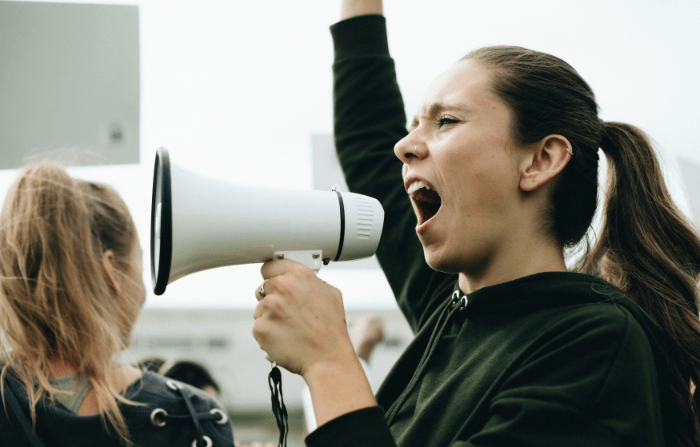
This year marks the 50th anniversary of the Nordic Council of Ministers’ decision to establish official co-operation between the Nordic governments on gender equality issues. To make wise choices for the future, it is important to know the history that many build on. NIKK is therefore publishing an anniversary publication.
During the half-century of Nordic co-operation, its forms have both developed and changed, and since 2020 it has also included the rights of LGBTI* people. What has happened in these 50 years? What was the situation in 1974, are there any events of particular significance, and what can be said about Nordic co-operation and its importance for gender equality work in the Nordic Region?
NIKK has interviewed eight people with different backgrounds and knowledge, asked them to reflect on the past years and also to look ahead. The publication does not claim to be comprehensive. It provides a glimpse into historical events through people who share their knowledge, experience and personal reflections. The interviews focus on themes such as family and welfare policy, sexual and reproductive health and rights, the organisation of gender equality policy and the rights of LGBTI people.
“We hope that this anniversary publication will give those working in the field an opportunity to reflect on the past. To feel proud of the progress that has been made, but also the will and strength to tackle current and future challenges” says Elin Engström, Manager of NIKK.
Over the past 50 years, the hard work of civil society and policy makers has made the Nordic Region one of the most gender-equal regions in the world. But even though gender equality has been prioritised, there are still clear differences in conditions for women, men and LGBTI people in the Nordic Region. Nordic co-operation will therefore continue. Next year, a new co-operation programme in this area will come into force for the period 2025-2030.
*LGBTI is an acronym for lesbian, gay, bisexual, trans, and intersex. Although the abbreviations used in the various Nordic countries may differ, LGBTI is the acronym used in all official Nordic co-operation as it is equivalent to what is used in other international organisations.
- Text: NIKK
- Categories: Gender equality and welfare policy
- Published: 2024-10-25