
Two Steps Forward and One Step Back in the View of Female Entrepreneurship
Which measures lead to gender equality in entrepreneurship? This is the topic of a report from the Swedish Agency for Economic and Regional Growth. According to the report, the Nordic countries have a lot to learn from each other.
The Nordic countries share many traits. Denmark, Finland, Iceland, Norway, Sweden and Åland have similar value systems and social solutions. The same can be said about their views of business, entrepreneurship and gender equality.
Katarina Pettersson, researcher at the unit for rural development, Swedish University of Agricultural Sciences, has conducted a gender analysis of policies for female entrepreneurship in the Nordic region.
‘I’ve explored the policies implemented to support women’s entrepreneurship in the six Nordic countries and have simply looked closer at how the different policies are formulated,’ she says.
The report, titled En genusanalys av policy för kvinnors företagande i Norden, discusses the results and lessons learned from initiatives to promote female entrepreneurship. It offers both broad and deep knowledge about which measures can be expected to lead to equal conditions for entrepreneurship.
‘When women are placed in a subordinate position and it is assumed that they need help, that they don’t understand entrepreneurship and business, the focus is set on individual female entrepreneurs and not on the structural problems in business-promoting systems and the labour market at large.’
Some Nordic countries have taken steps towards a more structural perspective in recent years, while others have taken a step backwards.
‘It’ll be interesting to follow this development. Not least since both Norway and Sweden have relatively new governments in place,’ says Pettersson.
- Text: NIKK
- Categories: Gender equality and welfare policy
- Published: 2015-03-23
Need for Research on Gender Equality in Nordic Academia
A joint Nordic research programme for gender equality aims to improve the gender balance in senior positions in Nordic academia. NIKK contacted Jesper Werdelin Simonsen, executive director at the Research Council of Norway and chair of the programme committee.
‘The share of women in senior academic positions at Nordic universities and other research institutions is not proportional to the share of women in society at large. The gender balance in research and innovation is no better than the European average. The gender balance might be good in the overall management of academic institutions, but this is not reflected in the top academic positions. This is the background for the programme,’ says Simonsen Werdelin.
Better statistics
The research programme is a follow-up to the report Norden – et steg nærmere kjønnsbalanse i forskning? (the Nordic region – a step closer to gender balance in research?), drawn up in 2013 on request by the Committee for Gender Balance in Research in Norway. In addition to establishing a joint Nordic research programme, the report recommends that the Nordic countries work systematically to develop better statistics on gender balance in academia. This statistical endeavour will be included in the new programme.
‘The EU has a big programme called She Figures, where they collect data on the gender equality situation in research and innovation. The goal of creating a Nordic She Figures is both to create better data for ourselves and to contribute to higher quality of the European She Figures,’ says Simonsen.
Compare the Nordic countries
The report points out that the research-based knowledge on gender balance in Nordic academia remains weak. The report mentions a number of areas where more knowledge is needed, including research funding and gender, work environment studies in a gender equality perspective, and publication and citation patterns in a gender perspective. The programme will not just gather information about the gender dynamics in academia in each individual country, but also facilitate studies of differences and similarities among the Nordic countries and between the Nordic countries and the rest of Europe.
‘The main argument for improving the gender balance in academia has always been that if we don’t, we’ll waste a lot of important talent resources. So the focus is not primarily on discrimination or discriminatory structures in academia, although there are probably some good examples of that. What’s important is that an improved gender balance will raise the quality of Nordic research,’ says Simonsen.
Call for applications next autumn
The programme was established in early March by the board of NordForsk, a body under the Nordic Council of Ministers that funds Nordic research cooperation. Currently, the Research Council of Norway, the Swedish Research Council for Health, Working Life and Welfare (Forte) and the Icelandic Ministry of Education, Science and Culture have agreed to fund the programme along with NordForsk. Several other Nordic institutions are also considering contributing.
‘The programme committee will hold its first meeting shortly, but the first call for applications can’t be expected until next autumn. The programme will be action oriented and not focus on basic research. We therefore need to identify the areas with the greatest need for action when preparing the project documents,’ says Simonsen.
- Text: NIKK
- Categories: Gender equality and welfare policy
- Published: 2015-03-19

Nordic Ministers call for men to play greater role in gender equality
“Much would be gained by a greater focus on men’s roles and responsibilities in promoting gender equality. When men and women work together, it speeds up progress towards sustainable and gender-equal societies,” the Nordic Council of Ministers for Gender Equality (MR-JÄM) announced at the UN Commission on the Status of Women (CSW) in New York.
“Over the last 20 years the Beijing Platform for Action has been a guiding star for women and girls’ empowerment. And we have come far towards a world in which every woman and girl can exercise her freedoms, her choices, and realize all her rights. So this year is a time for celebrating progress. But it is also a time where we must move to the next level of gender equality”, says Manu Sareen, Danish Minister for Children, Gender Equality, Integration and Social Affairs, who chairs MR-JÄM in 2015.
On Wednesday, the ministers gathered at the UN CSW for a panel debate about men and gender equality.
Eygló Harðardóttir, Icelandic Minister for Social Affairs and Housing, who is also responsible for gender equality, notes that it has positive benefits for both women and men.
“Everybody benefits from a labour market that is not based on gender stereotypes. Everybody benefits from a childcare policy that lets fathers play a role in childrearing. And progress will only be made in the work to combat violence against women if men take an active stand,” the minister says.
The Nordic countries have been comparing experiences, pursuing joint priorities and working together to promote gender equality for over 40 years. Active participation by men and boys is one of the main themes of the current Nordic programme for co-operation on gender equality.
“The contribution made by boys and men is crucial. We need to work together to make progress towards gender equality,” says Åsa Regnér, Swedish Minister for Gender Equality.

According to MR-JÄM, Nordic experience shows that gender equality is not just a matter of justice or democracy, but an economic necessity and a pillar of the Nordic welfare model.
“Women and men need to work together to change attitudes and build sustainable societies for ourselves and future generations. Gender equality benefits all of us,” says the Finnish representative at the panel debate, Anne Sipiläinen, Under-Secretary of State.
The Norwegian representative, State Secretary Hans Brattskar, stresses that men have just as great a responsibility for progress as women:
“When it comes to addressing the inequalities and discrimination faced by women and girls, men are important agents of change – because often they are the ones wielding power.”
- Text: NIKK
- Categories: Gender equality and welfare policy
- Published: 2015-03-12

Sweden Expands Gender Mainstreaming Programme
An expanded Swedish government programme will support the gender mainstreaming work in government agencies. Gender mainstreaming is on the agenda in all Nordic countries, but the conditions differ.
Gender mainstreaming is used as a strategy to achieve policy objectives for gender equality in all Nordic countries, but the exact design of the work differs.
All Nordic EU-countries have been required to follow the EU rules for gender mainstreaming work since 1997, and Norway follows the rules by choice.
‘It’s not enough to wake up in the morning and say you feel kind of feminist. A feminist government needs to stick its neck out and push things forward,’ said Swedish gender equality minister Åsa Regnér at a conference in Stockholm on 4 March.
Three hundred people, including 40 director generals of some of Sweden’s largest government agencies, had gathered at the conference to kick off the expansion of the Gender Mainstreaming in Government Agencies (GMGA) programme.
‘Government agencies play a very strong role in Sweden compared with their counterparts in many other countries. It’s therefore important that you feel connected to the national gender equality policy,’ Regnér said.
Forty-one agencies supported
The Swedish GMGA programme started in 2013 with 18 government agencies. Now it is time to add another 23, including the Swedish Prosecution Authority, the Swedish Public Employment Service and the National Board of Health and Welfare. Over the next four years, the Swedish Secretariat for Gender Research will assist the selected agencies in their gender mainstreaming work.
A Nordic review, requested by the Danish government, concludes that Sweden has made the greatest investments in the area. In Sweden, gender mainstreaming is prioritised centrally, and the implemented measures are rather comprehensive, with a focus on preventive work. In contrast, Denmark has emphasised concrete problems affecting certain parts of the population. The review, carried out by Oxford Research, finds that also Finland and Norway have chosen a more problem-oriented approach.
Active efforts with limited resources

Annamari Asikainen from the Finnish Ministry of Social Affairs and Health thinks positively of the Swedish government’s initiative. She says that those types of resources are simply not available in Finland.
‘We too work actively with these issues and are trying to incorporate this way of thinking in key processes in the ministries. Finland’s gender mainstreaming strategy has received a high rating from the European Institute for Gender Equality. Maybe that means we’re doing the right things with our limited resources.’
The Finnish gender equality legislation requires all public agencies to actively promote gender equality. Gender mainstreaming is used to this end. Each ministry has a gender equality group that supports the government agencies in its respective domain. Asikainen says that the Ministry of Employment and the Economy, which is in charge of the Finnish public employment agency, has come a long way in the area. The agency has arranged training to help its staff become better at considering gender equality aspects in their work.
‘It’s about breaking away from segregation and the lack of gender equality in the labour market.’
‘A long-term plan for the work is lacking’
Also the Norwegian gender equality legislation requires public agencies to promote gender equality, and gender mainstreaming is used there as well. Each ministry is in charge of the work in its respective domain. But, similar to the situation in Finland, Lise Østby from the Norwegian Directorate for Children, Youth and Family Affairs points out that the resources available for this work are limited.
Norway also has three private foundations that offer advice and training in the area of gender mainstreaming. The Centre for Equality in the town of Hamar is one of them. Director Signe Opsahl says that the public agencies have good ambitions when it comes to gender equality issues, but that the necessary knowledge and an effective structure for the work are generally lacking.
‘The actual implementation of the gender mainstreaming is weak in many ways. There’s no long-term plan for how to actually do the work,’ she says.
- Text: NIKK
- Categories: Gender equality and welfare policy
- Published: 2015-03-09

What’s the most important feminist issue right now?
What’s the most important feminist issue right now? And what needs to be done?
Since Sunday is International Women’s Day, NIKK asked researchers, politicians, activists and debaters from across the Nordic region. Read their responses below.

‘The most important issue is how we can help liberate minority women. I’m thinking in particular of women who don’t have any networks, who don’t speak the language in the country they have settled in, who live with violent men and who are forced to endure physical and mental abuse. These are the women we should help deal with their gender-related limitations.’
Amal Aden, author and lecturer focusing on the rights of women and children
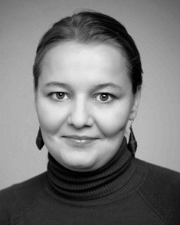
‘Feminism has taught us to define power structures between genders, groups, nations and countries. We need to focus on the connection between different forms of oppression. We need to inform and educate so that more people can see and work against the power structures. In the labour market it’s about pay differences, violence and different career opportunities.’
Drífa Snædal, general secretary Federation of General and Special Workers in Iceland

‘Equal pay, shared parental leave, equal representation, equal treatment and equal pensions for women and men. I could go on and on. However, power analyses and measures to ensure equal distribution of our common resources are probably at the very top of the list. We need a gender perspective, a norm-critical perspective and an intersectional perspective in this work.’
Mia Hanström, chair of Åland’s feminist umbrella network

‘Maybe education and the way children grow up. All children have the right to security and to positive response and support without gender stereotypes. Every person should get to decide over his or her own body, name and legal gender. This is not possible unless parents, teachers, doctors, coaches etc. have the necessary norm-critical competence. Laws also need to be changed, like the transgender act.’
Aija Salo, secretary general of the Finnish organisation for LGBT rights Seta
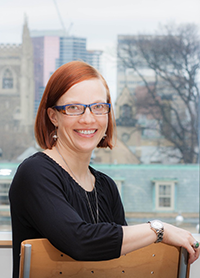
‑ As a Sámi woman and Indigenous feminist, the most important issue for me is self-determination for Indigenous women. Indigenous peoples must be in charge of their own affairs. Indigenous women must be in charge of their own lives and bodies. Gendered violence against Indigenous women is a self-determination issue, and Indigenous self-determination is a gender justice issue. Rauna Kuokkanen, Sámi from Ohcejohka (Utsjoki), Northern Finland. Associate Professor of Political Science and Aboriginal Studies at the University of Toronto.

‘We in the north must let go of the image of ourselves as highly equal. It gives us a rhetoric that has no room for all the work that remains. Okay, we are more equal than Saudi Arabia, but we must remember that we have genital mutilation, forced marriages and widespread discrimination also in Norway.’
Hilde Sofie Pettersen, editor of the feminist publication Fett

‘That society makes a serious attempt to deal with men’s violence and hatred. The violence and hatred against feminists and antiracists, the hatred against women, the hatred against animals and nature. It’s men who are doing all of this, and it’s masculinity norms and men that need to change. Society needs to take this seriously and undertake broad violence-prevention work aimed to change the prevailing masculinity norms.’
Tomas Agnemo, director Men for Gender Equality

‘One of the biggest problems in the work to achieve greater gender equality in the Danish society is that the environment for discussion is so inflamed. It is practically impossible to have a constructive debate on gender equality measures – even if you present nice cost-benefit analyses showing that we would all gain from it.’
Birgit Søderberg, Lokk – the national organisation of women’s shelters in Denmark
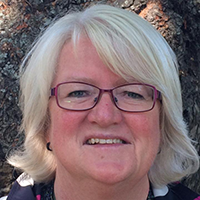
‘The possibility for women to provide for themselves is crucial, which means that their position in the labour market has to be strengthened with a right to full-time work and equal pay. Women’s right to their own bodies is also key. Men’s violence against women, rape, prostitution and human trafficking are the ultimate consequences of an unequal society.’
Carina Ohlsson, chair Social Democratic Women in Sweden and member of the Swedish Parliament

‑ We should be able to make feminism mainstream way of thinking in our societies. Even Nordic countries which are considered most equal societies in the world, have problems like gender wage gaps and different glass ceilings. It’s important to break problematic traditional gender roles, challenge heteronormative thinking and take into account needs of different minorities. Ozan Yanar, Co-chairman of the Youth Greens in Finland

‘I grew up in the 1970s and needless to say, the world was different back then. There was this healthy unisex approach to for example clothing and hobbies. I think kids have a very open attitude to gender equality, and that should of course be encouraged. The distinction between what’s masculine and what’s feminine begins way too early.’
Peter Sandström, Finnish-Swedish author living in Turku
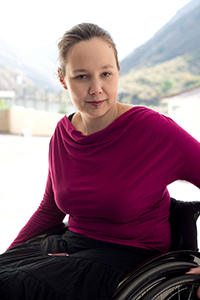
‑ For me, feminism is an ideology of freedom to be what we are and to be able to use and develop our individual skills. I would like to see feminism grow more inclusive. Currently, most feminist talk is way too academic. That makes feminism sound more difficult than it is. We should focus on mainstreaming equality instead of arguing of nuances. Feminism benefits everyone. That’s surely a message worth sharing! Amu Urhonen, Green feminist and disability activist
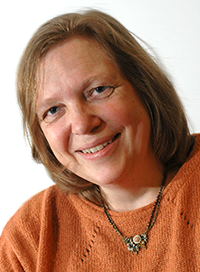
‘How the development of family formation and family law in the Nordic countries can be based on zero tolerance for violence and abuse as well as recognition of and respect for the importance of reproductive aspects. An investigation of the area should be undertaken immediately. See more on Nordictour2014.dk.’
Pia Deleuran, lawyer and mediator focusing on advanced conflict management. Deleuran has a special interest in equality, legal security and human rights issues.

‑ Violence against women. Almost a third of all Finnish women have experienced physical or sexual abuse in a relationship but the cases are not often reported. We need: 1) more awareness of the issue 2) accessible services, e.g. shelters, for victims 3) to stop mediation in close relationships 4) funding and resources for governmental action plan 5) political will for all the aforementioned. Kirsi Marttinen, Secretary General for Finnish Centre Women. Executive committee member, National Council for Gender Equality.

‘One of the most important feminist issues in the Faroe Islands right now is the lack of role models. We have our parliamentary election this year, and although Faroese women have been able to vote for almost 100 years, we have only one woman in our government. The proportion of women in Faroese politics has increased, but we need women in the most important positions as well.’
Katrin Kallsberg, chair of the Faroese national gender equality committee, consultant in obstetrics and gynaecology at the National Hospital of the Faroe Islands, Tórshavn, Faroe Islands

‘Racified women and girls lack influence in Nordic decision-making bodies, and as a result of this we often see a lack of a multidimensional perspective on gender equality policy in the region. Women’s struggle is a struggle for rights and equality. As racism discriminates people in society, the struggle against racism is also a women’s struggle.’
Fakhra Salimi, leader of the MiRA Resource Center for Black, Immigrant and Refugee Women
‘Sexual harassment was included under the gender equality act following the legal amendment in 2013, making such conduct illegal. Greenland’s gender equality council will bring focus to this type of harassment, which is defined as any unwanted conduct of a sexual nature with the effect or purpose of violating, humiliating, discriminating against or impair the person
Inge Olsvig Brandt, Greenland’s gender equality council
- Text: NIKK
- Categories: Gender equality and welfare policy
- Published: 2015-03-06

“Very different gender issues on the agenda in Canada”
Researcher Erika Anne Hayfield just returned from Canada and a conference on sustainable development in the northern and Arctic regions. She was inspired by the conference, but fundamental challenges for indigenous peoples moved the focus away from gender and gender equality issues, she says.
Nordic and Canadian politicians, researchers, NGO representatives and people from business and industry met last week in Quebec at a conference on sustainable development in the northern and Arctic areas of the two regions.
One of the many topics at the conference, which was arranged by the Nordic Council of Ministers and the government in Quebec, was gender and gender equality. The Nordic representatives included Erika Anne Hayfield, PhD and assistant professor at the University of the Faroe Islands. Hayfield presented her research on young people’s migration from the Faroe Islands. NIKK had a chance to talk to her during the conference.
‘The main argument in my presentation is that we have to work with in- and outbound migration as an integral part of the Faroese culture. My research shows that young people think of it as a natural part of life. It’s about opportunities. It’s about breaking free from the safe environment in a small community.’
‘More women than men move away to get an education. However, the gender aspect becomes even clearer when it comes to returning. Many women cannot find employment in the Faroe Islands. They see the private sector as very male dominated. For example, there are very few women in management positions,’ says Hayfield and explains that the reasons also include a superior Danish welfare system, a Faroese labour market with lots of part-time work and a traditional gender culture.
Are there any other conference contributions that address gender and gender equality? How much room is given to these issues?
‘The conference is covering a lot, and the participants come here with very diverse backgrounds. It seems like Canada and the Nordic countries have very different gender issues on their agendas. Over here I perceive quite different gender equality concerns, concerns that have to do with Canada’s indigenous peoples. I attended a workshop where they for example talked about an educational programme at university level for these groups. The average age in the programme is 38, and most of the students are women. The reason for this is that many women have children at a young age. There’s some prestige involved in this behaviour. So they drop out of school. The young women ask themselves what opportunities they have, and many of them don’t see many other opportunities than having children. This means that the challenges are very different than the ones we face in the Nordic countries.’
Are there any aspects that you can bring home with you and that have made you wiser?

‘The Nordic region has come a long way when it comes to gender equality. I wish the Faroe Islands would have come as far as the other Nordic countries. But my perspective changes completely when I compare our situation with places where they can’t even really talk about gender issues because they’re too busy dealing with the fundamental challenges some groups in society are facing, like education and language policy. Their lack of equality is not so much a matter of gender, but more about being treated unequally in relation to the rest of Canada. This obviously doesn’t make it OK that the Faroe Islands has not made more progress in the gender equality area. It only means that we have different things on our agenda than a modern country like Canada.’
What’s your overall impression of the conference?
‘I’ve got so much out of the conference. But I think we can learn something from it. If we wish to cooperate and share knowledge with Canada, maybe we should emphasise a clearer focus so that we really get a debate on gender. We didn’t get that type of debate here, as it ended up only concerning the indigenous peoples. That’s extremely relevant too, of course. But to get a really good debate on gender, you almost have to plan a separate seminar or workshop around that topic. Why put gender and gender equality under the theme “social conditions”, like they did here? Nothing defines our identity more than gender.’
- Text: NIKK
- Categories: Gender equality and welfare policy
- Published: 2015-03-03
Nordic Ministers for Gender Equality Attend UN CSW
The Nordic ministers for gender equality will provide a strong Nordic presence in New York during the second week of March. On 11 March the ministers will meet in a panel discussion on men’s role in gender equality.
“Men are important supporters in areas where the status of women needs to be strengthened, for example, in fighting violence against women. The Nordic countries have some good examples of this that we would like to share with you in New York”, says the Danish Minister of Gender Equality, Manu Sareen, the chair of the Nordic Council of Minsters for Gender Equality in 2015.
In their new co-operation programme, the Nordic ministers for gender equality highlight the example of men in traditionally female dominated occupations. Breaking the gender division in the labour market promotes both the career and job opportunities for both sexes, as well as reducing the income gap between women and men which arises as a result of division along gender lines.
“Let’s not forget that a more equal division of care work in families promotes both women’s opportunities in the labour market and men’s role as fathers. Many will spend more time with their children”, says Manu Sareen.
The Nordic minister’s panel will take place in the UN Headquarters, auditorium Dag H, on Wednesday 11 March, 11.30–12.45 local time. The seminar will be streamed live on www.norden.org.
Equality affects the economy
A basic prerequisite for economic growth is a high participation in the labour market of both sexes – but personal finances are also affected by gender equality policies. In conjunction with CSW, the Nordic Council of Ministers is organising a expert seminar on gender equality as a crucial economic parameter, where different viewpoints on gender equality as a prerequisite for economic growth and prosperity will be presented.
The expert seminar will take place in the UN Headquarters, auditorium Dag H, on Monday 16 March, 13.15-14.30 local time.
- Text: NIKK
- Categories: Gender equality and welfare policy
- Published: 2015-02-26

Gathering Nordic Gender Equality Statistics in One Place
Did you know that no Nordic parents share their parental leave more equally than the Icelandic ones? It will soon become much easier to compare gender equality statistics from the Nordic countries. The statistics offices are working together to put all data in one place.
In an international perspective, the Nordic countries have come a long way in their gender equality efforts. The progress is evident in areas such as health, political power and women’s access to education. Nevertheless, a lot of work remains. To get a better understanding of the current situation, the Nordic Council of Ministers has initiated a cooperation project between the Nordic statistics offices. A working group has been tasked to develop statistics on gender and gender equality and make the information available to a broader public.
‘The statistics will help inform the political decision making, and will also be used to spread knowledge about the Nordic gender equality work,’ says Linn Mårtens, gender equality adviser to the Nordic Council of Ministers.
Difficult to compare statistics on violence
The cooperation between the Nordic statistics offices started in the summer of 2014. Since then, the working group, which consists of one representative from each country, has been meeting to compile the statistics. When the statistics offices’ own information has not been enough, the working group has used other sources, such as NOMESCO, the committee for health statistics in the Nordic countries, and the UN organ UNECE (Economic Commission for Europe).
‘We have come up with some good data on for example income, parental leave and gender distribution on company boards,’ says Annemette Lindhardt Olsen, who is leading the group.
Some areas have been more difficult to work with. Men’s violence against women is one example.
‘The national statistics on violence are based on observations that can’t be compared with each other. We can’t just look at police reports either, since many victims never contact the police,’ says Lindhardt Olsen.
Publishing the results
The results of the work will be published in a report titled Nordic Gender Equality in Figures 2015, which will be presented at the UN women’s conference in New York in early March. The easy-to-read report will be divided into separate areas, including health, education, labour market and influence/power. The statistics will show both development over time and differences and similarities between countries, such as that the income gap between women and men is smallest in Denmark and that women’s unpaid work at home has decreased in all Nordic countries since the year 2000.
‘The report will be used in international contexts. The Nordic countries have come a long way when it comes to gender equality and may help inspire other countries,’ says Lindhardt Olsen.
New website with gender equality statistics
Statistics from the Nordic countries are already available in the Nordic Statistics database, but gender equality is not included as a separate subject area. The new statistical material will be added shortly. Also, a new webpage will be added at norden.org on 15 September. The new page will present the gender equality statistics with descriptive text, data and graphs.
Lindhardt Olsen says that one advantage with the project is that it has helped establish cooperation between officers specialising in gender equality at the Nordic statistics offices.
‘It’s important to know what one’s Nordic colleagues are doing. We can help and inspire each other. It’s about sharing knowledge. Now we’ve established close contact and can also plan future cooperation,’ she says.
Linn Mårtens at the Nordic Council of Ministers thinks it is great that all Nordic gender equality statistics are gathered in one place.
‘It means that we can refer anybody who’s interested to the website. We’ve had statistics in the past, too, but they have never been available in one place.’
- Text: NIKK
- Categories: Gender equality and welfare policy
- Published: 2015-02-24

Nordic Experiences to Inspire Danish Municipalities
A new report requests more and better gender equality statistics – statistics that can be used to strengthen the Danish municipalities’ gender mainstreaming efforts. The report points to Norwegian and Swedish experiences with user-friendly targeted statistics.
All Danish municipalities are required to gender assess their citizen services and the working conditions of the people they employ. The purpose of this requirement is to improve the gender equality in the municipal workplace and ensure that all public services are equally available to men and women. However, the report titled Mätbar jämställdhet(Measurable gender equality) from the Danish Institute for Human Rights shows that compliance with the mainstreaming requirement varies a great deal among the 98 Danish municipalities.
The reasons for the discrepancies include that the municipalities lack relevant gender equality statistics and useful indicators. Without proper metrics, it is difficult for politicians to formulate objectives and gauge development over time. Consequently, the Danish Institute for Human Rights is calling for clearer and more user-friendly statistics on gender equality. The report brings attention to Swedish and Norwegian experiences.
Connection between objectives and statistics
‘Statistics Sweden develops statistics based on the Swedish government’s gender equality objectives. They have a clear task to illuminate how the work to achieve the objectives is progressing at the national, county and municipal levels,’ says Peter Ussing, project leader at the Institute, who has edited the report together with special adviser Kirsten Precht.
In Norway, Statistics Norway has published gender equality indicators at municipal level since 1990. ‘Based on this information, each municipality is assigned a gender equality index, which shows how the municipality is doing in relation to the national average. Denmark can learn a lot from these two Nordic neighbours,’ says Ussing.
Combining statistics
Statistics Denmark, who contributed to the report, already presents extensive gender data. However, it can be difficult to draw conclusions based on the statistical material without specialist knowledge, as it for example can be necessary to combine several statistics to get a fair view of a situation. Based on the Norwegian and Swedish experiences, the report illustrates for example how three types of statistics can be combined in a useful way: gender distribution in the labour market, employment rates and share of people with higher education.
Need for legislative change
Statistics Denmark will not be able to carry out this task successfully without legislative change and proper funding. The report therefore recommends that the politicians request that Statistics Denmark develop and disseminate gender equality statistics to the municipalities. It also recommends that Statistics Denmark, the municipalities, the Danish Ministry of Children, Gender Equality, Integration and Social Affairs and other relevant actors cooperate to establish the necessary indicators.
‘The clearer the politicians can define the objectives, the clearer and more focused and user-friendly the statistics delivered by Statistics Denmark will be. And conversely, the better the statistics, the easier it is to set goals. Denmark has been pragmatic and doesn’t share Sweden’s and Norway’s strong tradition of measuring and developing objectives in this area. The work relies on getting the statistics in place, so it’s great to get a discussion going,’ says Kirsten Precht who also wrote the introduction to gender mainstreaming in the report.
- Text: NIKK
- Categories: Gender equality and welfare policy
- Published: 2015-02-19

Debate on sex purchase legislation keeps simmering
The sex purchase legislation is subject to ongoing debate in the Nordic region. Critics in Sweden say that the law has had undesired effects, such as making the sellers of sex more vulnerable. Yet a Norwegian study shows that the sex purchase law overall has had positive results.
Sweden adopted its sex purchase law in 1999 and Norway followed in 2009, and the controversial legislation has been subject to recurring discussion in both cases. Although similar arguments have been presented, the debates have in some respects taken different directions. The Swedish Association for Sexuality Education (RFSU) recently presented an evaluation of knowledge about the consequences of the Swedish Sex Purchase Act. The intended effect of the law is now being questioned based on this evaluation. RFSU concludes that there seems to have been a change in attitudes, where not only the buyers of sex but also the sellers are looked upon as criminals. The organisation also says that the risks for the sellers seem to have increased and that the law is not combined with social support measures to a sufficient extent.
Wanted to abolish the law in Norway
In Norway, the debate has been simmering ever since it was introduced. Critics say that the law is harmful and makes sellers of sex more vulnerable. The discussion culminated last autumn when the Norwegian right-wing government wanted to abolish the law as it was not considered to have the intended effect. An independent analysis company was appointed to look closer at the issue, and the resulting report shows that the purchasing of sex has decreased by 20-25 per cent compared with the year before the law went into effect. It was also found that the law has made Norway less attractive for organised prostitution, and therefore has reduced the risk for human trafficking linked to prostitution.
Hanne Størset is active in the Norwegian Feminist Group Ottar and represents a Nordic network against the purchasing of sex. She recognises the arguments in the Swedish debate.
‘The critics point to the stigmatisation of the women as the main dilemma, while it’s in fact the prostitution that’s the biggest problem. It’s harmful to women in many ways. This is clearly a matter of gender power and not just a social problem,’ she says.
More knowledge! Or do we already know enough?
RFSU proposes that Sweden look into the possibility of revising the legislation with a clear focus on the rights of individuals who sell sex. In a comment, the organisation requests a national knowledge centre that can gather more knowledge about the purchase of sex and preventive measures.
Norwegian participants in the debate are also calling for more knowledge, but Størset, who was one of those who fought for the introduction of the sex purchase act in Norway, does not think it is needed.
‘We know a great deal about the harms of prostitution. Prostitutes are extremely vulnerable to both physical and mental violence, as shown in a large body of international research,’ she says.
Evaluations drawing criticism
Both RFSU’ s report and the evaluation of the law in Norway have been heavily criticised. Both reports have been described as political and lacking trustworthiness.
Størset says that the political interest in the sex purchase act has been weaker in Norway than in Sweden. As a result, it has not been used to the same extent.
‘The law works best if it is used by the police to catch buyers of sex,’ she says.
She believes there are several reasons why the criminalisation of purchase of sex is a hot topic. Women teaming up to put constraints on men may be provocative, she says.
Some women and men voluntarily choose to sell sex. Isn’t there a risk the law puts constraints on them as well?
‘In policy-making you have to look at the big picture. This is a collective struggle to change the gender power structure. We believe that prostitution is harmful to the individual, but most of all it is harmful to society and the relation between women and men,’ says Størset.
- Text: NIKK
- Categories: Gender equality and welfare policy
- Published: 2015-02-17
