
‘We are working hard just to make the development not go backwards.’
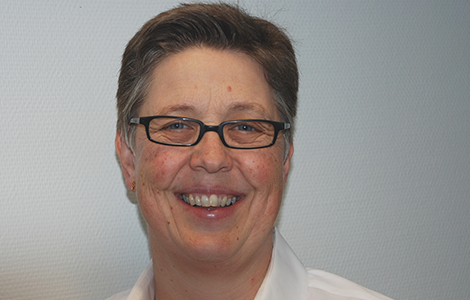
The UN will reach its goal of cutting the global rate of extreme poverty in half by 2015. However, the reduction is noted mostly for men. Nordic politicians can play a key role in the work for women’s economic rights, says Gro Lindstad, leader of the Norwegian umbrella organisation FOKUS – Forum for Women and Development.
‘Since 70 per cent of the world’s poorest are women, efforts to reduce poverty should include a gender equality perspective, says Lindstad. FOKUS and the Nordic committees of UN Women will lead a discussion on future global challenges at their joint seminar at the Nordic Forum in Malmö.
Why are these issues important to the Nordic countries?
‘The Nordic countries have been forerunners in the struggle for women’s rights. Although we have come a long way we can’t just sit there and be blind to the rest of the world. We need to look at what’s going on around us and keep pushing forward. It’s a matter of international solidarity and of realising that what we have accomplished can in fact be taken away from us.’
Why has the UN not been able to reduce women’s poverty to the same extent as men’s poverty?
‘The Millennium Development Goals has brought attention to issues that are important to women, such as mortality in childbirth and the right to education. That’s great but not enough. We are seeing a problematic trend in the UN, where countries such as Russia, Iran, Saudi Arabia and the Vatican are forming alliances with an aim to negotiate away women’s rights. Instead of building strategies for the future, we in the international women’s movement are working hard just to make the development not go backwards.’
Which rights are at risk?
‘Primarily the right to decide over one’s own body. Conservative countries are for example challenging the right to abortion, access to birth control and sex education in schools. We have seen discussions about women’s right to decide over their own bodies in the Nordic countries as well. In Norway, there has for example been a discussion about whether doctors should have the right not to refer women who want an abortion to a gynaecologist.’
Are some groups of women particularly vulnerable to poverty?
‘Yes, women without economic freedom. A new study by the World Bank shows that up to 130 countries in the world are limiting women’s economic rights in some way. Older women and women with disabilities are particularly vulnerable. It’s important that we remember this when we talk about women’s economic vulnerability. That various forms of discrimination lead to increased vulnerability is something we have to keep in mind in order to understand the whole picture.’
What’s the most important global challenge right now?
‘Women must be given the same opportunities to be in charge of their own economy as men. This is a key measure to reduce not only world poverty but also discrimination of women in other areas. The Nordic countries often stress the importance of supporting girls’ education with money, but it’s also important to make sure that they get to complete their education and that they’re not limited by lack of security or sanitation in school. We also have to focus more on ensuring that girls who go to school get a fair chance to participate in the labour market once they get out of there.’

This text is part of the article series Nordic Gender Equality in Practice, which presents the projects granted funding through the Nordic Funding Scheme 2013. The Norwegian umbrella organisation FOKUS and the UN Women’s national committees in Norway, Sweden, Finland and Icelandreceived DKK 150 000. The money will fund their joint seminar during the Nordic Forum in Malmö 12-15 June.
This is an article about one of the projects granted funding through the Nordic Gender Equality Fund.
- Text: NIKK
- Categories: Gender equality and welfare policy
- Published: 2014-06-04
New Publications about Part-Time Work in the Nordic Region
Women work part time to a much larger extent than men, and this pattern is found in all Nordic countries. The project Part-Time Work in the Nordic Region has provided an arena for discussion about the effects of part-time employment. The results of the initiative are described in two new publications.

The causes of part-time work are discussed in the fact sheet Part-time Work – Different Economic Effects for Women and Men. The publication summarises the report Part-Time Work in the Nordic Region II, written within the framework of the project.
Experts met to discuss important issues and questions for the future at the project’s final conference in Reykjavik in autumn 2014. The results from the conference as well as the challenges related to part-time employment in the Nordic region are described in the fact sheet Part Time Culture and Full Time Norm – Paths to Gender-Equal Working Time in the Nordic Countries.
Part-Time Work in the Nordic Region was carried out 2013–2014. Nordic Information on Gender coordinated the project on behalf of the Nordic Council of Ministers.
- Text: NIKK
- Categories: Gender equality and welfare policy
- Published: 2014-06-02
Washing Line in the Colours of the Rainbow
An art project will help bringing colours to the Nordic Pride festivals. Everyone is invited to take part by hanging out their wash in the colours of the rainbow.
“Most people take for granted that you treat everyone equally, but for those who are afraid to face homophobia it can mean a lot to know that your friend, neighbour, colleague or relative is sympathetic to HBTIQ – people,” says Ilar Gunilla Persson who runs the project together with Heidi Lunabba.
The two artists started the project during Jeppis Pride Festival in Jakobstad 2014. Now Washing Line in the Colors of the Rainbow will be touring the Nordic countries visiting amongst others the Sápmi Pride Festival, Helsinki Pride, Falu Pride and Gotland Pride.
Everyone who wants to show their support for equal values are invited to participate by hanging out their wash in the colours of the rainbow, take a photo and share the image using the tag #tvattlina.
“By making the project international we create a movement for tolerance and humanity in countries that sadly share the problem of homophobic and intolerant discussion and a harshening political climate”, Heidi Lunabba explains.
The Nordic tour will start on Friday during Sapmi Pride.
“The Sápmi Pride festival is an important festival since the risk of discrimination is doubled as HBTIQ-saami are a minority inside the minority, therefore it feels great to start of the tour in Karasjok,” says Heidi Lunabba.
- Text: NIKK
- Categories: Gender equality and welfare policy
- Published: 2014-05-27

Men are Dominating Nordic Media
While the Nordic countries are internationally renowned for their progress in gender equality, most top management positions in the media and communication industry are held by men. Printed news media is one example, as 58–100 per cent of all editors-in-chief are men. These and other figures can be found in a new fact sheet from Nordicom and Nordic Information on Gender – NIKK.
Nordicom is a Nordic knowledge centre in the field of media and communication research that initiated the project Nordic Gender & Media Forum in 2013. One purpose of the project was to produce gendered statistics on the Nordic media industry. Now NIKK and Nordicom are presenting their findings for Nordic filmmaking, journalism, advertising and the gaming industry in a new fact sheet.
‘Gender equality work is nothing new in the film industry, partly because the national Swedish and Norwegian film institutes have had gender equality objectives included in the film contracts,’ says Maria Edström, leader of the Nordic Gender & Media Forum project.
Most leading roles in films are played by men (64 per cent of all Nordic films in 2012) and for directors the proportion is a full 85 per cent.
When it comes to journalism, the editorial teams are more or less gender balanced. The management level, however, is a different story. Looking for example at Icelandic daily newspapers, 100 per cent of all editors-in-chief are male (although there are only two such publications in the country). In Norway the corresponding figure is 90 per cent, in Denmark 84 per cent and in Finland 63 per cent. Sweden has the most equal gender distribution, yet 58 per cent of all editors-in-chief are still men.
The advertising industry resembles journalism in that the gender distribution is balanced at the staff level but male-dominated at the top.
The Nordic gaming industry is growing rapidly. Comparable gender statistics are missing, but there are strong indications that it is the most male dominated of all sectors. For example, 85 per cent of all game developers in Sweden are men.
Comparable statistics are hard to get
One problem when analysing the media industry is that gendered statistics are often hard to come by. Systematic comparisons can be difficult, too, since different Nordic countries use different types of measurements.
‘Both the UN, the EU and the European Council have long required the media industry to increase their gender equality efforts, in both their organisations and products. This in turn calls for more comparable statistics so we can base the work on a shared perspective. It would also enable us to start talking about why there are such big differences among the Nordic countries,’ says Maria Edström.
According to NIKK, gender equality in the media industry is a matter of democracy.
‘So it’s very valuable for NIKK to get to cooperate with Nordicom around gender equality in Nordic media. These types of comparisons fill a void. At NIKK we’re developing comparative knowledge reviews concerning Nordic gender equality work. Partly so we can learn from each other’s mistakes, but also to identify positive examples. Thanks to Nordicom, today you can find them in media as well, and that’s great,’ says Josefine Alvunger, Head of Operations at NIKK.
- Text: NIKK
- Categories: Gender equality and welfare policy
- Published: 2014-05-26
Conference on Men and Masculinity Studies
The 4 – 6 June there will be a large Nordic conference in the University of Iceland on men and masculinity studies entitled: Emerging ideas in masculinity research – Masculinity studies in the North.
The conference is a collaboration between the Nordic Council of Ministers and the Nordic Association for Research on Men and Masculinities, and is the third Nordic conference in this cooperation.
The keynote speakers are two world-famous scholars who are both pioneers in the field of men’s studies which are Raewyn Connell Professor of Sidney University in Australia and Michael Kimmel Professor at Stony Brook University in New York.
These scholars have attracted much attention and interest in the conference, but the conference will include 35 workshops with over 140 missions combined. Participants in the conference are from four continents and have diverse approaches. Various manifestations of masculinity will be discussed, for example; young men, the male body, fathers and fatherhood, health, arts and literature, coordination of family and work, violence, the role of men in gender equality, men in history, disability to name a few.
- Text: NIKK
- Categories: Gender equality and welfare policy
- Published: 2014-05-23
‘The culture we had to overcome was our own editorial office’
Sure, we might be more gender equal than many other countries in the world, but women are still under-represented in the media. Also, men hold most leading positions in the media industry. What can we do about it? This was the topic of the Nordic Gender & Media Forum in Bergen, Norway on 7 May.
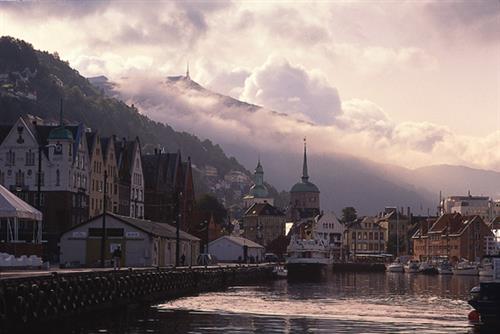
Every year in Bergen, Norway, the Nordic Media Festival enables journalists and other people in the media sector to meet and discuss various issues. This year, Nordicom and NIKK hosted a full-day event in connection with the main conference with the motto ‘Time to Step Up’. The initiative drew about 70 participants from media and research.
The topics ranged from film, advertising and computer games to representation by ethnic minorities and sexual identities outside the hetero norm. Sara Lindquist from Queering Sápmi talked about the work with people’s preconceptions of a minority within a minority.
‘The media have presented the Queering Sápmi project as an effort to map out Sami LGBTQ persons. But what we are really trying to do is add some nuances to the common view of Sami identity.’
The purpose is to show how differences can strengthen a group instead of weakening it. Part of the work has consisted of interviewing queer Sami persons and staging artistic photos based on shared themes in the stories told.
‘It has been important not to make interpretations and generalisations of the interviews. As a non-Sami person, I’m a carrier of a colonial heritage, and I have to take responsibility for that.’
‘If we want change, we must act”
One of the areas discussed was leadership and the media as an organisation.
Suzanne Moll works as an adviser at International Media Support, which focuses on the media development in the Third World. She has worked in the Danish media industry for about 20 years and told the audience about a network for women that started in Denmark in the 1990s.
‘It started with a leadership programme initiated by Lisbeth Knudsen, CEO of Berlingske Media. We had a goal that 40 per cent of all leadership positions in the media industry should be filled by women. The network was cancelled because the younger generation didn’t seem interested in these issues.’
And we believed that talking about it is not enough; we would need to take carefully planned action as well.
‘My conclusion is that if we want change, we must act. I’m a strong supporter of imposing gender quotas on boards of directors. Nothing will ever happen without it.’
Cecilia Zadig also talked about leadership. Zadig has worked as a journalist for the Swedish public service broadcaster SVT for many years and also as leadership lecturer at Stockholm University.
‘The leadership programme for women in media that we started would not have been possible without the feminist wave in the 1990s,’ she said.
A total of 350 Swedish journalists and editors have finished the programme over the years. A study on how the programme has worked will be presented in November.
‘Journalism has a huge impact on society – that’s what’s driving me. Setting the agenda for which parts of society are covered and which voices are heard is central. Maybe we have contributed to the fact that 42 per cent of all editors-in-chief in Sweden are women,’ said Zadig.
‘Men have to start making different choices’
The gender in media day was followed up at the venue of the main conference with a panel discussion that attracted an audience of about 100. Besides Suzanne Moll, the panel also included Ellen Arnstad, publishing editor at Aller Media in Norway, and Gunnar Falck, managing editor of the Swedish newspaper Västerbottens-Kuriren. The panel discussed mainly the culture and work conditions in the media sector and how they affect women and men.
‘All editors should study the research that’s available on masculine and feminine environments,’ said Arnstad, who in 2006 co-authored the book Slik drar du bra damer, a handbook for the recruiting of women to leading positions.
‘There’s this notion that women should take care of kids and the household. As a result, they get a certain label if they choose to prioritise their career. The segregated labour market is largely due to people making traditional choices: When the man works overtime, the women work part time. Men have to start making different choices. They have to start working part time and turn down top management positions if they’re in a phase of life that doesn’t allow for that level of commitment. It has to be possible to combine work and family life.’
Gunnar Falck talked about the work at the newspaper Västerbottens-Kuriren to increase the share of women on the pages.
‘Our numbers were as bad as everybody else’s, but since 51 per cent of the readers are women, we asked ourselves how we could keep them despite the crisis in the newspaper industry. More different voices must be given a chance to be heard, from different parts of society. The culture we had to overcome was our own editorial office, in order to make it a long-term project and not just a temporary measure. I think the work has made us lose fewer readers than we would have otherwise.’
- Text: NIKK
- Categories: Gender equality and welfare policy
- Published: 2014-05-22
Power Handbook against Racism in Daily Life
In Interfem’s power handbook, anti-racist feminists share their best tools for fighting sexism and racism. A Finnish edition is underway within the framework of a Nordic cooperation project, and more books may be in the pipeline.
‘When the racists organise themselves, we have to do the same thing,’ says Kristin Tran.
Kristin Tran is active in the Swedish organisation Interfem and is also coordinating the work with the organisation’s handbook for young feminists who want to work against racism and sexism. In the book, anti-racist feminists talk about their strategies and give concrete advice on how to respond to domination techniques.
‘The methods are pretty straightforward, which makes them very useful.’
Why is Nordic cooperation on anti-racist feminism important?
‘We see a great urgency in our countries, and we also see how much we have in common. There is a lot of useful knowledge in different organisations and I believe we can do a lot together. Right now we’re in the middle of establishing contacts with activists in the Nordic countries and Estonia. In June we’re having a network meeting in Skåne. It’s a summer camp for racialised adolescents who want to work against racism and sexism.’
Can you tell us more about the power handbook?
‘It’s unique in the sense that it is written by people who are experiencing racism themselves. It focuses on the obstacles and discrimination people face in clubs and voluntary organisations, but the advice can also be applied for example in working life and politics. The book describes typical everyday experiences of racism and can help readers put their own experiences into words.’
Why is it important to put experiences of racism into words?
‘It is important in order not to put the problems on ourselves. Sometimes it might feel like you’re the one who hasn’t been able to communicate what you want to say, but the racism is built into the structures and affects all aspects of society. Only when we organise ourselves will we be in a position to push the anti-racist agenda and achieve change.’
You are working on a Finnish edition of the power handbook. How come?
‘A group of Finnish activists read the book and invited us to come and talk about it. We soon realised that there is so much we could work on together. I wouldn’t say that racism is a bigger problem in Finland than in Sweden, but there is a great need for this type of book, not least in feminist circles. For the feminist movement to break through at the broad political level, it needs to bring attention to the anti-racist agenda.‘
How will the Finnish book differ from the Swedish?
‘Finnish activists will write their own story and present their feminist and anti-racist role models. Finland and Sweden are experiencing – just like other Nordic countries – a similar development in the political arena, with the Finns Party and the Sweden Democrats. But the targets of racist sentiments tend to differ. For example, people of Russian or Estonian descent are often targeted in Finland in a way you don’t see as much in Sweden. It is important to consider the different contexts at the same time as we must see how racism is a European and global problem.’
This is an article about one of the projects granted funding through the Nordic Gender Equality Fund.
- Text: NIKK
- Categories: Gender equality and welfare policy
- Published: 2014-05-21

Women Leave Rural Areas in Search of Gender Equality
Old-fashioned traditions and lack of opportunities make young women leave the countryside. The pattern can be observed all across the Nordic region, but is particularly evident in the Faroe Islands. We need to turn the trend around, says Erika Hayfield, researcher from the Faroe Islands.
Many young people in the Faroe Islands leave their home islands as soon as they get out of school. They want to try a different lifestyle and a different environment, and many of them never return. This is especially true for women, and a general lack of gender equality seems to be one reason for their decision to move away.
‘Men seem to see more opportunities in the Faroe Islands,’ says Erika Hayfield, migration researcher at the University of the Faroe Islands.
She has interviewed individuals who have chosen to leave the islands and has found that women in particular feel that the region offers them very limited opportunities. This makes them eager to move away to study, work or try life in the city. Some interviewees also described the Faroese culture and way of life as old fashioned.
‘The message I got from the interviews was that people are seeking a more open and tolerant society,’ she says.
Welfare in jeapoardy when young people move
When young people move away, the proportion of old people goes up. This is problematic, says Hayfield.
‘Many Nordic communities are characterised by aging populations, but not to the extent we will see in the Faroe Islands in the future. If the trend continues, we won’t be able to maintain the welfare system in 40 years,’ she says.
In the Faroe Islands, there is broad awareness at the political level about the problems that arise when young people move away. However, the gender equality perspective is not getting much attention, says Hayfield.
‘Politicians like to say that more jobs will solve the problem, but it isn’t that easy,’ she says and explains that the types of jobs offered and how businesses recruit employees also matter.
‘I can understand that young women don’t see a future in small communities with a strong focus on traditionally male-dominated activities such as hunting, fishing and industrial work. It makes the culture very male centred,’ she says, but adds that it is possible to change both which sectors are focused on and how different sectors are perceived.
‘I believe that the fishing industry could draw young and well-educated women back to the Faroe Islands, but only if there’s a willingness in the industry and among politicians,’ she says.
Gender equality politics must be updated if young women are to stay
Hayfield feels that many people don’t want to open their eyes to the problem of losing women. If the politicians want to stimulate population growth, they have to invest in gender equality, she believes. Kristín Ástgeirsdóttir, director of the Centre for Gender Equality in Iceland, agrees. Ástgeirsdóttir is coordinating the gender equality conference that the Nordic Council of Ministers is hosting in Tórshavn, the capital of the Faroe Islands, on 27-28 May. The conference will focus on gender equality in working life and politics in the Faroe Islands, with themes such as part-time work, rural labour markets and gender equality in family life. People from all across the Nordic region will attend the conference and Ástgeirsdóttir is expecting many interesting discussions.
‘I’m looking forward to hearing about all the experiences and ideas. The conference is important – there’s a great need for a thorough discussion about gender equality in the Faroe Islands,’ she says.

Ástgeirsdóttir and Hayfield both agree that the Faroe Islands has fallen behind its Nordic neighbours when it comes to gender equality policy. Symptoms of this include the low frequency of men going on parental leave and large share of women working part time. In 2010, 19 percent of working men and 66 percent of working women had a part time employment (less than 35 hours per week) according to figures from the Hagstova database. According to statistics for parental leave, men used 6 percent of the days in 2013, as reported by the authority Barsilsskipanin.
Hayfield points out that the Faroe Islands’ special political and geographical conditions imply equally special challenges in the gender equality work.
‘Many men work in the Norwegian fishing industry and spend long periods away from home. It’s hard to make a relationship gender equal if your partner is not even home,’ she says.
She also explains that the Faroese welfare system has a stronger focus on the family than in the Scandinavian countries, and that Faroese women therefore tend to face heavier care responsibilities. The family is supposed to serve as a social safety net – a view that for example may lead to old people being denied elderly care if their families are deemed able to provide care.
‘There are cases were old people have been moved down on the waiting list if they have a daughter. This practice is heavily criticised by women’s groups,’ says Hayfield.
She also notes that the Faroese welfare system and family policy affect same-sex couples in particular, since they are unable to get married or register a domestic partnership under the current legislation. She is unsure how common it is that homo- and bisexuals choose to move away from the islands, but knows that some of them feel forced to settle down elsewhere.
‘I have talked to couples who have registered partnership in Denmark and don’t want to move back since their status would not be recognised here,’ she says.
Both the geographical and political conditions in the Faroe Islands are different than elsewhere in the Nordic region, but the pattern of women moving to more populated areas is not unique. In fact, this trend has been noticed in rural areas all across the Nordic region in recent years.
‘We see it everywhere. Men stay and women move to the cities,’ says Ástgeirsdóttir.
She sees a link between women’s migration away from the countryside and the overrepresentation of women in higher education, and her observation gains support from Erika Hayfield’s interviews. Most of her interviewees stated education as their reason for leaving the Faroe Islands. It seems like men have an easier time or are more willing to find a job that doesn’t require higher education,’ says Kristín Ástgeirsdóttir.
‘Rural women have traditionally worked at home, but today they want something different and their communities have not been able to cater to their needs.’
- Text: NIKK
- Categories: Gender equality and welfare policy
- Published: 2014-05-20

Nordic Transport Investments: Are They of Equal Benefit?
The Nordic governments are spending significant resources on improving transport solutions, but who is benefitting? A new network of researchers is focusing on the democratic right to mobility.
Women, young people and the elderly use public transport more than men and middle-aged citizens. Politicians need to be aware of this when they choose to spend resources on motorways instead of bus stops, says Hilda Rømer Christensen at Coordination for Gender Research in Denmark. The organisation has taken the initiative to develop a Nordic research network on gender equality and transport issues.
‘We’re taking a comprehensive approach and want to encourage political initiatives,’ Rømer Christensen continues.
Why is the gender equality perspective important when dealing with transport issues?
‘Major investments are made in the transport sector, but who do the investments target? Researchers and politicians tend to forget that different groups have different transport habits. They often base their norm – consciously or unconsciously – on male drivers. For example, Denmark has orchestrated major campaigns for green motorways with charging stations for electric cars and fast “super bikeways”, but the campaigns appeal mainly to male long-distance bicyclists from the suburbs. It is important to assess these initiatives from a gender equality perspective, but we also need an intersectional analysis.’
What do you mean?
‘We need to include more factors than just gender in our analyses. There is research showing that the higher a woman’s income, the more she will drive. High-income women also drive larger cars, so the view that women live more sustainably than men changes somewhat when we control for class. There are also some negative stereotypes that need to be questioned, like the view that young men from ethnic minority groups are wild and careless drivers.’

Is there a special Nordic perspective on transports in relation to sustainable development?
‘All Nordic countries want to approach the issue from a sustainability and innovation perspective. There is strong faith in new technology as a solution to environment problems, but there are also differences in the discussion between the different countries. In Denmark, we talk a lot about bicycling, while Sweden and Norway are more liberal to cars and driving. Of course geographical differences are involved, but the Swedish discussion is also influenced by the perceived importance of the car industry. Politically, that has been a strong focus on gender equality in the Nordic welfare states. This view should be applied for transports and mobility, too, to make the benefits of investments extend beyond the powerful groups that drive a lot.’

Concretely, what are your plans for the project?
‘We want to create arenas for information exchange between researchers from different countries and open up for dialogue with politicians. We’re hosting an open workshop at the Nordic Forum in Malmö, where we will present current research and let politics comment on it. In connection with the Forum, we will also arrange a research workshop in Copenhagen.’
- Text: NIKK
- Categories: Gender equality and welfare policy
- Published: 2014-05-14

The Law Can’t Stop at the Front Door
Violence against women, forced sterilisation and family norms. These were some of the topics discussed when Nordic gender and law researchers met in Umeå.
The law cannot stop at the front door, but must enter into the home, said UK Professor Rosemary Hunter in her keynote speech.
The need to legislate on issues related to the private sphere was a recurring theme at the conference, which was held 5–6 May. Law and gender researchers from mainly the Nordic countries met in Umeå, Sweden, to discuss how legislation can be used to create gender equality.
Almost 80 people participated in the conference – far more than the host had expected.
‘There’s a feminist wave going on right now, at least in Sweden. There’s a strong interest in these issues, not least among students,’ says Monica Burman, researcher at Umeå Forum for Studies on Law and Society, Umeå University, which arranged the conference.
‘Gender equality is not a competition’
The Nordic countries are often described as international forerunners in gender equality, and this is in fact curbing the development. According to the Nordic self-image, the Nordic countries have already achieved gender equality. However, this is a false belief, said the participants in a panel discussion at the conference.
‘It’s true that we are topping the list compared with other countries, but that doesn’t say much about what we need to do,’ said Hege Brækhus, professor at the University of Tromsø.’
The pay gap between women and men has not changed in years and domestic violence remains a widespread problem, she continued.
Brynhildur G. Flóvenz, associate professor at the University of Iceland, agreed with the criticism of the Nordic self-image.
‘We are the world champions of gender equality, right? But it’s not a competition,’ she said, adding that the Nordic countries do not score so well in all events.
Not least when it comes to gender equality in academia have the Nordic countries fallen behind, she pointed out. Only 15 per cent of Danish professors are women, according to statistics from 2012.
‘A growing field with great diversity’

The conference included panel discussions, speeches and project presentations. Monica Burman describes the legally oriented gender research in the Nordic region as a growing field with great diversity.
Thirty papers on a wide range of topics were presented at the conference. Surrogate motherhood, the Swedish tax deduction for household services, gender quotas for company boards, adoption, forced sterilisation and discrimination in connection with pregnancy were some issues addressed.
The conference was titled Law’s Ability to Produce Gender Equality.
‘We all agree that the law is a tool, but we are not equally optimistic regarding the change that can be accomplished through legislation,’ Burman explains.
Burman participated in a panel discussion on future challenges. Several of the panel participants emphasised the importance of the Convention on the Elimination of all Forms of Discrimination Against Women in order to achieve change.
‘It is a strong document but a poorly used tool. We need to use the law,’ said Eva-Maria Svensson, professor at the University of Gothenburg and the University of Tromsø.
Burman feels that the entire conference radiated a strong willingness to produce change and be more activist as researchers.
‘There’s a willingness to reach out in society and get things done, and not just sit at home and tinker with one’s research,’ she says.
- Text: NIKK
- Categories: Gender equality and welfare policy
- Published: 2014-05-08