
The Nordic gender effect goes international
Together the five Nordic countries make up one of the world’s most gender-equal regions. But how did they get there? The most important political reforms and experiences are now summarised in five briefs. The series of briefs is part of an effort to ‘export’ Nordic gender equality, and is intended to serve as a tool for countries that want to see more women in the labour market.
Five countries and 50 years of reforms have slowly but surely strengthened women’s rights and opportunities in the labour market – all this is now summarised in 50 pages in a ‘knowledge hub’ issued by the Nordic Council of Ministers. Five briefs, produced by Nordic Information on Gender (NIKK), describe the most important components in ‘The Nordic Gender Effect’, which has led to almost three-quarters of women now being in paid work.
Family-friendly policies boost growth
The first four parts are ‘Shared and paid parental leave’, ‘Subsidised childcare for all’, ‘Flexible work arrangements’ and ‘Leadership and equal opportunities’. The fifth part places gender equality policy in a wider historical context – the growth of the welfare state and the Nordic labour market model.
One important point made in the ‘knowledge hub’ is that the Nordic countries have not always proceeded at the same rate or made the same political choices. However, for the Nordic region as a whole, the steady increase in the number of women in the labour market has played a major role in helping to boost economic growth in the past 50 years.
Easily available to policy-makers
The material has been well-received by international organisations, such as the ILO, International Labour Organization, the ITUC, International Trade Union Confederation and the UN’s gender equality organisation, UN Women.
– Investing in gender equality not only benefits individual women and girls, it boosts entire communities by fostering employment, family wellbeing, and broader economic growth. The Nordic hub presents a compelling case for this through a collection of legal, institutional and innovative instruments that can be applied at country level and are easily available to all policy-makers. I hope that, with time, such strategies to support gender equality will be the Nordic countries’ greatest export, says Phumzile Mlambo-Ngcuka, Executive Director of UN Women.
A practical tool to bring about change
Dagfinn Høybråten, Secretary General of the Nordic Council of Ministers, has observed strong demand for Nordic experiences in general, and Nordic gender equality policies in particular.
– We have chosen to meet this demand by summarising the five Nordic countries’ policies on gender equality over five decades, policies that have proved to be very successful. I hope the material will be used as a practical tool to bring about change, all over the world, he says.
The knowledge hub has been produced as part of the Nordic Prime Ministers’ Initiative, ‘Nordic Solutions to Global Challenges’, which was launched in 2017. The initiative is the Nordic region’s joint contribution toward the global Sustainable Development Goals, Agenda 2030.
- Text: NIKK
- Categories: Gender equality and welfare policy
- Published: 2018-09-17

Major challenges await Greenland’s new minister for gender equality
Greenland has a new gender equality minister after this spring’s early election, and the gender equality issues have been transferred to a new ministry. Yet gender equality did not dominate the pre-election debate, despite substantial needs in the area.
Greenland’s left-wing government survived the early election in late April. The two largest political parties, social-democratic Siumut and leftist IA (Inuit Atagatigiit), performed weaker than in the previous election but still gained 52.7 per cent of the votes, according to the Utrikesmagasinet online journal. The name of the new gender equality minister is Doris J Jensen (Siumut). She is in charge of the ministry for research and health, to which the gender equality issues have been transferred.
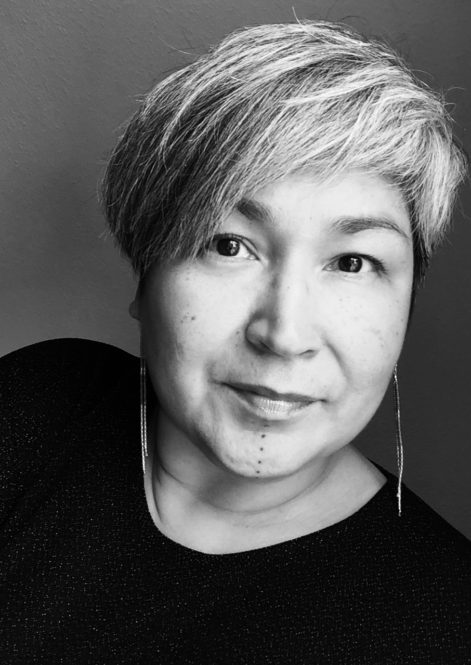
Inge Olsvig Brandt is head of secretariat at Greenland’s gender equality council, which provides consultation and disseminates information in the field of gender equality. She cannot say exactly how the ministerial transfer and the change of the gender equality minister will affect the country’s gender equality policy.
‘At first after the election, we didn’t know what ministry was in charge of gender equality issues. The staff at the gender equality council still have not met with the new minister and therefore don’t know what issues she will focus on,’ she says.
Autonomy and fishing dominated the agenda
The recent Greenlandic early election was a result of a conflict about fishing quotas – an issue that also dominated the previous election campaign. The conflict concerned whether fishing quotas should continue to be concentrated to big trawlers or be distributed with greater consideration of the smaller local vessels in the small coastal communities. A bigger issue that was simmering in the background was the expectation of full autonomy from Denmark. The debate about gender equality was not as intense.
‘However, the parties have talked a bit about equal treatment. In the last 10 years, the people in Greenland have talked about the remains of the colonial past, about the Danish influence on our culture, language and politics. When the politicians in Greenland talk about these things, it is my impression that equal treatment and gender equality issues are not discussed and treated separately,’ says Olsvig Brandt.
Gender roles need to be challenged to achieve change
Paternal leave was one concrete gender equality issue that was addressed during the election campaign. At present, women in Greenland are entitled to 17 weeks of parental leave whereas men get 3 weeks. Couples cannot share the weeks, as in other Nordic countries.
‘All political parties agree that this needs to change. They say that a new law is under way, which is badly needed,’ says Olsvig Brandt.
The widespread gender-related violence in Greenland is another challenge for the politicians. During the election campaign, there was talk about establishing a crisis centre for men, but according to Olsvig Brandt, that was mostly a strategic move to gain votes.
‘That’s how they talk before an election, but I don’t think men’s violence gets nearly the attention it should in politics. There should be much bigger investments in preventive work. The violence against women is a national catastrophe that’s not being taken seriously enough.’
According to Inge Olsvig Brandt, there needs to be more discussion about gender roles, and not least the role of men, in Greenland. Today, Greenland is characterised by a gender-segregated labour market where men make more money than women, at the same time as women take more responsibility for the care of children and other family members. Statistics show that a majority of students in higher education are women. They also show that suicide, violence, crime and homelessness are more common among men. When former gender equality minister Martha Lund Olsen was in office, an initiative to form men’s groups was taken and had positive effects.
‘A male representative from the gender equality council has visited smaller communities along the entire coast and started men’s groups where these types of issues are discussed,’ says Olsvig Brandt.
She continues to say that Greenland’s sheer size and infrastructure pose important challenges for the gender equality work. The country is twice the size of Sweden, Norway and Finland combined, but only about 56 000 people live there, almost exclusively along the coast.
‘What we do in Nuuk is one thing, but what does it look like in the more rural areas? We see it as very important to change the way people think when it comes to gender roles and gender equality.’
Call for new legislation
Greenland does not have an equal treatment or anti-discrimination law, and citizens have nowhere to turn if they want to report discrimination for example based on ethnicity. However, there is a children’s ombudsman and a disability ombudsman, both of whom have some authority in their respective fields. There is also an advisory body for human rights, but neither this body nor the gender equality council can register complaints or pursue reported cases.
‘We really need an equal treatment law and legislation against discrimination. In 2018, we and the other organisations will push hard for this change and begin actively discussing it with policymakers,’ says Olsvig Brandt.
She believes there is a need for broad dissemination of information about equal treatment, everybody’s equal value and gender equality in Greenlandic society.
‘We need to incorporate the concepts in the Greenlandic language and explain clearly what the words mean. That the point is that all people have equal value whether they are from Greenland or Denmark, whether they speak Greenlandic or Danish and whether they are women or men,’ she says.
According to Olsvig Brandt, the relationship between Greenlanders and Danes is a matter of justice and fairness that people feel stronger about than the gender equality issue. When it comes to the latter, people’s level of knowledge is generally much lower.
‘The gender equality work started only 17 years ago in Greenland, which means that we are about 20–30 years behind the Nordic countries. The point of our work is largely to spread awareness – to make people truly understand the meaning of gender equality.’
- Text: NIKK
- Categories: Gender equality and welfare policy
- Published: 2018-06-14

Several Project Proposals Submitted in the Wake of MeToo
Increased gender equality between parents, in the workplace and among reindeer-herding Sami. These are the objectives of some of the nine projects granted funding from the Nordic Gender Equality Fund in 2018.
Last spring, the Nordic Gender Equality Fund accepted requests for funding of Nordic gender equality projects for a sixth straight year. Nine requests were granted.
A project titled Exporting Nordic Models of Fatherhood, Gender Egalitarianism and Parental Leave will explore how the Nordic model of parental insurance and so-called ‘daddy months’ has worked out in other countries that have experimented with it, such as Japan, Slovenia and Germany.
‘We know a great deal about how the parental insurance has been debated, changed and not least used in the Nordic countries, and we know that there is a widespread interest in Nordic family policy internationally. Now we want to study how it’s been received and how the concepts of male and female parenting have been discussed’, says Ann-Zofie Duvander, project leader and professor at the Stockholm University.
Another project will look into how the gender equality can be strengthened in isolated regions with limited job opportunities. Select areas of the Faroe Islands, Greenland and Denmark will be studied. A third project aims to increase the gender equality among reindeer-herding Sami:
‘Previous research has identified structures that cause gender disparity in traditional Sami reindeer-herding communities. It’s important to collect existing knowledge and create a holistic understanding of structural gender inequality and promote gender equality in the reindeer-herding communities. How do structures causing gender inequality interfere with or prevent women’s access to reindeer herding as a source of income, and how does this affect Sami women’s ability to enjoy their human rights?’, says Kamrul Hossain, project leader and professor at the University of Lapland in Finland.
The MeToo movement seems to have inspired many applications for funding.
‘The strong impact of the MeToo movement in the Nordic countries clearly seems to have affected the submission of funding requests this year. Many proposed projects have focused on sexual harassment. The granted projects include one dealing with what Nordic municipalities are doing to fight sexual harassment in the healthcare sector. This is an important topic, as sexual harassment is a big problem in this specific occupational domain,’ says Elin Engström, head of operations of Nordic Information on Gender (NIKK), which is the unit administering the Nordic Gender Equality Fund on behalf of Nordic Council of Ministers.
The Nordic Gender Equality Fund was launched by the Nordic gender equality ministers to stimulate research, initiatives and collaborations in the field of gender equality.
‘It’s great to see the tremendous diversity among the organisations that apply for funding. This year’s applicants include several universities, but also national emergency services and organisations specialising in family planning,’ says Engström.
- Text: NIKK
- Categories: Gender equality and welfare policy
- Published: 2018-06-14

Unequal distribution of part-time work and family responsibilities in the Nordic countries
In the Nordic countries, part-time work is much more common among women than men. This affects both the gender equality in the labour market and the economic opportunities available to women and men. NIKK, Nordic Information on Gender, has compiled the results of three research reports on part-time work into a factsheet reviewing the causes and consequences of part-time work in the Nordic region.
The Nordic countries have higher female employment rates than the EU average, yet part-time work is much more common among women than men, which affects women’s economic independence. The gender difference in number of hours worked per week is an expression of the different conditions women and men face in the labour market and society at large. The unequal distribution of part-time employment is therefore a key aspect in the work to achieve gender equality in the labour market.
About 30 per cent of the women in Norway, Iceland and Sweden work part time. In Denmark, the figure is 35,3 per cent, and in Finland only 20,5 per cent of the women work part time. Finland’s low rate is partly due to part-time jobs being more marginalised and more concentrated to low-skill occupations in that country. Yet there are also some historical explanations. Women’s participation in the labour market rose earlier in Finland, which has influenced the employment rate.
Women in the Faroe Islands and Åland have higher part-time employment rates than women elsewhere in the Nordic region – 49 % and 45.9 %, respectively. These are high rates even when compared with countries in the rest of Europe. In fact, only Switzerland and the Netherlands have higher rates. In Greenland, there is no significant difference in part-time employment rates between women and men. The Greenlandic part-time employment rates vary more between urban and rural areas than between women and men, as those who live in the countryside are more likely to work part time than people in urban areas.
Part-time employment is significantly less common among men in the Nordic countries, although the rate is rising. In all Nordic countries, women with low levels of education are more likely to work part time than women with more education.
Domestic work and care reasons for part-time work
Part-time employment is more common among women for several reasons, including greater family responsibilities, health issues and the organisation of workplaces. Women’s part-time employment is strongly linked to the fact that women tend to carry a heavier load than men when it comes to family and care responsibilities. There are norms and values prescribing that women should experience a conflict between being employed and taking care of their homes and families, which makes them apt to engage less in paid work. Another reason is that a part-time culture has emerged in female-dominated sectors such as child and elderly care in the Nordic countries. This culture leads to an expectation, and acceptance, of part-time employment among women. Foreign-born women and women with low levels of education are particularly likely to work part time involuntarily.
Health problems and disabilities are other reasons women work part time instead of full time. Health problems can in some cases arise from attempts to combine full-time employment with family life, or they can be caused by the way work is often organised in the female-dominated health and care sectors. Research shows that women’s experiences of insufficiency in both the labour market and the family domain are important causes of part-time employment and reduced health.
Finances and pension
Part-time employment affects women’s financial situations both immediately and in the long term. One immediate consequence is less money to spend, and in the longer term the women may end up with flatter salary trajectories and lower pensions.
An extended period of part-time employment may affect a person’s future pension, but the effect differs between the Nordic countries. A comparison shows that the difference in future pension between part-time and full-time work is small in Denmark and Norway. In these countries, having worked full time for most of one’s career has a greater effect on the pension than having worked part-time for a period. In addition, the pension systems in Denmark and Norway compensate people for time they have spent at home raising children. In Denmark, parts of the pension system also compensate people for lower incomes. In Finland, Iceland and Sweden, a woman’s pension is 4–6 per cent lower if she has worked part time for 10 years. In these countries, there is a stronger correlation between pensions and the life-time number of hours worked in life.
To increase the opportunities for women to work full time, there is a need for structural solutions, such as an expansion of child and elderly care services. Experts also say that women’s part-time employment is closely linked to men’s high rates of full-time employment. Focusing only on women’s part-time work will not help solve the underlying problem. Instead, there should be a focus on the distribution of part-time employment and family responsibilities, as well as a discussion for example about a general reduction of work hours for both men and women.
- Text: NIKK
- Categories: Gender equality and welfare policy
- Published: 2018-06-07

Nordic initiatives made impact at conference on men and gender equality
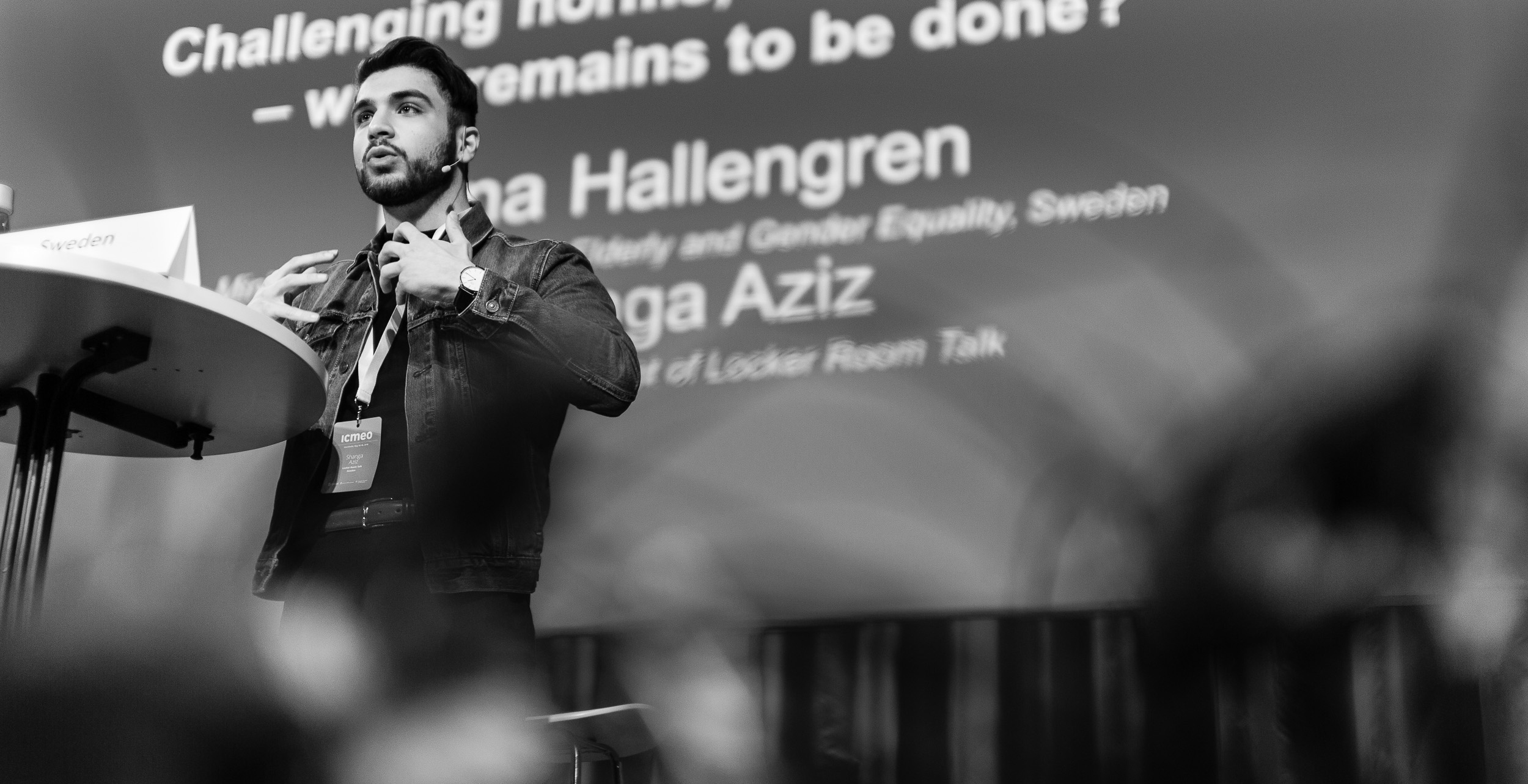
How can the prevailing masculinity norms be changed? This was the central issue discussed at the recent international conference on men and gender equality, ICMEO, arranged in Stockholm. The 2-day conference programme also covered topics such as methods to prevent violence in the Nordic countries.
Issues related to men and gender equality are assigned key importance in Nordic gender equality policy, with the main point being that men need to take greater responsibility and be included more in the gender equality work. Gender attitudes that affect and restrict women have an impact on men, too. Restrictive masculinity norms influence the roles of men and the conditions they face. A large number of initiatives have been launched in the area, aimed for example to end men’s involvement in violence both as perpetrators and victims, find ways for men to balance work and family life and challenge destructive masculinity norms.
ICMEO stands for International Conference on Men and Equal Opportunities, and the diverse conference programme included everything from keynotes on Arab masculinities to minister panels and workshops on norm-critical work in the school environment. Hosted by the Swedish Ministry of Health and Social Affairs, the Swedish Gender Equality Agency and the Nordic Council of Ministers, the event was part of the Swedish Presidency of the Nordic Council of Ministers and attracted a wide range of actors in the gender equality field, including researchers, policy makers and representatives from government agencies and the civil society.
Focus on Violence Prevention in the Nordic Countries
One workshop, organised by Lina Lundborg from the Swedish Gender Equality Agency, focused on what the Nordic countries are doing to prevent violence among young men, including honour-related violence. According to Lundborg, the event was a continuation of the violence prevention work carried out within the framework of the Nordic co-operation. During the Finnish Presidency of the Nordic Council of Ministers in 2016, a report on the violence prevention methods used was written. Last year, the Norwegian Presidency added to the efforts by carrying out a study of how the Nordic countries are implementing the so-called Istanbul Convention.
‘We wanted to continue building on the previous work. The reason for the focus on violence prevention among young people in particular is that it is important to prevent violence at the earliest possible stage, to change norms when people are still young. Research shows that a norm-critical approach is what yields the best results,’ says Lundborg.
Mentor Programme Reducing Violence in Stockholm Suburb
The workshop presented several methods and experiences from the Nordic countries, including a violence prevention programme titled Mentors in Violence Prevention (MVP) and carried out in Botkyrka municipality south of Stockholm. The Swedish police have identified Botkyrka as a high-priority area, and to reduce the violence, the local schools, the municipal social services and the police have started to deal with the problems together instead of separately. The municipality has a systematic approach in place, reaching all the way from individual to municipal level, and the interventions targeting children and young people are central components of it.
‘The work begins already at preschool level, with preschool staff receiving training on violence in close relationships. There is a focus on the adult world around the kids and on being sensitive to indications that children are being violated,’ says Pernilla Junior Vera, municipal head of security.
The violence prevention work continues throughout primary school and lower-secondary school, where the MVP mentor programme is introduced. The programme consists of 11 lectures where the pupils reflect on ways to act against violence in everyday life and talk about various aspects of violence, such as bullying, racism and honour-related oppression. The 9th graders serve as mentors to 6th graders.
Mashury Mirza and Mmesoma Ezekiel are in 9th grade at Karsby International School in Botkyrka and participate in the MVP programme. They say that the fighting and other problems in the school hallways have decreased since the mentor programme started.
‘There is much less psychological violence and harassment at school. We don’t laugh and say mean things to each other as much as we used to,’ says Ezekiel.
As mentors, their task is to support the 6th graders.
‘It works because we talk the same language as the 6th graders. We can reach them better. And our work has a snowball effect, as it affects not only the school environment but also everyone the pupils interact with at home and in society,’ says Mirza.
Broad-based Approach to Stop Intimate Partner Violence
The workshop also included a presentation of a project titled Stopp Kjærestevolden (stop intimate partner violence) by Hedda Hakvåg from the Norwegian organisation Reform. Stopp Kjærestevolden is an education programme for young people. So far, more than 3500 adolescents have participated in the programme, which primarily aims to prevent intimate partner violence through information and discussions about violence, values and sexual boundaries.
‘We try to keep the gender roles open and don’t talk about men as perpetrators and women as victims. We target young people, people who are in the process of negotiating masculinity and femininity and who don’t want to reproduce gender norms,’ says Hakvåg.
She adds that a perspective where men are always made out to be perpetrators brings about a sense of passivity and a defensive attitude. It may also remove the attention from male victims. The emphasis in that discourse is also often placed on heterosexual relationships, which may make queer relationships invisible.
‘We talk more about what than who. The goal is to open up for a broader discussion in the area. At the same time, though, it is necessary to talk about gender and the fact that the violence tends to be gendered, and we do this at a later stage,’ she says.
Hakvåg also says that she sees a lot of good violence prevention work in the Nordic countries, not least by grassroot organisations.
‘The performance at this workshop is a good sign of this. But the problem is that the work is not long-term oriented. My hope is that this will become a hot political topic, because today it is not.’
The Importance of Safe Spaces for Men

The discussion around how masculinity norms and the prevalent male gender role can be changed was an overarching theme of the ICMEO conference. A debate involving representatives from all Nordic countries focused on the MeToo campaign and what men have to do with it. The participants included Harry Lunabba, senior lecturer who has done research on the topic of boys in school at University of Helsinki. According to Lunabba, there is a need for safe, gender-sensitive spaces where men can be vulnerable in a way that is not possible today.
‘MeToo is a great platform where we have been able to listen to women’s stories. For men, however, talking about personal shortcomings on social media is a risky thing to do. Instead, there is a need for safe institutions where men are allowed to look weak and foolish and where we are not held accountable for everything some men do,’ says Lunabba.
He sees a need for an intersectional perspective in order to understand the complexity of issues concerning boys and men. In his PhD thesis, Lunabba wrote about boys in school and what happens in the face-to-face interaction between adults and the boys. In the public debate, girls are often portrayed as the well-adjusted winners in the school environment, while boys are thought of as noisy, disruptive and underperforming. According to Lunabba, this is a grossly simplified view.
‘Most boys perform at the level of girls in school. It’s just a small share of all boys who don’t do well. When you listen to the debate, it is easy to start believing that boys are loud and annoying by nature. They as a group are viewed as a problem in the classroom,’ says Lunabba.
Instead, he says, there is a need for sensitive tentacles in order to understand why some boys cause problems in the classroom. He calls for a greater understanding of masculine vulnerability.
‘Many people get really mad at boys and men, when instead it would be wiser to treat them with love and empathy. Boys who cause problems at school don’t do better by being moved somewhere else – they need individual attention.’
- Text: NIKK
- Categories: Gender equality and welfare policy
- Published: 2018-05-24
New OECD report: Nordic gender equality boosts GDP growth
The steady increase of women in the labour market can account for 10–20 per cent of the Nordic region’s GDP per capita growth in the past 40–50 years, according to a new OECD report.
Almost three out of four women in the Nordic region work. This does not only make the Nordics the most gender-equal region in the world, but also an economic powerhouse.
Since the 1960s, Denmark, Finland, Iceland, Norway and Sweden have actively pursued policies to ensure that both women and men can participate fully in the labour market.
Investing in working parents pays off
Extensive access to childcare, paid parental leave for mums and dads and flexible workplaces, have helped reduce gender gaps in employment so that they are now the smallest in the OECD – at about 4 percentage points compared to the OECD average of 12 percentage points.
In a new report, commissioned by the Nordic Council of Ministers, the OECD looks at the effects of these work-life policies on Nordic economic growth, as well as potential gains from closing remaining gender gaps in the future.
Comparing with Canada and the US
In the report, the economic gains of women’s employment growth in the Nordic countries are put side by side with those in other OECD countries, like Canada, Germany, Japan, and the US.
– Most OECD countries have made little progress in getting closer to gender equality goals in recent years, but we do have some champions leading the way. The Nordics have a long-standing commitment to gender equality, and this has significantly benefitted their economies, says Ángel Gurría, Secretary-General of the OECD.
The Nordics still have to complete the last mile
However, there are still issues to iron out – and the potential for further economic gains.
The OECD points out that the Nordic region still has some way to go when it comes to increasing the share of women in management positions. The region is still grappling with occupational segregation in the labour market, the gender pay gap, as well as gender inequalities in working hours.
Large potential future gains
According to the report, encouraging women to increase their paid working hours so that gender gaps in both participation and working hours disappear completely by 2040, would boost the economy by an additional 15-30 per cent GDP per capita growth in the Nordic countries.
Nordic potential gains are large indeed, but small compared with some other OECD-countries:

- Text: NIKK
- Categories: Gender equality and welfare policy
- Published: 2018-05-22

“The conference is key to help us find ways to incorporate men in the gender equality work”
ICMEO, an international conference on men and equal opportunities, will be held in Stockholm on May 15-16. The theme is “Masculinity and norm critical approaches: Gender equality work with boys and young men”. NIKK has spoken to one of the Icelandic participants.
Hi there, Tryggvi Hallgrímsson from the Centre for Gender Equality in Iceland! You will attend the ICMEO conference on men and gender equality in Stockholm. Can you tell us more about it?
‘Yes, I’m going to Stockholm together with three other persons from Iceland: one young politician, one teacher and one representative from an education and counselling centre for survivors of sexual violence. The aim of the conference is to help us find ways to incorporate men in the gender equality work. The Nordic co-operation and experience in the area make us stronger.’
You will participate in a seminar titled “#metoo – What do men have to do with it? Experiences, responses and perspectives from Nordic Civil Society”. So, what do men have to do with #metoo?
‘The #metoo movement and all the testimonies have given men a chance to step aside and listen. It has been an alarm clock and an opportunity for men to reflect on their own position and gender role. Many men are aware that society is full of sexual harassment and sexual violence, but not in the same way as women who carry these experiences with them. It’s important that men don’t diminish their stories. In Iceland, I think men have responded positively.’
The #metoo movement is still in full swing in Iceland. What’s the latest?
‘We have had a series of campaigns filled with testimonies from various groups of women. The most recent have come from women with a migration background. Their testimonies are the strongest so far. The stories, which are full of both racism and sexism, serve as perfect examples of power structures. These are issues that need to be given more attention.’
What are you doing at the Centre for Gender Equality to change things in the wake of #metoo?
‘We have a very broad mandate when it comes to gender equality issues. One of our roles is to advise the government on possible measures in the area of gender equality. The Icelandic government has been active and has instructed several committees to look into how sexual harassment can be stopped. Today we do have laws and rules against sexual harassment, but the anti-harassment work in the workplace needs to be organised better and carried out more systematically. The Centre for Gender Equality is also in charge of monitoring the employers’ gender equality plans, and that’s an area where we have become stricter. All the attention around #metoo has given us a good tailwind, which is positive.’
What changes are needed?
‘It’s a complex problem because the gendered power hierarchy has so many impacts. We need to get a broad discussion going about gender roles and relations. Today, school are given this responsibility, but that’s not enough. The work to create real change needs to take place elsewhere in society as well – in the workplace, in politics.’
What’s your view of men’s involvement in these issues?
‘Men’s participation and engagement are important. Men need to be included in the work but must at the same time not be held accountable for everything men do. I think we have done this quite well in the Nordic countries. One successful factor has been that we have been able to discuss power structures and the patriarchy, which are things that affect the lives of men, too.’
- Text: NIKK
- Categories: Gender equality and welfare policy
- Published: 2018-05-14

Iceland Discussing Stronger Anti-Discrimination Laws
The anti-discrimination laws and victims’ opportunities for redress vary among the Nordic countries. Iceland offers the weakest protection against discrimination. ‘We are 15 years behind,’ says Hugrún R. Hjaltadóttir from Iceland’s Centre for Gender Equality, Jafnréttisstofa.
Iceland’s lack of anti-discrimination laws that protect minorities sets the country apart from its Nordic neighbours. The possible introduction of anti-discrimination legislation in line with the other Nordic countries has been discussed many times, and a dialogue on the topic is currently underway at the government level.
‘This issue has been on the agenda for over a decade, but it still has not resulted in new legislation,’ says Hjaltadóttir.
All Nordic countries have some form of anti-discrimination laws prohibiting discrimination based on gender in place, yet their exact design varies. Most countries have also outlawed discrimination on grounds such as ethnicity, disability and sexual orientation, but again, some important differences between the countries can be noted.
Lacking a Discrimination Ombudsperson
The lack of discrimination legislation in Iceland makes it difficult for victims to take action. The Icelandic constitution offers some protection by providing that all people have the same human rights. There is also a law prohibiting agitation against ethnic or national groups, and another giving individuals with disabilities the right to be able to access public buildings.
‘There are a whole bunch of gaps in the legislation and many forms of discrimination remain unregulated. Theoretically, you can take a discrimination case to court, but it’s going to cost you a lot of money. Nobody ever does it,’ says Hjaltadóttir.
In contrast to the other Nordic countries, Iceland does not have a state discrimination ombudsperson who helps victims take discrimination cases to court. The country’s Centre for Gender Equality only deals with gender-related discrimination, and victims of workplace discrimination may in a best-case scenario count on the support of their trade unions. Special-interest organisations for example within the LGBTQ movement have also occasionally addressed the issue, but generally lack the resources necessary to take cases to court.
‘We know there are victims who have nowhere to go. They call us, hoping we will be able to help them, but all we can do is tell them who to contact next. So, we know there’s a need for legislation,’ says Hjaltadóttir.
Norwegian Legislative Change Met Resistance
The Norwegian discrimination laws were recently changed, and since January this year, all discrimination grounds are covered under the same act. As a result of the change, the gender equality act no longer exists, and this has stirred up a storm of protests in the women’s movement. The first Norwegian gender equality act was adopted in 1978 – one year before the UN Convention on the Elimination of all Forms of Discrimination was established in 1979 and two years before Norway’s ratification of it.
‘Many women’s organisations wanted to keep the gender equality act because it was the fruit of many years of hard work, was very well known and signalled that women are not a minority group in society,’ says Anne Hellum, professor at the Department of Public and International Law, University of Oslo.
Supporters of the new law say it is more user friendly and makes it easier to deal with cases involving multiple grounds of discrimination. Some also point to the benefit of not treating minorities separately and instead placing all types of discrimination under the same umbrella. Hellum stresses that compound discrimination was prohibited also under the old legislation. She thinks that overall, the new law is more difficult to interpret.
‘All discrimination grounds are unique in some ways, and it’s obvious in the work that led up to the new law that they had problems concretely defining them. Instead, they had to settle for an abstract level, which makes it difficult for those who are actually going to use the law in practice,’ she says.
She also points out that the new legislation has changed the way discrimination cases are handled. Overall, it has become more difficult to get one’s case reviewed, she says.
‘The Norwegian Gender Equality and Anti-Discrimination Ombud can no longer process individual cases, and the resources needed to give people advice have been reduced.’
In addition, the new discrimination board, which handles all discrimination cases since the turn of the year, only accepts written reports of discrimination. In the past, people could report discrimination verbally, Hellum continues.
‘Overall, we are seeing a neoliberal liberalisation reform where the handling of individual rights and the responsibilities of private and public actors have been dramatically weakened,’ she says.
Gender Discrimination in Denmark and Finland
While Norway and also Sweden are now handling all grounds of discrimination under one and the same law, Finland and Denmark have separate laws against discrimination based on gender.
Although gender is handled separately in Danish law, the same discrimination board deals with all complaints regardless of type of discrimination. The board can, in theory, handle several types of discrimination at the same time, although this has turned out to be difficult in practice, says Rebekka Mahler from Danish KVINFO.
‘If you for example are a woman with immigration background, it is not easy to pursue a case that combines both discrimination grounds,’ she says.
The Danish anti-discrimination protection is generally not as extensive as the laws in Finland, Norway and Sweden. For example, Danish law does not require employers to actively prevent discrimination, nor does it explicitly prohibit discrimination of trans persons, in contrast to Finnish, Norwegian and Swedish law.
‘Reporting a Violation Really Doesn’t Make You a Whiner’
The Icelandic government is currently discussing how a national anti-discrimination act could be designed. It has for example been suggested that the law should only apply to the labour market and the workplace, while others have proposed that it should also cover other parts of society. The other Nordic countries have chosen somewhat different paths in this respect. In Finland, Norway and Sweden, the anti-discrimination laws apply in many different domains, including in school, in the housing market, at restaurants and in shops. In Denmark, only discrimination based on gender and ethnicity is prohibited in all areas of society. For the other discrimination grounds, the laws only apply in the labour market and the workplace.
‘What’s most important right now is that we finalise this law so that Iceland, too, will have an anti-discrimination act in place,’ says Hjaltadóttir.
Besides legislation, she also sees a need for efforts to change the prevailing views of discrimination in both Iceland and the other Nordic countries.
‘There is a culture that encourages victims to bite the bullet and just keep going, but reporting a violation really doesn’t make you a whiner,’ she says.
- Text: NIKK
- Categories: Gender equality and welfare policy
- Published: 2018-05-02

Migrant Women and Jobs in Focus
How can the share of foreign-born women be increased in the Nordic labour market? This was the key question discussed when the Swedish Presidency of the Nordic Council of Ministers arranged a conference in mid-April. Several new reports and Nordic collaborations around the theme were also presented.
Sweden is heading the Nordic Council of Ministers in 2018 and has identified gender equality in the labour market as a key issue for the year. A conference on the entry of immigrants into the labour market, with a particular focus on women, was arranged in mid-April. Sweden’s minister for employment and integration, Ylva Johansson, opened the event by bringing up the issue of discrimination and the view of foreign-born women.
‘I recently met a Somali woman who grew up in Uppsala, Sweden. She told me that in Uppsala, she was a lawyer, but in Husby, an immigrant-dense Stockholm suburb, she became a Somalian. This was just another indication that we tend to define people based on ethnicity rather than competence, and I suspect that this is a problem that affects women more than men,’ she says.
The purpose of the conference was to present the latest research in the area and discuss challenges and appropriate policy changes. A new OECD report was presented by Stefano Scarpetta from the Directorate for Employment, Labour and Social Affairs at the OECD. Among other things, the report addresses what the refugee flows to the Nordic countries as well as the employment rates for immigrant women and men have looked like in recent years.
‘The Nordic countries are facing a more difficult challenge than other OECD countries since you are accepting more migrants. A lot of work is being done, but more measures are needed as a large share of these individuals remain unemployed,’ he says.
Scarpetta’s presentation was followed by a panel discussion where the Nordic labour market ministers as well as Åland’s deputy head of government talked about political solutions to the problem.
All Nordic countries have a larger female share of the workforce than the EU average. At the same time, a large portion of the foreign-born women are unemployed. The conference also included a presentation of a recently published report about the entry of newly arrived women into the labour market. The report was written by Oxford Research at the request of the Nordic Council of Ministers and gives an overview of the support newly arrived women are offered to facilitate their transition into paid work in the Nordic countries as well as experiences regarding the effectiveness of these tools.
The Nordic co-operation was a central theme at the conference. Towards the end of the day, the conference guests listened to a presentation of a project titled Enhancing Labour Opportunities for Women in the Nordic Countries and funded by the Nordic Council of Ministers’ gender equality fund, which is administered by Nordic Information on Gender (NIKK). The project is a collaboration between the University of Akureyri in Iceland, the University of Lapland in Rovaniemi, Finland, and Nordregio in Sweden. The aim of the project is to carry out a comparative study and share examples of best practice in order to improve the integration of migrant women in the labour market.
‘A study we did in Akureyri shows that many migrant women end up in low-status jobs that don’t correspond to their level of education. This can partly be attributed to a lack of support, which in turn is partly due to the fact that Iceland lacks a tradition of immigration,’ says Markus Meckl, professor at the University of Akureyri.
According to Meckl, the Nordic co-operation in the project is important, not least in order to learn from each other. The marginalisation problem is not unique to Iceland. Meckl feels that being both a woman and a migrant in the Icelandic labour market implies a double disadvantage.
‘Iceland, with its shorter history of migration, can learn from Sweden’s experiences. I think it is also good that we are creating networks and raising the public’s awareness about these issues,’ he says.
- Text: NIKK
- Categories: Gender equality and welfare policy
- Published: 2018-04-19

Sweden arranges conference on men and gender equality
Sweden will arrange the 4th International Conference on Men and Equal Opportunities, ICMEO, in Stockholm on 15-16 May 2018. The Swedish Minister for Gender Equality, Lena Hallengren, will host the conference with international high-level participants also being featured in the programme. The Swedish Gender Equality Agency co-arranges the conference on behalf of the Swedish Minister of Gender Equality.
After being hosted by Germany, Austria and Luxemburg, Sweden is now to run with the ball. The 4th ICMEO conference in Stockholm focuses on change of social norms and stereotypes as ways to strengthen focus on men and boys and their role in gender equality politics and efforts. What are the best ways to engage men and boys for gender equality?
ICMEO is organized in cooperation with Swedish Agency for Gender Equality, which is also responsible for one of the six seminars. The Swedish Association of Local Authorities and Regions, the Swedish National Agency for Education, The Public Health Agency of Sweden and MÄN are also organizing one seminar each.
This year’s ICMEO theme is “Masculinity and norm critical approaches: Gender equality work with boys and young men”. Challenging norms for masculinity promotes gender equality and better opportunities for all, and is especially important in work with youth. How do social norms change, and what are the best ways to engage men and boys for gender equality, and a lifestyle with opportunities which reach beyond stereotypical norms?
Day one, May 15, will have an international perspective, and parts of day two more of a Nordic profile, as Sweden holds the Presidency of the Nordic Council of Ministers during 2018.
Lena Ag, Director General of Swedish Gender Equality Agency, is participating in a panel discussion on how to turn boys and young men into actors of change using a norm-critical approach. Swedish Gender Equality Agency is also arranging a workshop on Nordic work with violence prevention among young men, including honour-related violence.
- Text: NIKK
- Categories: Gender equality and welfare policy
- Published: 2018-04-04
