
“No one is liberated until everyone is liberated” – Summing up Norway’s Presidency in 2022

Norway’s Presidency in 2022 focused on making the Nordic countries greener and more gender-equal, with a particular emphasis on the workplace and opposition to gender equality and LGBTI rights. “Together, the Nordic countries can speak with a much stronger voice than these countries and regions can do alone. Nobody is liberated until everyone is liberated,” says Norwegian Minister for Culture and Equality Anette Trettebergstuen.
Norway took over the presidency of the Nordic Council of Ministers in 2022. Minister of Culture and Equality Anette Trettebergstuen summarises the year in which the Commission on the Status of Women conference was held in New York with its aim of strengthening climate policy. The report How climate policies impact gender and vice versa in the Nordic countries concluded that the gender dimension was largely lacking in national climate policy in the Nordic countries.
Increase women’s influence in the green transition
Moving forward, the Nordic countries’ ministers for gender equality want to increase knowledge and raise awareness so as to target climate policy more accurately, and to avoid the green transition deepening gender inequality in the Nordic countries. The meeting focused in particular on work to reduce the vulnerabilities of women and girls to climate change, and to increase their influence on climate policy.
– Women and men work in different industries and have different levels of purchasing power; and they have different lifestyles, attitudes and priorities. This means that as groups, women and men are going to be affected differently by climate change and climate policy unless we take the gender dimension into account. Women must be involved in shaping the big decisions we are facing as part of the green transition, and we must ensure that we use the green transition to engender a positive trend in the area of gender equality rather than setbacks. This should also be a global focus, says Trettebergstuen.
A green and gender-equal Nordic region
The year’s primary effort for a green and gender-equal Nordic region has been to focus greater attention on and increase understanding of the connection between gender equality policy and climate policy. During the 2022 UN climate summit (COP27), an official side event was organised by the Environment and climate policy area within the Nordic Council of Ministers, in conjunction with the African Union and UN Women.
– It’s useful to share experiences concerning how we are affected by climate change in different regions of the world. Measures and solutions for the future of education and the labour market were also discussed in parallel at a Nordic conference in Oslo in cooperation with the Working life policy area,” explains Trettebergstuen. “We are also conducting a knowledge development project to map the gender distribution in parts of the blue economy, which refers to fisheries and aquaculture, in the Nordic countries. This will give us an even better knowledge base for the future.
“Oslo was hit hard”
During the year, the Nordic Ministers for Gender Equality met in Oslo, the city where two people were shot dead and 26 were injured during the Pride festival. In order to respond to growing opposition to gender equality and the rights of LGBTI people in particular, the Nordic Ministers for Gender Equality decided at the meeting on a two-year plan entitled Pushing back the push-back – a Nordic Roadmap. The roadmap describes more coordinated and vigorous efforts and is a step in the right direction towards a more proactive Nordic gender equality policy in the future.
– We live in a time when these rights are being actively opposed in various parts of the world. Oslo as a whole and many individuals were hit hard by the terrible event at this year’s Pride festival. In the Nordic countries, we are at the forefront of gender equality and freedom for all and must speak with a clear voice when attempts are made to frustrate the enjoyment of fundamental human rights. Together, the Nordic countries can speak with a much stronger voice than these countries and regions can do alone. No one is liberated until everyone is liberated, says Trettebergstuen.
Measures for equality in the workplace
No individual’s opportunities in the education system or the workplace should be limited due to restrictive gender norms and prejudices. The conference on working life A gender-equal Nordic region – measures and solutions for the future of education and the workplace focused on how the Nordic countries ensure that education and the labour market promote gender equality and combat discrimination. “Gender equality is an end in itself and a key means of achieving a sustainable and competitive labour market,” Trettebergstuen stresses.
– Gender equality is about justice and women’s representation in the power structures of the society. We know that gender equality pays off and that workplaces benefit from diversity. In the Nordic countries, there are good measures in place at the central and local government levels which can help to combat gender segregation in educational choices and gender segregation in the labour market. We must facilitate mutual learning, cooperation and sharing experience. We need more men working in health and social care, and more women in the industrial, technological and energy sectors. This is important for the success of the green transition.
Handing over with pride to Iceland
Trettebergstuen is proud that interdisciplinary collaborations have been strengthened during Norway’s 2022 Presidency. She emphasises that it is crucial that gender equality efforts garner support in other industries and disciplines in order to achieve good, long-term results.
– We have worked well with several Councils of Ministers, including those responsible for education, health, employment, culture, fisheries and the maritime environment, and the climate and environment. A number of the projects we initiated will continue for several years. These include efforts to improve knowledge of the quality of life and living conditions of LGBTI people. This year, we have focused on older LGBTI people, which complements previous efforts and contributes to a knowledge base for LGBTI people that encompasses the whole of a person’s lifetime. We greatly appreciate our good dialogue with Iceland, which will now take over the presidency for Nordic co-operation in the area of gender equality.
- Text: Caroline Jonsson
- Categories: Gender equality and welfare policy
- Published: 2023-01-09
Apply for funding for Nordic co-operation in the gender equality and LGBTI area
Next year, NIKK will open up the possibility of applying for funding for Nordic co-operation in the gender equality and LGBTI area again. As in previous years, actors from at least three Nordic countries are required to participate in the application. In total, approximately 4 million Danish kroner will be distributed.
In order to be granted funding from the Nordic Gender Equality Fund or the Nordic LGBTI Fund, the planned activity needs to start in 2023 and be completed within two years. The funds can, for example, be used to develop joint methods, develop new knowledge or arrange conferences and networks. The application is made through a form that is available on nikk.no during the application period.
Important dates for the Nordic Gender Equality Fund
First out in 2023 with its ‘call for proposals in March is the Nordic Gender Equality Fund. This fund finances collaboration across the Nordic region to promote gender equality. In total, approx. three million DKK will be distributed.
- 1 March – Call for proposals opens
- 3 April – Application deadline
- May – June – Decision is notified to applicants
- June – Project agreements concluded.
Read more about the Nordic Gender Equality Fund
Important dates for Nordic LGBTI fund
In the autumn of 2023, it will be possible to apply for funding from the Nordic LGBTI Fund, which aims to promote Nordic co-operation in the LGBTI area. Projects that contribute to the work for LGBTI people’s equal rights, treatment and opportunities in the Nordic region can apply for funding. In total, approx. 1 million DKK will be distributed.
In the autumn of 2023, it will be possible to apply for funding from the Nordic LGBTI Fund, which aims to promote Nordic co-operation in the LGBTI area. Projects that contribute to the work for LGBTI people’s equal rights, treatment and opportunities in the Nordic region can apply for funding. In total, approx. 1 million DKK will be distributed.
- 1 September – Call for proposals opens
- 2 October – Application deadline
- November/December – Decions are notified to applicants
- November/December – Project agreements concluded.
- Text: NIKK
- Photo: Karen Beate Nøsterud – norden.org
- Categories: Gender equality and welfare policy
- Published: 2022-12-16
Three new co-operation projects strengthen the LGBTI area in the Nordic region
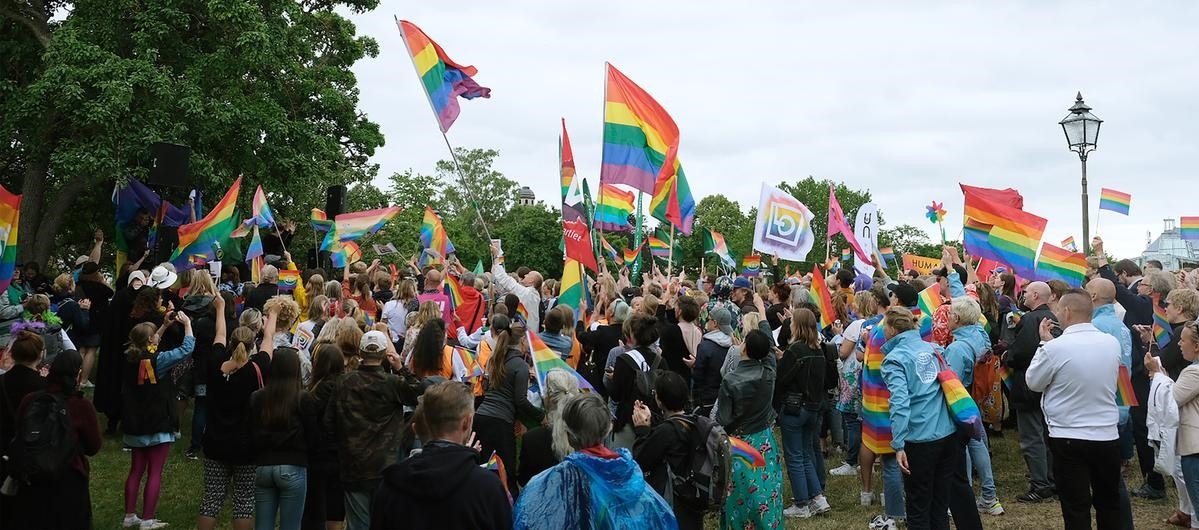
This year’s call for proposals for the Nordic LGBTI Fund has resulted in three Nordic co-operation projects in the LGBTI area. This year the Nordic LGBTI Fund was open for applications for funding for the second time. Three projects strengthening the LGBTI area in the Nordic region has now been granted funding.
Projects granted funding from the Nordic LGBTI Fund 2022
- Antigypsyist homophobia and LGBTIQ Roma rights in the Nordics – The aim of the project is to putting Roma LGBTIQ communities on the agenda in the Nordics. The project aims to provide information about Romani LGBTIQ minorities in the Nordics and the intersectional discrimination they face, including antigypsyist homophobia.
- Nordic Futures: QTIBIPoC Movement Based Learning – Through research the project, consisting of five organization, will develop a digital and physical toolkit that stems from the experiences of QTIBIPoCs (Queer, Trans*, Inter* and Black, Indigenous, People of Colour) in the Nordic region.
- Nordic network for queer history archives and activities – The aim of this project is to create a network of queer history archives and activities in the Nordic and Baltic countries.
The Nordic LGBTI Fund is administrated by NIKK on behalf of the Nordic Council of Ministers.
- Text: NIKK
- Categories: Gender equality and welfare policy
- Published: 2022-12-05
Gender norms a challenge for the green transition

How people eat, travel and consume goods and services is a significant source of climate impacts in the Nordic countries. Nordic Information on Gender (NIKK) is now publishing a new research overview which aims to reveal, challenge and contribute insights into gender stereotypes as they relate to consumption and lifestyles. Among other things, the report shows that a caring ideal can be an important key in the green transition.
How can we make it possible to live sustainably in the Nordic countries? How can we better understand how differences in lifestyle that affect sustainability arise? Sustainable production and consumption, Goal 12 of the 2030 Agenda, has been identified as one of the areas where the Nordic countries face the biggest challenges in their sustainable development work. This area is also the focus of the NIKK project Sustainability, lifestyles, and consumption from a gender perspective, which is part of the Nordic Council of Ministers’ programme Sustainable lifestyles in the Nordic region.
The new research overview entitled Climate, gender and consumption – a research overview of gender perspectives on sustainable lifestyles summarises the state of international research in seven different areas: Food, Housing and energy, Clothing and consumer goods, Transport, Work and time use, Culture and tourism, and Activism and influence. The report aims to reveal and challenge gender stereotypes as they relate to consumption and lifestyles, and to contribute to a better understanding of how gender differences arise and are reinforced and reproduced in these areas.
Ideals and norms have an impact on the climate
“At the group level, there are clear and not very surprising differences between men and women. For example, men eat more meat than women do, and meat consumption has a bigger impact on the climate than vegetarian foods do. But a more detailed analysis shows that the underlying factor in this is norms and ideals, rather than gender per se. For example, men who want to be perceived as ‘real men’ also eat more meat. Conversely, a traditional feminine body ideal leads to a more vegetarian diet, but this is not primarily a result of consideration for the climate,” says Jimmy Sand, author of the report and analyst at the Swedish Secretariat for Gender Research, University of Gothenburg.

Attitudes and behaviours are influenced by norms and ideals that relate to care and technology, and these areas are often associated with femininity and masculinity, respectively. All in all leading to a greater or lesser impact on the climate.
“Generally, women are more inclined to change their behaviours, while men are more interested in technical solutions to the climate crisis, such as solar panels. Prejudices about technical expertise as being a masculine field can also deter women from engaging with matters that concern technology,” says Jimmy Sand.
Care ideal promotes sustainable lifestyles – in both women and men
How unpaid domestic and care work is organised affects transport patterns, for example. Those who work part-time and who are responsible for dropping off and picking up children, and making the daily purchases for the household, travel in ways that are quite different to full-time workers who tend to travel more directly between home and work.
Women as a group are more involved with sustainability issues and also more oriented towards care values than men as a group, the research overview shows. Based on the research carried out in this field, sustainability and consideration for the climate seem to be more important to individuals, regardless of gender, who are engaged in domestic and care work and see this work as important.
“In studies where men are shown as driving sustainability, these are men who are taking the main care responsibilities in their households,” says Jimmy Sand.
Key takeaways
- Gender, understood as social norms, is often more important than sex as a statistical variable. Individuals oriented towards caregiving – an ideal often associated with femininity, regardless of sex – are more engaged with sustainability and show more sustainable behaviour patterns.
- The uneven distribution of unpaid domestic and care work, for which women as a group take a greater share of the responsibility than men as a group, and the normative coding of technology as a male domain, have consequences for the different impacts of individuals on the climate; and consequently for what efforts should be made to reduce this impact.
- Women as a group are ascribed a greater responsibility for the environment as consumers than men as a group due to social norms concerning fashion consumption, but also because women more often than men are responsible for cooking the meals in households and for washing and buying clothes for the family members.
- Traffic planners, vehicle manufacturers, food producers, energy companies, the fashion industry, etc., all have great power to influence the climate impact in their spheres, and thus bear a great responsibility for the green transition. When responsibility is placed on consumers instead, it risks being individualised. Due to norms of femininity and masculinity, the unequal distribution of unpaid domestic and care work and the feminisation of consumption, where men’s behaviour patterns in this space are rendered invisible, may entail a particular burden of responsibility on women as a group.
- If reducing working hours with associated changes in consumption is to be used as a strategy to achieve more sustainable lifestyles, it should be based on efforts to influence the preferences of men as a group, and to support the ideal of caring among men.
- Text: NIKK
- Categories: Gender equality and welfare policy, Sustainability
- Published: 2022-10-04

New co-operation projects strengthen gender equality in the Nordic region
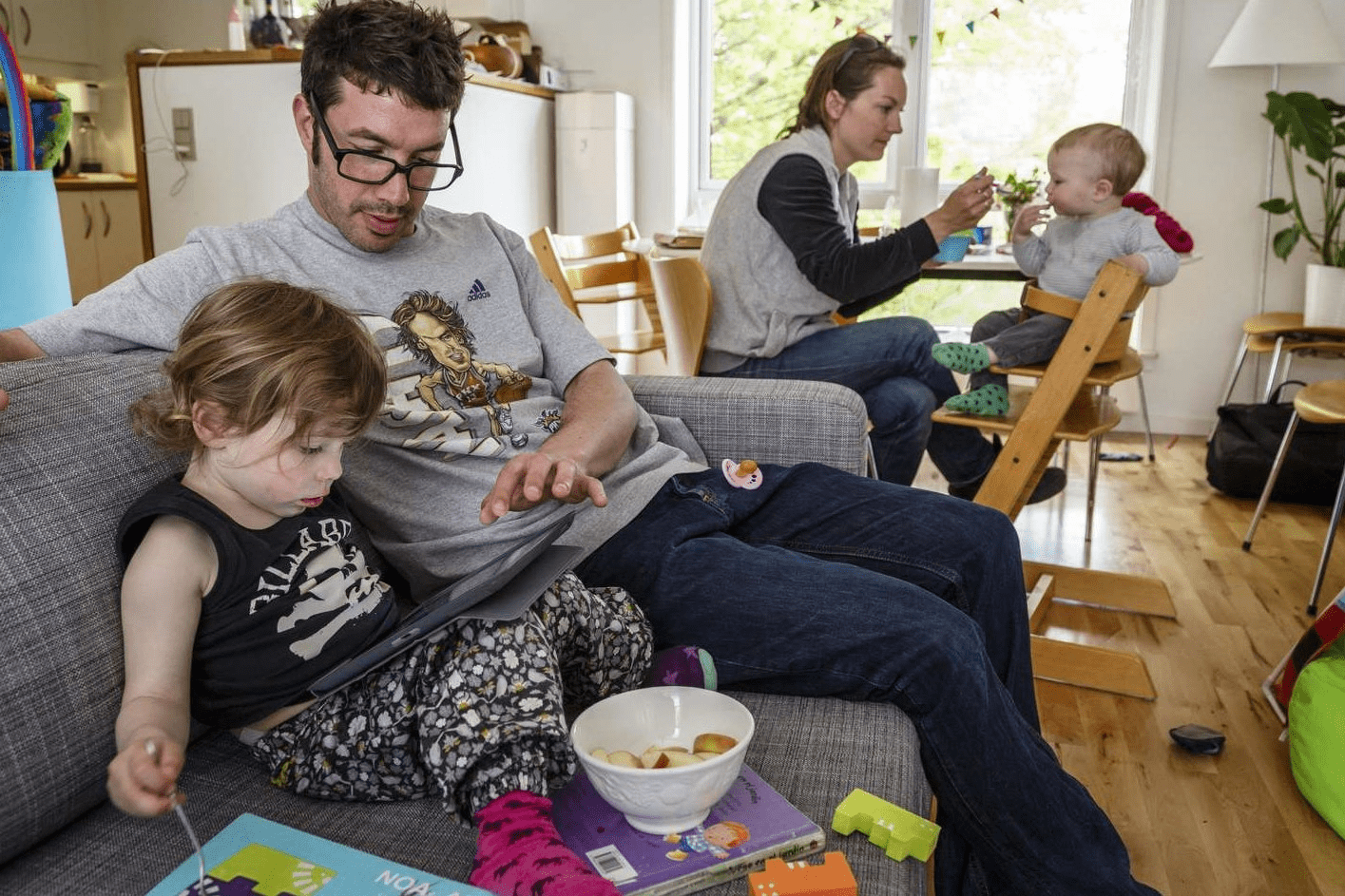
Six projects have been granted funding from the Nordic Gender Equality Fund 2022. The collaboration projects will increase knowledge and create platforms on issues such combining parenting and academic careers, health consequences of covid-19 for immigrant women and feminist cooperation the in the West Nordic Region.
Projects granted funding by the Nordic Gender Equality Fund 2022
Read more about the projects on the project pages:
- West Nordic Feminist Network
- Gender-based health inequalities among migrant women during COVID-19 and public health responses in the Nordic countries
- Minority Stress – Interfem’s Nordic Network for Feminist Activism
- (In)equalities in combining academic knowledge work and care responsibilities
- Nordic Women Mediators Network Website
- Addressing the gender and diversity paradoxes in innovation – towards a more inclusive policy design (AGDA)
The Nordic Gender Equality Fund is administrated by NIKK on behalf of the Nordic Council of Ministers. Information about the call for proposals for 2023 will be available later on this year.
- Text: NIKK
- Photo: Yadid Levy/Norden.org
- Categories: Gender equality and welfare policy
- Published: 2022-09-13
New report provides gender perspective on sustainability in the future world of work

The labour markets in the Nordic countries are changing rapidly. New demands are coming out of the green transition and digital development. What needs to be done to enable sustainable development based on human rights and gender equality? NIKK’s new publication on the future world of work in the Nordic countries highlights some of the opportunities and challenges for a sustainable world of work from a gender perspective.
Labour markets and the world of work are facing a variety of challenges, including challenges emanating from technological change, demographic shifts, and regional differences. This is happening at the same time as views on knowledge, learning and education, and the logics of governance are changing or have changed. NIKK’s new publication Towards a sustainable future world of work in the Nordic countries – The gender perspective on the opportunities and challenges describes these changes and focuses on three of the challenges:
- Lifelong learning: being schooled in readiness to change
- The significance of place: teleworking and work on site
- Forms of employment and working conditions: the gig economy and entrepreneurship as examples.
By identifying the challenges from a gender perspective, it becomes possible to problematize assumptions about technology-driven social development that have a bearing on the world of work and the supply of skills. They are also positioned in relation to policy goals for sustainable economic, social and environmental development.
“Gender analyses indicate that prevailing norms and social structures assign women and men different roles, opportunities and responsibilities – and that these norms and social structures are limiting our opportunities to transition to a sustainable society,” says Fredrik Bondestam, Director of the Swedish Secretariat for Gender Research where NIKK is located.
The publication takes up examples where the different aspects of sustainability are somewhat at odds with each other. Economic interests and thus economic sustainability are often given priority over social and environmental sustainability. The examples also show how such unequal priorities reproduce inequalities based on gender, class, age and ethnicity. Intersectional analyses of how different systems of power interact are important to understanding gender and sustainability.
“There are many opportunities to make the world of work in the future more sustainable, but for this to happen, power relationships must be taken into account. Because they do not automatically change as a result of technological or economic changes. They just find new, different, or additional expressions than previously,” says Fredrik Bondestam.
Focus on changes in the workplace and education
Why is the rise in teleworking increasing inequalities? Could it possibly get rural areas in the Nordic region to flourish? Who are the people working in the growing gig economy, where gigs are allocated via digital platforms, and what are the conditions like in this economy? What roles do sex and gender play in education when the role of education is strongly tied to the labour market’s need for employable labour? The three challenges highlighted in this publication in various ways show how the workplace, and education and training systems related to the workplace, have changed in a variety of different ways. These changes are due to technological development, deregulation and different governance logics.
“New ways of organising work and the demand for a more flexible workforce also challenge previous norms that work is attached to a fixed place and is something where there is a clear employer responsibility. The examples in the publication illustrate how this can manifest itself. Highlighting these changes from a gender perspective is absolutely key to achieving sustainable development,” says Fredrik Bondestam.
For each of the three challenges, the publication presents a number of central messages as takeaways for future discussions on possible ways forward. These discussions are essential for achieving the 2030 Agenda goals, and for creating a sustainable world of work where nobody is left behind.
As a Nordic Council of Ministers cooperation body, NIKK – Nordic Information on Gender – contributes to realising the Council’s Vision 2030. NIKK’s areas of activity all deal with one or other of the major challenges of our time, and are based on the global sustainable development goals. By highlighting the gender perspective on pressing issues, NIKK strives to make a contribution to sustainable solutions for social development in the Nordic countries.
- Text: NIKK
- Categories: Gender equality and welfare policy, Labour and labour market
- Published: 2022-05-30

Read about the Nordic LGBTI Fund in four languages
This autumn, the Nordic LGBTI* Fund opens up for applications for funding for the second year in a row. We have gathered information about the Fund in a message available in English, Finnish, Icelandic, and Swedish.
The Fund is a part of the Nordic co-operation on improving conditions for LGBTI people. NIKK administers the Fund on behalf of the Nordic Council of Ministers. It opens for applications for funding on 1 September 2022.
The Fund finances projects in which at least three organisations from at least three of the Nordic countries will co-operate to promote equal rights and opportunities for LGBTI people in the Nordic countries. Projects that aim to respond in various ways to promote equal rights for LGBTI people, contribute new knowledge and promote exchanges of experience or which manifest and develop Nordic co-operation can apply for grants from the Fund.
All information about the Fund is now gathered in a message available in English, Finnish, Icelandic, and Swedish.
Read the message in
*LGBTI is an acronym for lesbian, gay, bisexual, trans, and intersex. Although the abbreviations used in the various Nordic countries may differ, LGBTI is the acronym used in all official Nordic co-operation as it is equivalent to what is used in other international organisations.
- Text: NIKK
- Photo: Martin Zachrisson/norden.org
- Categories: Gender equality and welfare policy, LGBTI
- Published: 2022-05-23
Green transition and LGBTI focus as Norway takes charge

Every year, the Presidency of the Nordic Council of Ministers and thereby leadership of efforts to promote gender equality rotate among the five member countries. In 2022, Norway is at the helm. The Presidency’s functions include leading initiatives in climate and gender equality policy and enhancing the health and wellbeing of LGBTI people. For succeeding with equality-projects, collaboration among various sectors of society is vital, says Siw Ellefsen (ÄK-JÄM).
In January, representatives of business, authorities and civil society gathered at a roundtable discussion in Oslo. The aim was to help build alliances to boost awareness of the connection between climate and gender equality policy — one of several priority areas for the Nordic Ministers for Gender Equality and LGBTI (MR-JÄM). The Nordic Co-Operation Programme on Gender Equality and its supplement for the LGBTI area lays particular emphasis on the importance of involving multiple sectors, to provide more perspectives on complex issues and create a broad base, so that results and knowledge summaries from all the projects reach more recipients in the community.
“Gender equality policy doesn’t take place in a vacuum. Instead, it’s vital for our efforts to be made in collaboration with important sectors of society, such as the areas of education and healthcare, in the world of work and in the legal system. Only through goal-oriented, long-term and systematic cooperation will we achieve lasting results,” says Siw Ellefsen, section head at the Ministry of Culture and Gender Equality in Norway, and member of the Nordic Committee of Senior Officials for Gender Equality and LGBTI (ÄK-JÄM).
International contribution to gender equality
The roundtable discussion on green transition in Oslo was a pre-meeting for the UN Commission on the Status of Women in New York, where the Nordic ministers for gender equality and LGBTI joined a ministerial panel with the same theme. The ministers also presented a declaration of their commitment to joining in the endeavour to bring about a green, gender-equal Nordic region that was handed over to UN Women’s Executive Director Sima Sami Bahous.
“The Nordic Council of Ministers is an outstanding platform for cooperation, knowledge exchange and communication vis-à-vis a global public as well. UN Women and Bahous have called for a greater Nordic commitment to promote gender equality internationally. The Nordic region has assumed this responsibility, and we’re prepared to make our contribution over the coming years,” Ellefsen says.
Investigating health and social care for LGBTI elderly
The current programme period for Nordic co-operation in the areas of gender equality will continue until year-end 2024. LGBTI issues are integral to long-term efforts for equality of opportunity in the Nordic region. This year, a project will be launched to enhance openness and improve the quality of life for older LGBTI people, with a special focus on health and care work.
“Surveys clearly indicate that for LGBTI, the quality of life is lower than for the rest of the population. In the Nordic setting, we have focused on children and young LGBTI people. However, there’s abundant evidence that it’s tough being older, openly queer and in need of public healthcare services,” Ellefsen says.
The Living Conditions and Quality of Life for Older LGBTI People project is to be implemented in collaboration with the Nordic Council of Ministers for Health and Social Affairs (MR-S). Nordic Information for Gender (NIKK) has been commissioned to run the project, and the results will be presented during a final conference in Iceland, in 2023.
Several other projects are due to start during the Norwegian Presidency. Examples include one on gender equality in fisheries and marine aquaculture and a conference on workplace gender equality to be held in Oslo on 27 September. The research initiative on sexual harassment in working life continues and, with a focus on young men’s mental ill health, a research overview will be compiled by 2023. NIKK is administering and producing knowledge overviews in several of the projects. Read more about the NIKK projects during Norway’s Presidency in 2022.

- Text: NIKK
- Photo: Johannes Jansson/norden.org
- Categories: Gender equality and welfare policy
- Published: 2022-05-12
Apply for funding for efforts to improve conditions for LGBTI people
This autumn, the Nordic LGBTI* Fund opens up for applications for funding for the second time. The purpose is to promote Nordic co-operation within the field and to improve conditions for LGBTI people in the region. The call opens on 1 September.
The work to improve the living conditions of LGBTI people is an important part of Nordic co-operation and of the Nordic Council of Ministers’ vision of becoming the world’s most sustainable and integrated region. Since 2020, the Nordic Council of Ministers has been co-operating to promote equal rights and opportunities for LGBTI people in the Nordic region. One part of this work is the Nordic LGBTI Fund, which is administrated by NIKK on behalf of the Nordic Council of Ministers. This autumn, the Fund opens up for applications for the second year in a row.
Who can apply for funding?
Dialogue and co-operation are one of the cornerstones of Nordic collaboration. The Nordic LGBTI Fund provides the opportunity for this. The Fund finances projects where at least three organisations, from at least three Nordic countries, collaborate. The call is open to various activities and organisations, such as voluntary organisations, authorities and companies.
Projects that contribute to Nordic interests and work for equal rights and opportunities for LGBTI people in the Nordic countries can apply for financing from the Fund. A total of approx. 1,5 million DKK will be distributed.
The activities should start during 2022 and are to be carried out within two years. The funding can be used to develop common methods and new knowledge, and to hold conferences and build networks, etc.
Important dates for the Nordic LGBTI Fund
You need to apply via a form, which will be available from nikk.no during the application period.
- 1 September – the call opens
- 30 September – deadline for applications
- November/December – decisions notified to applicants
- December – contracts will be signed
Upcoming events within Nordic LGBTI co-operation
In addition to the work with the Fund, NIKK also contributes to the collaboration by gathering and spreading knowledge. In May, several events within the Nordic co-operation for strengthened LGBTI rights will be arranged.
On 20–22 May, a conference aiming to enable the exchange of experience and knowledge between Nordic LGBTI organisations will take place in Oslo. The conference is organised by the project Enhancing Nordic LGBT+ organisations capacities amidst an international backlash against LGBT+ rights, financed by the Nordic LGBTI Fund. NIKK will be participating as an observer, to inform about the possibilities with the Fund, and highlight the Nordic LGBTI co-operation.
On 20 May, NIKK will arrange a network meeting in Oslo for the projects granted funding in 2021. The meeting will give participants the opportunity to present their projects and discuss Nordic co-operation within the LGBTI area.
*LGBTI is an acronym for lesbian, gay, bisexual, trans, and intersex. Although the abbreviations used in the various Nordic countries may differ, LGBTI is the acronym used in all official Nordic co-operation as it is equivalent to what is used in other international organisations.
- Text: NIKK
- Photo: Martin Zachrisson/norden.org
- Categories: Gender equality and welfare policy, LGBTI, Nordic LGBTI Fund
- Published: 2022-05-11
Researchers and practitioners in collaboration awarded funding in Nordic research initiative
How can we increase the knowledge about the role of bystanders in different risk situations? Which tools are needed to to break the silencing of sexual harassment in workplaces of care, and to promote a workplace culture prone to actively prevent sexual harassment? How can researchers and working life actors contribute to prevention strategies for the tourism and hospitality sectors? These are issues that are highlighted in the research projects that have been granted funds in the research initiative by the Nordic Council of Ministers, with focus on sexual harassment in working life.
Working life in the Nordic countries has many similarities in terms of overall structures and regulations, but also in terms of usual practice and procedures. Yet we know little about the importance of these structures for understanding or preventing sexual harassment in the workplace.
Sexual harassment in the workplace is a complex area that touches on many different areas of knowledge and fields of research. Research into violence, into sexual harassment, and into other forms of harassment in the workplace are some of the cornerstones that can provide a better picture of the problem, make it more likely that prevention will work, and assist in developing effective intervention methods.
In light of this, the Nordic Council of Ministers decided to support a Nordic research initiative, with two Open Calls, in co-operation between several sectors within the Nordic collaboration. Sectors involved include gender equality, culture, working life and the Nordic Committee for Children and Young People.
Granted research projects in Open Call 2
Open Call 2 was aimed at researchers and practitioners who intend to initiate practice-based research activities in collaboration. This call focuses mainly on preventative measures and methods for intervention through industry studies and comparative studies of different industries. The proposals are to be developed in partnership between several Nordic countries.
Applications that met the criteria was assessed by external academic reviewers. Decisions were made after consulting the cross-sectoral reference group appointed by the Nordic Council of Ministers in connection with this initiative. The following research projects have been granted funds in Open Call 2:
NIKK is administering the research initiative and will also disseminate information about and knowledge from the projects that are awarded grants in the two Open Calls.
Read more about the research initiative and the two Open Calls here.
- Text: Jessica Glanzelius
- Photo: Göteborgs universitet/Carina Elmäng
- Categories: Gender equality and welfare policy, Nordic Research Initiative
- Published: 2022-03-18