
Eight projects receive funding from the Nordic Gender Equality Fund 2023

Eight projects have now been granted funding from the Nordic Gender Equality Fund 2023. Sexual exploitation online, gender equality in Sapmí and gender equality in the Nordic energy sector are some of the important projects that can use the fund to work towards a more gender equal Nordic Region.
Read more about the projects here:
- Nordic-German trade union project on equal pay for equal work
- What are the Nordic countries doing to combat documented sexual exploitation online?
- Workplace sexual harassment in the hospitality sector from an intersectional perspective
- Gender Talks in Sápmi
- Women in Nordic ITS (WIN-ITS)
- Gender diversity in the Nordic energy sector 2024
- Equality, Social Sustainability, and Paid Parental Leave in the Nordic Countries
- Decolonial Pedagogies: Practices of solidarity in the Nordic Region
In March-April 2024, NIKK will open the opportunity to apply for funding for Nordic co-operation in thGender diversity in the Nordic energy sector 2024e field of gender equality. As in previous years, at least three different actors from at least three Nordic countries must participate in the application. A total of approximately DKK 3 million will be distributed. More information on deadlines will be available in January 2024.
- Text: NIKK
- Categories: Gender equality and welfare policy, Nordic Gender Equality Fund
- Published: 2023-12-13
Report on the mental health of young men in the Nordic countries

New Nordic report highlights young men’s mental ill-health encompassing education, the workplace and the pandemic.
Mental ill-health is a significant social and public health problem in the Nordic countries. Multiple studies also show that mental health problems have increased in the Nordic countries in recent years, particularly among young people. Studies show that there are also gender differences when it comes to mental ill-health and that gender, sexuality and masculinity norms play an important role in how young men manage and experience their mental health.
A new research overview from NIKK, Nordic Information on Gender, focuses in particular on knowledge about young men’s mental health in relation to current conditions and challenges in education and training and the workplace in the Nordic countries. The study also highlights knowledge about the impacts of the pandemic on young men’s mental health, where increased unemployment, distance teaching and isolation have risked reinforcing negative spirals in mental well-being.
Elin Engström, Director of NIKK, believes that the results help to highlight the relationship between mental health, education and working life:
Schools and workplaces are important places where young men can come into contact with health promotion and support, and they can provide a sense of belonging. At the same time, the review shows that much of the mental ill health can be rooted in poor experiences of the education system and poor working environment. It is important that we look at the types of norms and beliefs that are reproduced in our Nordic educational institutions and workplaces and provide personalised support to those who need it.
The study also highlights the consequences of the COVID-19 pandemic for young men’s mental health, as increased unemployment, distance learning and isolation have risked reinforcing a negative development of mental health.
- Text: NIKK
- Categories: Children and youth, Gender equality and welfare policy, Masculinities
- Published: 2023-11-22
Nordic conference on sexual harassment: “High time to go from me too to me neither”

Joint efforts, research and shared knowledge in the Nordic Region are needed to put an end to sexual harassment in the workplace. This was stated by the Norwegian Minister of Gender Equality and Culture, Lubna Jaffery, in her opening speech at the Nordic conference Prevent and Intervene – Ending Sexual Harassment at Work. ‘It’s an ambitious goal, but there is no alternative. It’s high time to move from me too to me neither’, she said.
.
Women are at greatest risk of experiencing sexual harassment. Factors such as age, ethnicity, education, functional variation and sexual identity also affect both exposure and the ability and opportunity for employees and employers to deal with what happens. Research from several studies in the Nordic countries shows that around one third of all women are exposed at some point during their working life.
‘We have had some large studies every few years and we do not see harassment go down. We use the word epidemic for this’, said Dagný Aradóttir Pind, lawyer at the Icelandic trade union BSRB, who took part in a dialogue on prevention with Joakim Aadland, director of Balansekunst in Norway, and Jeanine Førland, advisor in HR and personnel analysis at the Norwegian Police University College, moderated by Hannah Helseth.
The project Sexual Harassment in Tourism and Hospitality – using the past and present to inform the future emphasised the need for targeted and accessible knowledge about sexual harassment to ensure that training and information materials actually reach people. Both employees and managers in the Nordic tourism sector are often young. Many are also not native speakers of Nordic languages.
Questions about behaviour reveal harassment
Joakim Aadland from the stakeholder organisation Balansekunst represented the cultural sector, where vulnerability is high because insecure employment and freelance assignments are so common. A study conducted by the organisation shows how answers are affected by how the questions are asked.
‘When we asked ‘have you ever been exposed to sexual harassment’, very few people said yes. When we asked specific questions about have you experienced this or that, the numbers went up. So that makes it even harder to work on this topic’, he said.
To obtain comparable data on sexual harassment in the Nordic region, the IWS-Nordic project has developed a standardised questionnaire based on questions about different behaviours. The Inventory of Workplace Sexual Harassment form is available on the project’s website in Danish and English, and soon in Norwegian and Swedish.
Workplace culture needs change
In the service and retail sector, the risk of exposure is high among those who interact with customers on a daily basis. The project Customer Sexual Harassments in the Nordic Service Workplace highlighted how the Nordic service culture can affect safety. Focusing on the customer and making the customer happy becomes a kind of overarching principle that affects the entire organisation, explained Markus Fellesson and Anna Fyrberg Yngfalk, both lecturers at the Centre for Service Research, Karlstad University.
‘Even in situations when arguably you shouldn´t provide any kind of service anymore you still do it, because that´s what you do if you´re doing your job in a proper way, Markus Fellesson said.
‘It´s essential to question the ideals and discourse and practices of service management because we see that this way of managing enables violence to unfold’, said Anna Fyrberg Yngfalk.
Several panel discussions and presentations discussed the gap between legal definitions and how sexual harassment is understood in practice, how grey zones are perceived, speaking “the same language” or even having a language to talk about the problem. To create a common understanding, regular training is needed. And often the workplace culture is the major challenge.
‘When sexist harassment occurs in workplaces it is a sign that the workplace culture, hierarchies, organizational structures and work relations hold a every day sexist nature that enables sexual harassment, said Marta Padovan-Özdemir, Associate Professor at the Centre for Gender, Power and Diversity, Roskilde University, who presented the project Power Plays – preventing sexual harassment through memory work & forum theatre in workplaces of care.
Claus Jervell, secretary of the Norwegian Fellesforbundet, leads the union’s training programmes to change workplace cultures and engage bystanders, those who witness sexual harassment. These efforts have resulted in more people coming forward.
‘It´s not like most men harass women, but most men are passive bystanders in a culture where this is a part of the culture. Our work was to make passive bystanders active agents against harassment by giving them responsibility and tools. As a result we now have many cases of harassment coming in to the Union, both in our own organization and from the workplaces’, he said in a dialogue about translating research into practice, with Fredrik Bondestam, Director of the Swedish Secretariat for Gender Research, University of Gothenburg.
Management’s responsibility to build trust
To achieve change, everyone in the workplace needs to be involved. This is also the aim of the project “Speak Up!” – a practice-oriented research project on the prevention of Sexual Harassment (SUSH) which focuses particularly on bystanders, and which now also has continued funding from Nordforsk. One conclusion of the project is that a bottom-up perspective is preferable in workplace training programmes.
‘With an imancipatory approach it was possible to capture employees interests, their ability and collective resources to generate effective solutions to preventing sexual harassment’, said Linda Lane, senior lecturer at the Department of Social Work, University of Gothenburg, who represented the Swedish part of the joint Nordic project.
Jeanine Førland addressed the responsibility of management to support employees’ dialogue on sexual harassment, create a learning work environment and build trust.
‘For people to report what they´re experiencing they have to trust how you will carry them through it, and how you will conduct it in the rest of the organization as well’, she said.
The conference was summarised by Sirið Stenberg, Minister for Social Affairs and Culture of the Faroe Islands, and Katrín Jakobsdóttir, Prime Minister of Iceland and Minister for Gender Equality gave the closing speech.
‘We need training and dialogue and it´s crucial for implementing strategies and prevention. It´s up to us to break the silence and to create an environment where everyone feels protected’, said Sirid Stenberg.
‘Changing workplace culture attitudes and policies takes time and the fight against sexual harassment and violence continues. Sadly, we are not there yet’, said Katrín Jakobsdóttir.
- Text: NIKK
- Photo: Jessica Glanzelius
- Categories: Gender equality and welfare policy, Nordic Research Initiative
- Published: 2023-11-17
Relaterade notiser
Nordic conference on sexual harassment: “High time to go from me too to me neither”
2023-11-17 “High time to go from me too to me neither” – wegian Minister of Gender Equality and Culture, Lubna Jaffery, in her opening speech at the Nordic conference Prevent and Intervene – Ending Sexual Harassment at Work.
Nordic Conference on Sexual Harassment at Work
2023-06-08 On 30 October 2023, NIKK is organising a Nordic conference in Oslo based on the research initiative on sexual harassment at work.
Researchers and practitioners in collaboration awarded funding in Nordic research initiative
2022-03-18 How can we increase the knowledge about the role of bystanders in different risk situations? Which tools are needed to to break the silencing of sexual harassment in workplaces of care, and to promote a workplace culture prone to actively prevent sexual harassment? How can researchers and working life actors contribute to prevention strategies for the
Apply for funding for efforts to improve conditions for LGBTI people

This autumn, the Nordic LGBTI Fund opens up for applications for funding for the third time. The purpose is to promote Nordic co-operation within the field and to improve conditions for LGBTI people in the region. The call is open between 1 September and 3 October, 14.00 (CET).
The work to improve the living conditions of LGBTI people is an important part of Nordic co-operation and of the Nordic Council of Ministers’ vision of becoming the world’s most sustainable and integrated region. Since 2020, the Nordic Council of Ministers has been co-operating to promote equal rights and opportunities for LGBTI people in the Nordic region. One part of this work is the Nordic LGBTI Fund, which is administrated by NIKK on behalf of the Nordic Council of Ministers. This autumn, the Fund opens up for applications for the third year in a row.
Who can apply for funding?
Dialogue and co-operation are one of the cornerstones of Nordic collaboration. The Nordic LGBTI Fund provides the opportunity for this. The Fund finances projects where at least three organisations, from at least three Nordic countries, collaborate. The call is open to various activities and organisations, such as voluntary organisations, authorities and companies.
Projects that contribute to Nordic interests and work for equal rights and opportunities for LGBTI people in the Nordic countries can apply for financing from the Fund. A total of approx. 1,2 million DKK will be distributed.
The activities should start during 2023 and are to be carried out within two years. The funding can be used to develop common methods and new knowledge, and to hold conferences and build networks, etc.
Sign up for our digital Q&A
On 12 September at 14:30 (CET) we will organise a digital meeting via Teams where you will have the opportunity to learn more about the fund and ask your questions about the application. Register here no later than 11 September.
- Text: NIKK
- Categories: Gender equality and welfare policy, Nordic LGBTI Fund
- Published: 2023-06-08
Nordic Conference on Sexual Harassment at Work
On 30 October 2023, NIKK is organising a conference in Oslo based on the Nordic research initiative on sexual harassment at work. The projects present their results and together with industry, labour market representatives, decision-makers and researchers there will be discussions on preventive measures, current research and new findings in the Nordic region.
The Nordic conference Prevent and Intervene – Ending Sexual Harassment at Work, at Litteraturhuset in Oslo on 30 October, will follow up on the results of the five projects that have been granted funding in the Nordic research initiative on sexual harassment at work 2021-2023.
‘The focus on preventive work and collaboration between different labour market actors is what makes this research initiative unique. It will therefore be very exciting, both to learn about the results of the projects and to listen to discussions and reflections on Nordic collaboration in the work against sexual harassment in working life’, says Maja Lundqvist, coordinator of the conference.
Violence, harassment and other forms of vulnerability in working life are major social challenges, with serious consequences for individuals and work organisations. At the same time, there are major knowledge gaps in terms of methods for preventing and preventing violence and harassment, protecting vulnerable people and acting proactively in work environments.
This conference, held in English, will bring together policy makers, labour representatives and researchers to discuss challenges and solutions. In addition to reflections and conclusions from the five funded projects, Nordic dimensions of knowledge about sexual harassment will be discussed, as well as preconditions for developing and implementing new knowledge in the field.
The research programme is an initiative of all the Nordic ministers for gender equality. It is a cross-sectoral Nordic collaboration between the sectors for gender equality, for culture and for working life and the Nordic Committee for Children and Young People. The initiative is administered by NIKK on behalf of the Nordic Council of Ministers.
- Text: NIKK
- Categories: Economic equality, Gender equality and welfare policy, Nordic Research Initiative
- Published: 2023-06-08
Related news
Nordic conference on sexual harassment: “High time to go from me too to me neither”
2023-11-17 “High time to go from me too to me neither” – wegian Minister of Gender Equality and Culture, Lubna Jaffery, in her opening speech at the Nordic conference Prevent and Intervene – Ending Sexual Harassment at Work.
Nordic Conference on Sexual Harassment at Work
2023-06-08 On 30 October 2023, NIKK is organising a Nordic conference in Oslo based on the research initiative on sexual harassment at work.
Researchers and practitioners in collaboration awarded funding in Nordic research initiative
2022-03-18 How can we increase the knowledge about the role of bystanders in different risk situations? Which tools are needed to to break the silencing of sexual harassment in workplaces of care, and to promote a workplace culture prone to actively prevent sexual harassment? How can researchers and working life actors contribute to prevention strategies for the
Iceland’s Presidency of the Nordic Council of Ministers 2023

The Presidency of the Nordic co-operation rotates yearly between its five member countries. In 2023, Iceland is leading the work of the Nordic Council of Ministers. In the gender equality and LGBTI area, particular emphasis is being placed this year on initiatives for a socially sustainable Nordic region, the rights of LGBTI people and the gender perspective on climate work.
“The Nordic countries are at their strongest when they stand together. Nordic co-operation generates concrete results and builds bridges between our inhabitants. This is especially true in the area of gender equality, where the Nordic countries have co-operated successfully over many years, generating a rich store of knowledge.”
So says Iceland’s Prime Minister, Katrín Jakobsdottír, who has made it clear that gender equality and LGBTI issues are one of the cornerstones of Nordic co-operation when she launched the presidency at the beginning of the year. In particular, Jakobsdottír emphasised that work to improve the living conditions of LGBTI people needs to be strengthened in several areas.
“We want to focus on the rights of LGBTI people, where we have seen backsliding in the Nordic countries and other parts of the world in recent years. We need to use our strong, joint Nordic voice to counter the dangerous decline that has occurred.”
Focus on transpersons’ rights during the year
During the year, projects are being carried out on the conditions of transgender persons in working life and a project on the living conditions of older LGBTI people, which was initiated by the Norwegian Presidency in 2022 and will be completed this year. Both projects are important for identifying needs and communicating knowledge and conclusions.
Within the LGBTI group, transgender persons are particularly vulnerable, and we are therefore emphasising their rights in our Presidency project, which focuses on the conditions for transgender persons in working life.
The Nordic Council of Ministers has a clear vision that the Nordic region is to become the most integrated region. In 2022, the Nordic Ministers for Gender Equality established a Nordic roadmap (Pushing back the push-back: Nordic Roadmap on advancing gender equality, women’s and girls’ rights, and equal rights of LGBTI persons) with the aim of acting against and reacting to the antigender movement that has emerged in the Nordic countries as well as globally.
At the meeting of the UN Commission on the Status of Women in New York (CSW67) in March, the Nordic Ministers for Gender Equality met to discuss a Nordic solution so that everyone can live a life free from sexual harassment, abuse and violence in the digital world.
During her year as President of the Nordic Council of Ministers, Katrín Jakobsdottír will work to integrate the gender dimension into work with innovation and technology.
“Gender equality must remain a top priority when it comes to innovation and technological change. No country has eradicated gender inequality and if we don’t have policies in store, we risk that existing biases might be further established in the digital space. We need to take action to make innovation and technological change work for all of us. By embedding gender in innovation and technology development, investing in feminist innovation and tech, dismantling gender stereotypes and educating and empowering women I believe innovation and technological change can contribute to a better, more inclusive, society.”
- Text: NIKK
- Categories: Gender equality and welfare policy
- Published: 2023-05-02
Conceptions of sexual harassment are challenged in the Nordic anthology Re-Imagining Sexual Harassment – Perspectives from the Nordic Region

Researchers and writers from across the Nordic region write about sexual harassment, violence and justice in a new anthology. The book has been produced by NIKK and the Swedish Secretariat for Gender Research at the University of Gothenburg.
Searing images and new theories are presented in the anthology Re-Imagining Sexual Harassment – Perspectives from the Nordic Region which is published on April 18 by Policy Press/Bristol University Press. In the book, 19 writers contribute to a more nuanced and deeper understanding of issues such as violence in the workplace, sexual harassment in academia and the challenges and opportunities of the legal system. Academic text is alternated with literary contributions.
‘We invited researchers in the Nordic countries who could provide new perspectives and theoretical approaches. It was also important for us with contributions from people outside academia, in order to nuance the image of knowledge about vulnerability. There are experiences and embodied knowledge of vulnerability and resistance that fiction can better access’, says Maja Lundqvist, , one of the three editors of the book.
Bringing together a broad range of research
In the book a research field in a broad sense is brought together into four different tracks. The first discusses sexism and sexual harassment in relation to other forms of violence in society. The second concerns justice, vulnerability within the legal system and state responsibility. The third covers different aspects of Nordic gender equality and the image of the equal, ‘women-friendly’ region as an obstacle to change. The fourth theme broadens the view of ‘doing something about the problem’ beyond checklists and policies.
‘The book provides a structural understanding of what it means to live in the Nordic region. When sexual harassment is viewed through concepts developed in power-critical research, patterns emerge of how different types of vulnerability and violence reinforce each other’, says Editor Kajsa Widegren.
Responsibility for the wider problem is needed
An important theme in the book is that sexual harassment in society is seen as deviant but at the same time is normalized. Therefore, sexual harassment must not be treated as something that simply begins and ends with individual events, according to Editor Angelica Simonsson.
‘Responsibility needs to be more spread out. If sexual harassment is understood as isolated incidents in various workplaces, we will only be able to deal with a small part of a wider problem’, she says
In recent years, NIKK, Nordic Information on Gender, has produced and compiled Nordic knowledge and policy reviews on sexual harassment, and administered a research initiative on sexual harassment in the labour market. The Swedish Secretariat for Gender Research has produced research and policy reviews, participated in expert groups and collaborated in research projects on sexual harassment and gender-based violence in Sweden and internationally. The long-term work has highlighted the extent and complexity of the problem, which led to the idea for an anthology.
‘We hope that the book can be important in the discussion about sexual harassment. The Nordic region is a complex region and the book shows that the idea that some countries have come so much further, or are even finished with the work for gender equality, can stand in the way of actual change’, says Maja Lundqvist.

Seminar in Reykjavik on sexual harassment in the Nordic region

How can new perspectives on justice, violence, exploitation and work help us to better manage and prevent sexual harassment? These questions are raised in two Nordic anthologies, serving as a framework for a seminar that NIKK is organizing in Reykjavik.
On 25 April, NIKK, together with RIKK, the Institute for Gender, Equality and Difference at the University of Iceland, and the Swedish Secretariat for Gender Research at the University of Gothenburg, invite everyone who works to prevent sexual harassment through research, policy-making or in their practice to a thought-provoking and inspiring discussion.
During the seminar, authors and editors will discuss some of the central questions in the two anthologies “The Routledge Handbook of the Politics of the #MeToo Movement” (2021, Routledge) and “Re-Imagining Sexual Harassment – Perspectives from the Nordic Region”, which is edited in collaboration between NIKK and the Swedish Secretariat for Gender Research and will be published 18 April, 2023 (Policy Press/Bristol University Press).
The program will be published shortly!
Participants:
- Maja Lundqvist, co-editor of Re-Imagining Sexual Harassment. Perspectives from the Nordic Region.
- Hildur Fjóla Antonsdóttir, PhD in Sociology of Law, author of the chapter “Beyond Restorative Justice. Survivors’ Calls for Innovative Practices in Iceland” in Re-Imagining Sexual Harassment.
- Silas Aliki, lawyer and writer, author of the chapter “I Have Always Thought a Lot about the Nature of Violence. Carceral Feminism and Sexual Violence in the Neoliberal State” in Re-Imagining Sexual Harassment.
- Giti Chandra, co-editor of The Routledge Handbook of the Politics of the #MeToo Movement and author of the chapter “The Anonymous Feminist. Agency, Trauma, Personhood, and the #MeToo Movement”.
- Irma Erlingsdóttir, co-editor of the Routledge Handbook of the Politics of the #MeToo Movement and author of the chapter “Fighting Structural Inequalities. Feminist Activism and the #MeToo Movement in Iceland’.
- Text: NIKK
- Photo: UnSplash
- Categories: Gender equality and welfare policy, Sexual harassment
- Published: 2023-04-11
Nordic Gender Equality Fund celebrates ten years with new publication!
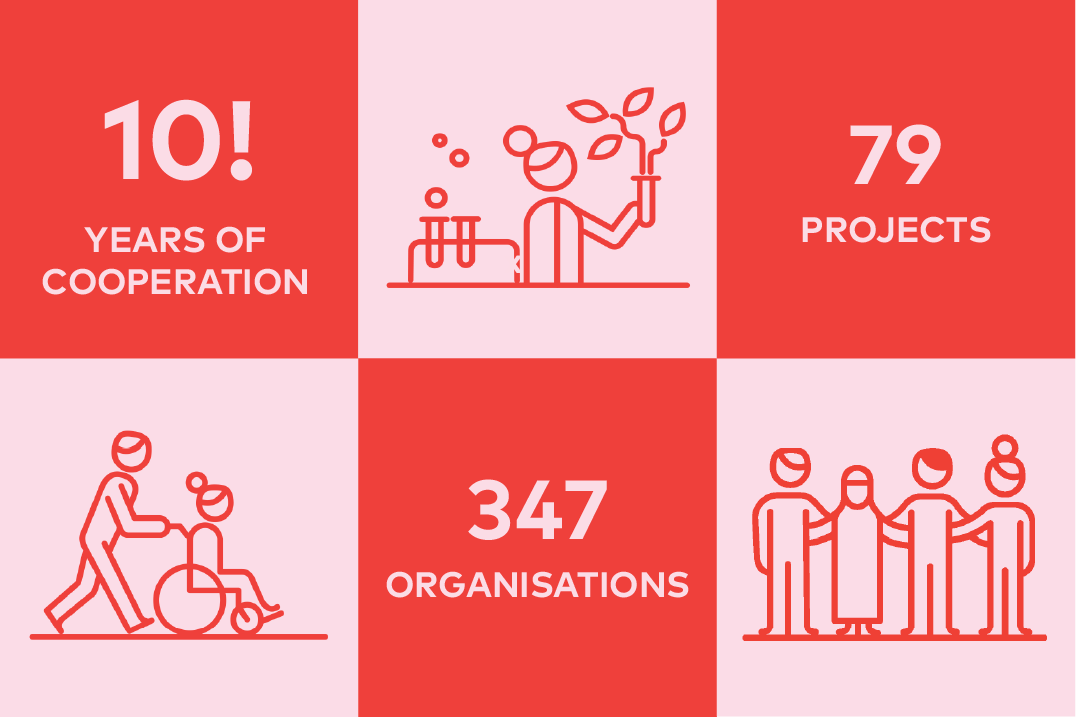
In this publication NIKK present the experiences, insights and effects of the first ten years of the Nordic Gender Equality Fund.
When the Nordic Council of Ministers established the Nordic Gender Equality Fund in June 2013, the aim was to stimulate Nordic cooperation in the area of gender equality. Since then, the Fund has granted funding to NGOs, public authorities, researchers and networks within the context of 79 different projects, all which aim to increase gender equality in the Nordic countries.
This publication gives an insight into ten of these projects, one for each year in the history of the Fund, and the concrete results they have generated. In brief reports and interviews, project participants share their experiences, knowledge and insights from their efforts to promote gender equality. They reflect on the benefits of Nordic cooperation and how we can meet the challenges identified in the Nordic cooperation programme for gender equality. They also give us examples of how the perspectives of children and young people can be integrated into work to promote gender equality, and contribute to the achievement of global sustainability goals.
Thanks to the cooperation projects financed through the Gender Equality Fund, knowledge in the area has grown and spread across Nordic borders. By sharing these projects they will be able to benefit more people and inspire new and exciting Nordic cooperation projects in the future.
”Gender equality is one of the common fundamental values of the Nordic nations. It is hugely important that we provide funds to non-profit organizations and academia working towards greater gender equality and also to the academic community. I have no doubt that the projects and research supported by this fund will help our governments in policy making and further progress gender equality in our societies.”
– Katrín Jakobsdóttir, Prime Minister of Iceland.
Ten years of cooperation through the Nordic Gender Equality Fund in all languages
English:
Ten years of cooperation through the Nordic Gender Equality Fund (online version)
English version in PDF for print
Finnish:
Kymmenen vuotta yhteistyötä pohjoismaisen tasa-arvorahaston kautta (online version)
Finnish version in PDF for print
Icelandic:
Tíu ára samstarf gegnum Norrænan jafnréttissjóð (online version)
Icelandic version in PDF for print
Swedish:
Tio år av samarbete genom Nordisk jämställdhetsfond (online version)
Swedish version in PDF for print
- Text: NIKK
- Categories: Gender equality and welfare policy, Nordic Gender Equality Fund
- Published: 2023-03-27
Webinar 27 April: Nordic youth – voices on wellbeing
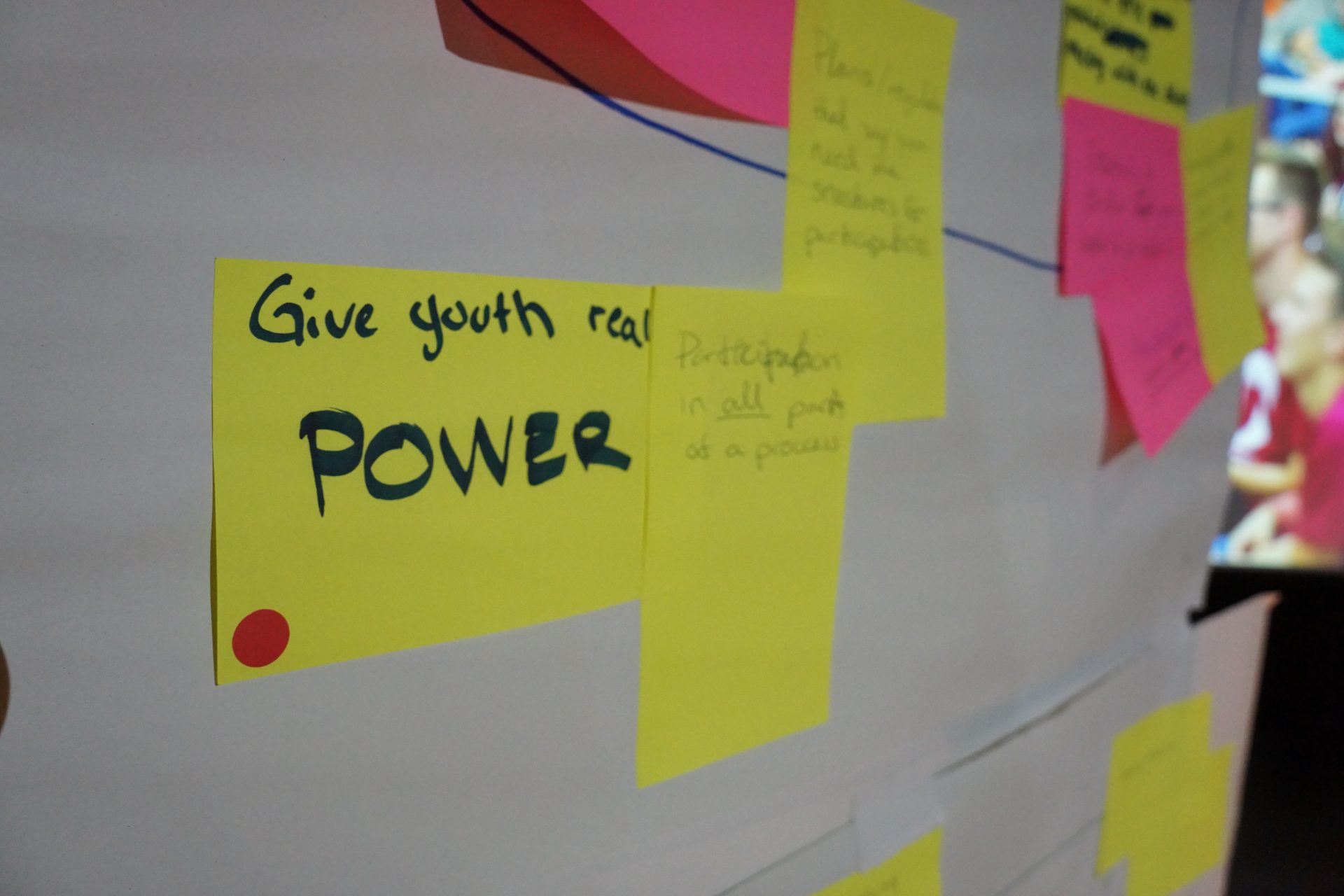
What were the consequences of the Covid-19 pandemic for children and youth and their wellbeing? We need to learn from the pandemic to handle future crises better to protect children’s and youth’s right to be heard and involved in all matters concerning them.
This webinar presents four reports with new research and key learnings. One of them is NIKK:s report on young men´s mental ill-health, which will be published later this spring. The webinar is arranged in collaboration with the Nordic Welfare Center.
Nordic youth, experts and scientists will share their knowledge and insights into why involvement can make a huge difference during a crisis. You will be given insights into what consequences the pandemic had, and how we can handle a future crisis better. We also dive into some new research on the consequences for young people’s mental health., and the gender differences. The webinar is a part of a four-year Nordic cooperation project lead by the Nordic Welfare Centre on behalf of the Nordic Council of Ministers.
Registration and event details
The webinar is free of charge and will be held in English. For this webinar we offer English Sign interpretation on request. Please register in the sign up form no later then April 12th.
Time zone: Europe/Stockholm (UTC+1)
Registration form: Nordic youth – voices on wellbeing (lyyti.fi
Start: 27 Apr 2023 at 13:00
End: 27 Apr 2023 at 15:20
Nordic Welfare Center’s event page: Nordic youth – voices on wellbeing | NVC (nordicwelfare.org)
- Text: NIKK
- Categories: Children and youth, Gender equality and welfare policy
- Published: 2023-03-27